- job ticket
- section
- ai writing
- slug
- check-a-paragraph-for-ai
- checked
- editor
- Nora Feld
How to Detect AI Writing in a Single Paragraph: Read It, Mark It, Then Weigh Any Score
One paragraph is the hardest case for any detector and the easiest case for a careful reader. Mark what you see first, then decide whether a score can add anything.
in short
To detect AI writing in one paragraph, read it before you run any tool. Mark generic claims, stock phrases, even rhythm and missing specifics. Then check the length: Turnitin needs at least 300 words and GPTZero at least 250 characters. A score on short text is a weak signal, never proof of authorship.
Someone hands you a paragraph, or you wrote one with help from a chatbot, and the question is the same: was this machine-written? Learning how to detect AI writing at this size means accepting a limit early. A single paragraph carries little evidence, so the reading you do yourself matters more than any percentage. Below: the reading checks to mark first, the minimum lengths vendors publish, what studies found about detector errors, and a worked example.
How to detect AI writing by reading the paragraph first
Read the paragraph before any tool reads it for you.
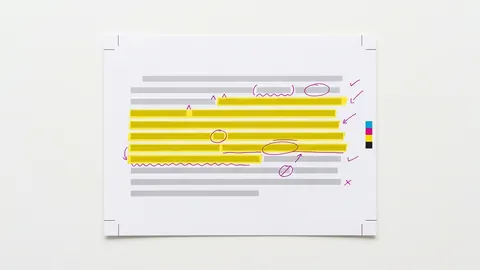
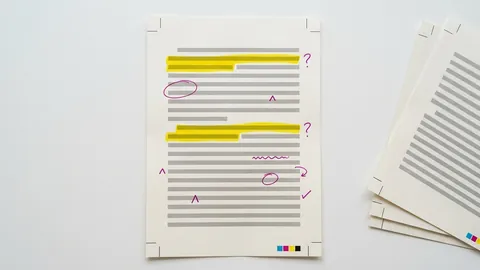
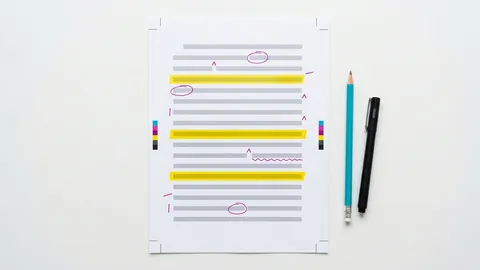
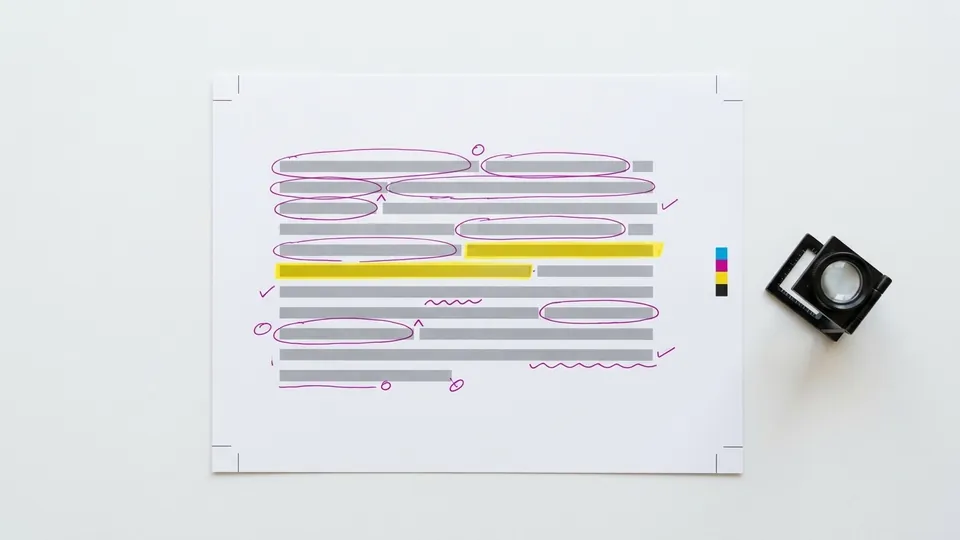
A reader has one advantage no detector has: context. You know the assignment, the writer and the topic. Read the paragraph once, then again with a highlighter, looking for the habits below. The fuller list, with examples, is in the guide to highlighting sentences that read as machine-written, and the stock vocabulary has its own page on words and phrases worth marking in a draft.
- Claims with no owner. Sentences that could sit in any essay on the topic: "This plays a crucial role in many areas." Ask what, where and according to whom.
- Even rhythm. Three sentences of the same length and shape in a row, each ending on a tidy summary.
- Missing specifics. No names, dates, numbers, places or quotations, where a person who did the reading would have them.
- A closing moral. A last sentence that restates the paragraph as a lesson.
- Sources that do not check out. A citation, title or quotation you cannot find. This is the strongest sign on the list, because it is a fact, not a style.
| Check | What to mark | Why it is weak on its own |
|---|---|---|
| Generic claims | Any sentence you could paste into another essay unchanged | Rushed human writing is generic too |
| Even rhythm | Runs of sentences with the same length and structure | Some writers are taught to write this way |
| Stock phrases | Words like delves, tapestry, navigate the complexities | People pick these up from reading AI text |
| Missing specifics | Places where a name, date or figure should be | Short answers often leave detail out |
| Unverifiable sources | Any reference you cannot open and find | Strong, but it shows a bad source, not who typed it |
Count the marks, but do not score them. Two highlights in eight sentences mean little. Highlights on nearly every line, plus a source that does not exist, mean it is time to ask how the paragraph was written.
Why one paragraph is hard for any detector
Detectors look for statistical patterns across many words, and a paragraph does not give them many. The vendors say so in their own documentation. In a May 2023 update, Turnitin's chief product officer wrote that the company had raised its minimum from 150 to 300 words for a document to be evaluated, because accuracy increases with a little more text. The same update reported a higher incidence of false positives in the first few and last few sentences of a document, which is exactly where a lone paragraph sits.
Turnitin also gave two rates in that update, and they measure different things. For documents with over 20% AI writing, the document false positive rate was less than 1%, checked against 800,000 academic papers written before ChatGPT's release. At the sentence level, the false positive rate was about 4%: roughly 4 of every 100 highlighted sentences may be human-written. When you check a single paragraph, the sentence figure is the one that applies.
GPTZero sets a lower floor. Its support guide for the Microsoft Word add-in says a selection needs to be at least 250 characters, about two average sentences, before it returns a result. A floor is where a tool will answer, not where its answer becomes reliable.
| Tool | Published minimum | What the vendor says about short text |
|---|---|---|
| Turnitin | 300 words of text (raised from 150 in May 2023) | Accuracy increases with more text; more false positives in opening and closing sentences |
| GPTZero (Word add-in) | 250 characters | Below that it asks you to fill in at least 250 characters |
What independent studies found about detector errors
Two studies are worth knowing before you trust a score on any length of text. In Patterns (2023), Liang and colleagues at Stanford ran seven widely used detectors on 91 TOEFL essays by non-native English writers and 88 essays by US eighth graders. The detectors classified the eighth-grade essays accurately but labeled more than half of the TOEFL essays as AI-generated, an average false positive rate of 61.3%. The cause was low perplexity: plainer vocabulary is more predictable, and many detectors measure predictability.
In the International Journal for Educational Integrity (2023), Weber-Wulff and colleagues tested 14 tools, including Turnitin, on 54 documents with known origins: human-written, machine-translated, AI-generated, and AI-generated then edited or paraphrased. Every tool scored below 80% accuracy and only five scored above 70%. For AI text run through a paraphrasing tool, overall accuracy fell to 26%. Their conclusion was that the tools are neither accurate nor reliable. More findings, and how detectors work, are on the page on what AI text detectors can and cannot tell you.
A worked example: one paragraph, marked
Here is an example paragraph written for this page, the opening of a short response on urban trees:
Reading it with a highlighter gives these marks:
- Generic claims: "play a crucial role," "multifaceted benefits" and "our shared future" could open any essay on parks, rivers or libraries.
- A list of three: shade, air quality, wildlife, with no city, species or figure attached.
- Even rhythm: five sentences of similar length, two opened with a connector (Moreover, Ultimately).
- A closing moral: the last sentence restates the paragraph as a lesson.
- Missing specifics: no source, place or number anywhere.
The paragraph is 62 words long, far below Turnitin's 300-word floor, so a Turnitin score is not available and a score from any tool would rest on very little text. The marks do not show who wrote it either; a tired student at midnight could produce every one. They show where to ask: which city, which study, which trees? A writer who did the reading can answer at once.
Steps to check a paragraph for AI writing
Read it once, clean
Read it through without marking anything, so your first impression comes from meaning.
Mark the reading checks
On the second pass, highlight generic claims, stock phrases, runs of even sentences, lists of three and missing specifics. Use one color per habit so the pattern is visible at a glance.
Check every source
Open each citation, quotation and figure. A reference that does not exist is the most concrete finding you can make. Tracing a quotation back to its source shows the method.
Check the length before any tool
Count the words. Below 300, Turnitin will not score it; below 250 characters, GPTZero will not either. Above those floors, a short text still gives a detector little to work with.
Run a detector only as a second opinion
Note the tool, the date, the score and the length. Agreement between your marks and the score is a reason to talk, not a finding.
Ask the writer
Ask about the specifics the paragraph lacks, and for notes or drafts. Answers settle more than scores do.
If you want a second opinion after the reading, one option is the AI detector built into Walter Writes AI, an AI humanizer that supports over 80 languages and includes a detector on every plan. Like the tools in the studies above, it returns a probability, not a finding about who typed the words, and two detectors can disagree on the same paragraph.
Pitfalls when checking a single paragraph
- Treating one tell as proof. A single stock phrase or connector shows a habit, and humans have the same habits.
- Forgetting the writer. Liang and colleagues found plain, predictable prose from non-native writers flagged most. Simple English is not evidence.
Tips from editors who check drafts
- Compare like with like. Read the paragraph beside earlier work by the same writer. A sudden change in voice is more telling than any single phrase.
- Keep your marks. A marked copy shows what you saw and why, which matters if anyone asks later. The routine for fair markup when you suspect AI writing builds on it.
If the paragraph is for a class, the score that matters is usually the one your school's tool shows: how Turnitin's AI indicator works explains what instructors see, what an AI percentage actually measures covers the number itself, and the ranking of AI detectors for teachers compares the tools on documented limits.
Checking a paragraph for AI writing is mostly reading: mark the habits, open the sources, compare the voice and ask the writer what the text leaves out. Detectors can add a second opinion on longer passages, but most paragraphs miss the floors their own vendors set. Start at the AI writing guides for the full set of methods, and keep your marked copy, because the marks are the part of the check anyone can verify. And if the paragraph turns out to be yours but reads flat, the humanizer ranking and the rewrite method beside it are the next stop.
Common questions
Can you detect AI writing in one paragraph?
Only weakly. A paragraph gives a reader a few habits to mark and gives a detector very little text. Turnitin will not score fewer than 300 words, and its own update reported more false positives in opening and closing sentences. Mark what you see, check the sources, and treat any result as a reason to ask questions.
What is the minimum length for an AI detector?
It depends on the tool. Turnitin requires at least 300 words of text, raised from 150 in May 2023 because accuracy improved with more text. GPTZero's Word add-in needs at least 250 characters. These floors are where a tool will answer; longer passages give it more to work with.
How can I check if text is AI generated without a detector?
Read it twice and mark generic claims, stock phrases, runs of even sentences, lists of three and missing specifics. Then open every source it cites, since a reference that does not exist is the clearest sign. Compare it with the writer's earlier work and ask about the details the text leaves out.
Why do detectors flag human writing?
Many detectors measure how predictable each word is, and plain, simple prose is predictable. Liang and colleagues, writing in Patterns in 2023, found seven detectors flagged an average of 61.3% of TOEFL essays by non-native English writers as AI-generated, while classifying US eighth-grade essays accurately. Style can resemble machine output without any machine involved.
Is a low AI score proof that a person wrote it?
No. Weber-Wulff and colleagues tested 14 tools and found accuracy on AI text that had been machine-paraphrased fell to 26%, so most of it passed as human. A low score means the tool did not find the patterns it looks for. It says nothing certain about who typed the words or how they were produced.
Sources
- Turnitin (Chechitelli, A., 23 May 2023): AI writing detection update from Turnitin's Chief Product Officer
- GPTZero Support Center: How can I use the Microsoft Word Add-In to check for AI?
- Liang, W. et al. (2023). GPT detectors are biased against non-native English writers. Patterns 4(7), 100779
- Weber-Wulff, D. et al. (2023). Testing of detection tools for AI-generated text. International Journal for Educational Integrity 19, 26
sign-off
Checked against its sources and signed before it went out.
Nora Feld
Editor · reviewed 1 Nov 2026