Annotation Symbols: A Chart of Close Reading Marks, What Each Means, and When to Use It
A dozen small marks can carry most of what you think while you read. The trick is to give each one a single meaning and to write that meaning down.
in short
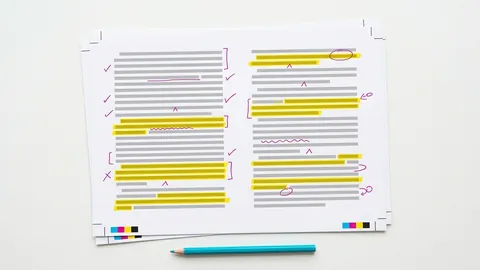
Annotation symbols are short marks you write while reading to record a reaction without stopping: a star or asterisk for a key idea, a circle for an unfamiliar word, a question mark for confusion, an exclamation point for a surprise, underlining for evidence. Guides differ on meanings, so write your own key and keep it.
Annotation symbols are the shorthand a reader writes on a page: a star beside a key idea, a circle around an unknown word, a question mark where the argument loses you. They are faster than margin notes and easier to scan later. They also cause trouble, because no two guides assign quite the same meanings. Below: a full chart of the common marks, where the published guides agree and differ, and how to build and use a key of your own.
What annotation symbols are for
One mark, one meaning, written down.
Harvard Library's guide to reading strategies, Interrogating Texts, describes annotating as putting yourself in a dialogue with the author. Its advice is to develop your own symbol system, for example an asterisk for a key idea and an exclamation point for the surprising, absurd or bizarre, so you can find the right passage again when you write or revise.
The same guide warns against relying on a highlighter alone: yellow lines that mean something today can look cryptic the next day unless you have a way of remembering why they mattered. A symbol records the reason along with the location: a star says this is central, a question mark says I did not follow this.
Annotation symbols are for reading. They are not editing marks, which tell a writer what to change. If you are correcting a draft rather than studying a text, use the standard proofreading marks for correcting a draft instead; mixing the two sets on one page makes both harder to read.
Annotation symbols chart
The chart lists the marks that appear most often in university and school reading guides. Some come from the guides cited on this page; the rest are widely used conventions you can adopt or drop.
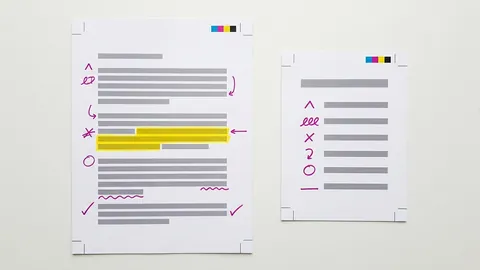
| Symbol | How it looks | Meaning | When to use it |
|---|---|---|---|
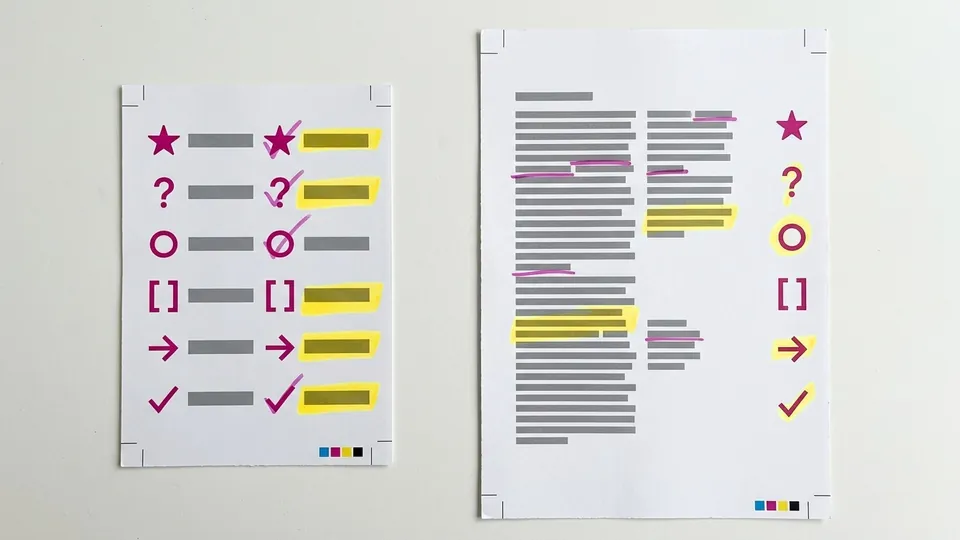
| Star or asterisk | A five-point star or an asterisk in the margin | Key idea, thesis or main point | Once or twice per section, at the sentence that carries the argument |
| Circle | A loop drawn around a single word | Unfamiliar word or term | Any word you would have to look up; write the definition nearby |
| Question mark | A question mark in the margin beside the line | Confusion or an open question | A sentence you could not explain to someone else |
| Exclamation point | An exclamation point in the margin | Surprise, or a connection (guides differ) | A claim that contradicts what you expected, or links to another reading |
| Underline | A single straight line under the words | Evidence: a quotation, statistic or example | Material you may quote or cite later; use it sparingly |
| Check mark | A tick in the margin | Main idea, or a point you agree with | Statements you accept and want to find again quickly |
| Double question mark | Two question marks side by side | Strong doubt or disagreement | A claim you think is wrong or unsupported |
| Bracket | A square bracket along the edge of several lines | A passage that belongs together | A worked example, a definition or a quotable block |
| Vertical line | A straight line down the margin | An important passage too long to underline | A paragraph you want to reread in full |
| Arrow | A line with an arrowhead connecting two places | Connection between two parts of the text | Where an idea returns or answers an earlier question |
| Numbers | Small numerals 1, 2, 3 beside the lines | Steps in an argument or items in a list | An author making several points in a row |
| Box | A rectangle drawn around a word or phrase | Transition or signal word | Words such as however or therefore that turn the argument |
| Margin abbreviation | Short letters such as ex, def or recc | Example, definition, recommendation | To label what kind of material a passage is |
Where the guides agree, and where they do not
On three marks the published guides line up. Dominican University's annotation guide, the UC Riverside Academic Resource Center's handout on methods for close reading and the Virginia Military Institute Writing Center's handout on annotating texts all use a circle for an unfamiliar word, and each tells you to write the definition next to it or at the bottom of the page. Dominican and UC Riverside both use a question mark for confusion, and UC Riverside adds a note on what confuses you so you can ask your instructor later.
The exclamation point is where they part. Harvard's guide uses it for the surprising, absurd or bizarre. Dominican's guide uses it for a connection to another class or to your own experience. VMI suggests a check mark for main ideas and a star for interesting supporting evidence, while Dominican uses the star for the main idea itself. None of these is wrong, but a symbol with no written key is a private code its own author can forget.
| Mark | Harvard Library | Dominican University | UC Riverside ARC | VMI Writing Center |
|---|---|---|---|---|
| Star or asterisk | Key idea | Main idea or key detail | The author's thesis | Interesting supporting evidence |
| Exclamation point | Surprising, absurd, bizarre | Connection | Not listed | Not listed |
| Question mark | Not listed (write questions out) | Question or confusion | A difficult sentence or paragraph | Not listed (write down what confuses you) |
| Circle | Not listed | Unfamiliar word | Unfamiliar words | Unknown words |
How to build your own annotation key
Every guide cited here gives the same advice: make a system that means something to you. These steps turn it into a reusable key.
Start with five marks
Pick a star, a circle, a question mark, an exclamation point and an underline. Five covers most reading.
Give each mark one meaning
Decide, for example, that the exclamation point means surprise, and use an arrow for connections.
Write the key inside the cover
Put it on the first page, a sticky note or the first line of your notes file.
Pair symbols with a few words
A question mark plus which study? records the question, not only the confusion.
Add marks only when you need them
If you keep writing the same margin word, such as ex for example, promote it to the key.
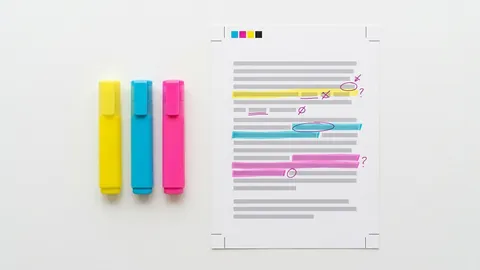
Match your highlighter colors to the key
If you also highlight, give each color a job that matches a symbol. The color-coding system for highlighters sets out one way to do it.
A worked example: one paragraph, marked
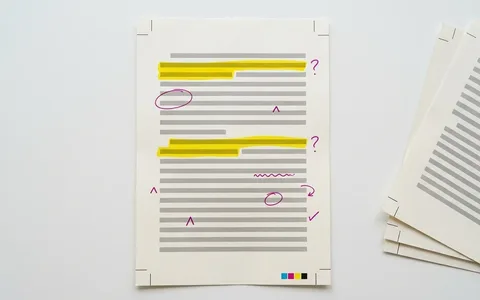
The paragraph below was written for this page as an example. Imagine it printed in a course reader.
Using a five-mark key, a reader might mark it so:
- Star beside the last sentence, Visibility, not availability, drives behavior, because it is the claim the paragraph exists to make.
- Underline under fewer than a third of people knew where to look, the one piece of evidence, with which survey? in the margin.
- Question mark beside people changed their plans, with the note how measured?, since the paragraph does not say.
- Box around However, the word where the argument turns from problem to finding.
- Exclamation point beside the text message finding, the surprise: only the delivery changed.
Five marks and two notes, and the structure is visible at a glance: claim, evidence, an open question and the turn. For turning a marked page into a full set of notes, see the step-by-step method for annotating a text.
Library books, e-books and screens
Never write in a book you do not own. The VMI handout's advice for that case is simple: use sticky notes. Draw the symbol on the note and add the page number in case it falls out.
On a screen, most PDF readers and e-book apps let you highlight and add a comment. Type the symbol as the first character of each comment, such as * or ?. On the web, you can mark a passage and keep a link straight to it with the highlight link generator.
Pitfalls with annotation symbols
- Marking everything. A star on every line means nothing is central. Aim for one or two stars per section.
- Symbols with no words. A bare question mark is a reminder that you were confused, not a record of why. Add two or three words.
- Changing meanings halfway through. If the exclamation point meant surprise in chapter one, it cannot mean agree in chapter four. Keep the key in view.
Tips for a key that lasts
- Review marks at the end of each section. Turn each question mark into a question you write out in full, as Harvard's guide suggests, or cross it out if the text answered it.
- Keep the key with your record. If you ever need to show how you read a source, a dated key and the marked pages explain themselves. The guides to keeping a reading record cover what to save.
To put the symbols to work on a whole book, see how to annotate a book; for articles and handouts, how to annotate a text.
Annotation symbols work when each mark means one thing and the meaning is written down. Start with five marks, add a word or two beside each one, and keep the key where you can see it.
Common questions
What are the most common annotation symbols?
The most common annotation symbols are a star or asterisk for a key idea, a circle for an unfamiliar word, a question mark for confusion, an exclamation point for a surprise or connection, and underlining for evidence. Harvard Library, Dominican University and UC Riverside's Academic Resource Center all describe versions of these marks in their reading guides.
What does a star mean when annotating?
A star usually marks the most important idea: the thesis, a main point or a key detail. Dominican University's guide uses it for the main idea, UC Riverside's handout for the author's thesis, and Harvard's guide uses an asterisk for a key idea. VMI's handout uses it for interesting supporting evidence instead, so define it in your key.
What is the difference between annotation symbols and proofreading marks?
Annotation symbols record a reader's reactions to a text: what is central, what is confusing, what to quote. Proofreading marks are instructions to a writer or typesetter: delete this, insert that, swap these words. Use annotation symbols when you are studying a source and proofreading marks when you are correcting a draft.
How many annotation symbols should I use?
Start with about five and add more only when you keep needing them. Five marks cover the main jobs: key idea, unknown word, confusion, surprise and evidence. Beyond eight or so, most readers stop remembering the meanings mid-sentence, and the marks begin to slow reading down instead of speeding it up.
How do I annotate a library book with symbols?
Put the symbols on sticky notes or removable tabs instead of the page. Draw the mark on the note, place it at the line, and write the page number on the note as well. The VMI Writing Center's handout recommends sticky notes for any text you cannot write in.
Sources
- Harvard Library: Interrogating Texts: Six Reading Habits to Develop in Your First Year at Harvard
- Dominican University: Annotation Guide (PDF)
- University of California, Riverside, Academic Resource Center: Methods for Close Reading (PDF)
- Virginia Military Institute Writing Center: Annotating Texts (PDF)
sign-off
Checked against its sources and signed before it went out.
Nora Feld
Editor · reviewed 2 Nov 2026