- job ticket
- section
- ai writing
- slug
- fair-markup-for-suspected-ai-writing
- checked
- editor
- Nora Feld
How to Tell If a Student Used AI: A Fair Process Built on Evidence, Drafts and a Conversation
Suspicion is not evidence, and a detector score is not either. A fair process marks what you see, gathers what the student can show, and decides only on what both of you can check.
in short
You cannot tell for certain from the text or a detector score alone. Compare the work with the student's earlier writing, check every source, and ask for drafts, notes and version history. Then talk with the student about how the work was made. Decide only on evidence both of you can open and check.
A paper lands on your desk that does not sound like the student who wrote the last one. The question of how to tell if a student used AI comes with a second question attached: how to find out without accusing someone who did nothing wrong. Detectors make mistakes, and the vendors say so. This page sets out a fair process for teachers and editors: what evidence to gather, how to read a detector result, how to run the conversation, and what a student can show if the suspicion is wrong.
How to tell if a student used AI: start with evidence you can check
Decide on what both of you can open, not on what a tool predicts.
Vanderbilt University's guidance for instructors, issued when it disabled Turnitin's AI detector in August 2023, suggests starting with three things: compare the writing with the student's other work, look for inaccurate sources, arguments and facts, and talk to the student. Each produces something you can point to. A detector score produces a number you cannot explain, because the tool does not show its reasoning.
| Evidence | What it can show | What it cannot show |
|---|---|---|
| Earlier work by the student | A sudden change in voice, vocabulary or structure | Why the change happened: tutoring, effort and growth also change writing |
| The sources cited | References that do not exist or do not say what is claimed | Who typed the sentences around them |
| Drafts and version history | How the work grew over time, in what steps | Whether text was pasted in from somewhere the history does not record |
| Notes and marked sources | That the student read what they cite | That the final prose is theirs word for word |
| A conversation | Whether the student understands and can extend the argument | Anything, if it starts as an accusation |
| A detector score | That the style resembles text the tool was trained to flag | Who wrote it; vendors advise against using it as the only evidence |
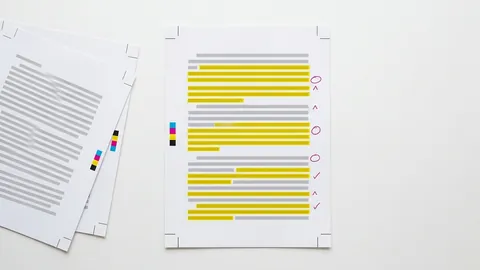
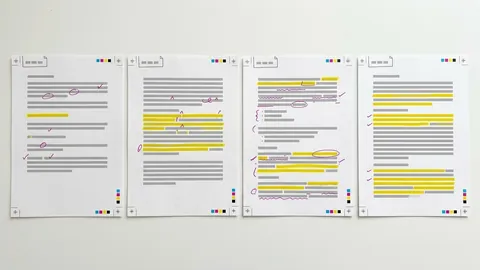
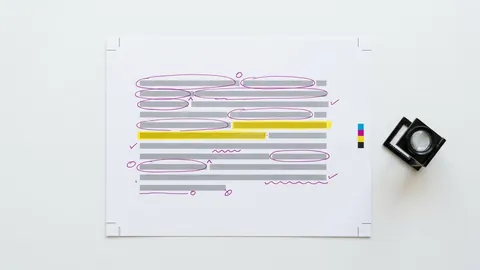
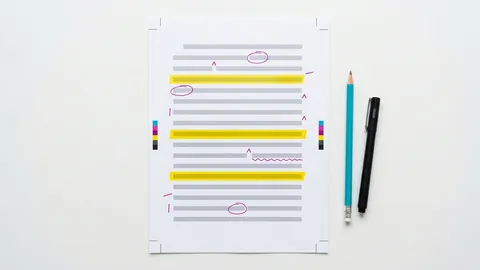
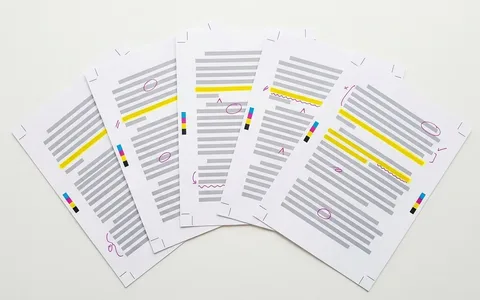
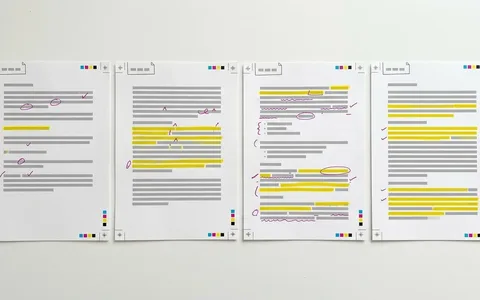
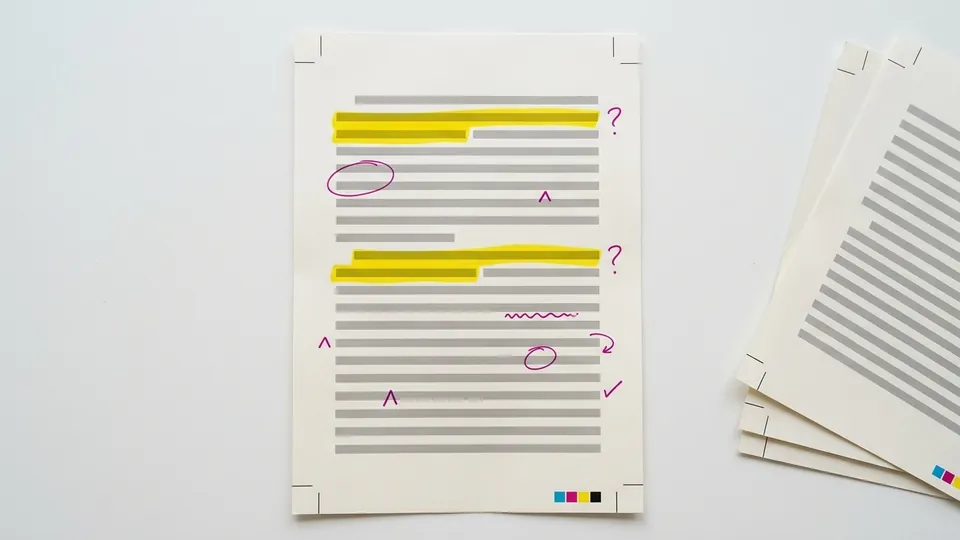
Mark the passages that concern you on a copy of the paper, the way you would mark any editing problem. The reading checks for a single paragraph give a short list of what to highlight, and the method for reviewing authorship through drafts and sources covers the longer review.
What a detector score is worth
Detector vendors set the limits themselves. GPTZero's guide to its scan results says it does not recommend using an AI detection result as the only proof for academic punishment or discipline, because results are probabilistic. Turnitin's May 2023 update said its document false positive rate was less than 1% for documents with over 20% AI writing, and that because the rate is not zero, educators should use the score to start a meaningful dialogue with their students.
Less than 1% sounds small until you multiply it. Vanderbilt did the arithmetic for its own campus: it submitted 75,000 papers to Turnitin in 2022, so a 1% false positive rate could have meant around 750 papers incorrectly labeled as partly AI-written. And the errors do not fall evenly. In Patterns (2023), Liang and colleagues found seven widely used detectors flagged an average of 61.3% of TOEFL essays by non-native English writers as AI-generated, while classifying essays by US eighth graders accurately. A student writing in a second language is the student a score is most likely to get wrong.
A fair process, step by step
Mark the passages, not the student
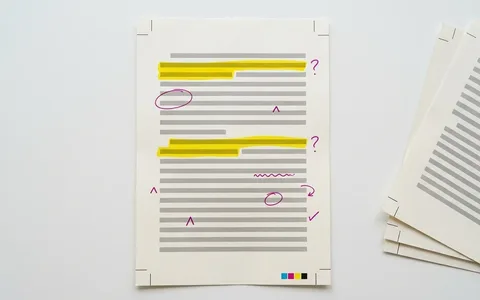
Highlight the sentences that concern you and write why beside each: generic claim, missing source, change in voice. A note that names a feature can be discussed; a note that says "AI" cannot.
Check every source
Open each reference and quotation. A citation that does not exist is a concrete problem whatever its cause, and it is the strongest thing you can bring to a conversation.
Compare with earlier work
Read the paper beside one or two earlier pieces by the same student. Note specific differences in vocabulary, sentence length and how sources are used.
Ask for the process
Request drafts, notes, the document's version history and the sources the student read. Ask as you would for any assignment, not as a charge.
Talk with the student
Ask them to explain a marked passage, say where an idea came from, or extend a point. Listen for understanding, not for a confession.
Record what the decision rests on
Write down the evidence other than any score. If the only entry is a detector result, there is no finding to make.
How to run the conversation
Turnitin's May 2023 update tells educators to plan how they will approach the conversation before it happens, and Vanderbilt's guidance notes that some students will simply say how they used AI if they are approached the right way. Plan the questions in advance, keep them about the writing itself, and be open from the start that detectors make mistakes. Questions that work in practice:
- "Walk me through how you wrote this section. What did you start with?"
- "This source is cited here. Can you show me the page where you found this point?"
- "What would you add if this paragraph had to be twice as long?"
- "Can you open the document's version history so we can look at it together?"
Avoid opening with the score. A student who hears "the detector says 80%" has nothing to answer except denial, and you have nothing to show except the number.
A worked example: two outcomes from the same flag
Suppose an essay on local water policy contains this example sentence, written for this page: "Water management plays a pivotal role in fostering sustainable communities, as a 2019 report by the Regional Water Council makes clear." The teacher marks it for a generic claim and checks the report.
- Outcome one. The report cannot be found under that name or any close variant. In the conversation, the student cannot say where the citation came from and has no notes for that section. The finding rests on a fabricated source, recorded with the search the teacher ran.
- Outcome two. The report exists, under a slightly different title, and the student has a highlighted copy with notes dated two weeks before the deadline. The phrasing is stiff because the student is writing in a second language. There is no finding, and the useful feedback is about style.
In both cases a detector might have returned the same score. Only the evidence separated them.
What a student can show if the suspicion is wrong
A student who is falsely accused of using AI has the same evidence available, from the other side. The strongest answer is a record made while the work happened.
- Version history. Google Docs and Word keep a dated history of edits. Using version history as an authorship record explains how to open and share it.
- Marked sources. Highlighted copies or highlight links to the passages cited show the reading behind each claim.
- Notes and outlines. Dated notes in the student's own words connect the reading to the draft.
- An explanation of the flagged passages. Being able to say where each point came from, and to extend it on the spot, answers most questions.
The full checklist is on the page about how to show you did not use AI. Students who used AI within a course's rules should say so plainly; the guide to disclosing AI help in your writing shows what a clear statement looks like.
Pitfalls in reviewing suspected AI writing
- Acting on a score alone. Both GPTZero and Turnitin describe their results as a starting point, not proof.
- Treating plain English as a sign. The Liang study shows simple, predictable prose is exactly what detectors misread.
- Changing the rules mid-assignment. Students cannot follow an AI policy they were not given. State it in writing before the work is set.
- Keeping no record. If a decision follows, the file should show the marked passages, the source checks and the conversation, with dates.
Before choosing a tool, read how the main AI detectors compare for teachers and what a detector percentage can and cannot mean. When the question is about the rules rather than the evidence, where schools draw the line on AI plagiarism is the place to start.
Telling whether a student used AI is less about catching and more about evidence. Mark the passages with reasons, check the sources, compare the writing with earlier work, ask for the process and talk before deciding anything. A score can start that work but cannot finish it. The other methods on the AI writing guides cover the marking itself, and every one of them leaves a record that the student can see and answer. The marks themselves can follow the standard proofreading marks chart, and a student revising after the conversation can use the same markup pass on their own draft.
Common questions
Can a teacher tell if a student used AI?
Not with certainty from the text alone. A teacher can find evidence: a sudden change from earlier work, sources that do not exist, or a student who cannot explain their own argument. Drafts, version history and a calm conversation settle most cases. A detector score can prompt a closer look but does not show who wrote the work.
How common are AI detector false positives?
It depends on the writing. Turnitin reported a document false positive rate of less than 1% for documents with over 20% AI writing, and about 4% at the sentence level. Independent research found much higher rates for some writers: seven detectors flagged an average of 61.3% of TOEFL essays by non-native English writers as AI-generated.
What should I do if I am falsely accused of using AI?
Stay calm and bring your process. Share your document's version history, your notes, the sources you read with your highlights, and earlier drafts. Ask which passages were flagged and explain how you wrote each one. Point out that detector vendors themselves advise against using a score as the only evidence of misconduct.
Should teachers use AI detectors at all?
Some institutions have chosen not to. Vanderbilt disabled Turnitin's AI detector in 2023, citing false positives, bias against non-native writers and the lack of information on how it works. Where a detector is used, treat its result as one weak signal that needs other evidence, and never as the basis for a decision on its own.
What questions should I ask a student I suspect used AI?
Ask about the work, not the tool. Ask how they wrote a marked section, where a cited point came from, what they would add if the paragraph were longer, and whether they can open the version history with you. Questions about the writing give an honest student a fair chance to show their process.
Sources
- Vanderbilt University, Brightspace (16 Aug 2023): Guidance on AI Detection and Why We're Disabling Turnitin's AI Detector
- Turnitin (Chechitelli, A., 23 May 2023): AI writing detection update from Turnitin's Chief Product Officer
- GPTZero (Cui, A. and Barlow, A.): How to Understand Your AI Scan Results
- Liang, W. et al. (2023). GPT detectors are biased against non-native English writers. Patterns 4(7), 100779
sign-off
Checked against its sources and signed before it went out.
Nora Feld
Editor · reviewed 1 Nov 2026