- job ticket
- section
- ai writing
- slug
- rewrite-highlighted-passages-in-your-voice
- checked
- editor
- Nora Feld
How to Make AI Sound More Human: Rewrite the Highlighted Passages in Your Own Voice
AI text sounds like AI less because of single words than because of sentence shapes. Rewrite the shapes, put back what only you know, and the voice returns.
in short
To make AI writing sound more human, rewrite it yourself sentence by sentence: replace trailing -ing phrases with plain statements, turn abstract nouns back into verbs, cut significance talk, vary sentence length, and add specific details only you know. Read it aloud, check every fact, and disclose AI use where your institution requires it.
If you are searching for how to make AI sound more human, you probably have a draft that is correct, fluent and somehow not yours. Swapping a few words rarely fixes that, because the giveaway is mostly structural: the way sentences are built, what they leave out, and what they pad in. This guide gives a manual rewrite method for passages you have already highlighted, a table of the patterns to change, a worked example, where a humanizer tool fits, and how to disclose AI help honestly.
Why AI text sounds like AI
The tell is the sentence shape, not the single word.
A 2025 study in the Proceedings of the National Academy of Sciences, Reinhart and colleagues' comparison of human and model writing, built parallel corpora of human-written texts and texts generated by Llama 3 and GPT-4o from the same prompts, then compared them on Douglas Biber's set of 66 grammatical and rhetorical features. The instruction-tuned models used present participial clauses at 2 to 5 times the rate of the human texts, and nominalizations (nouns made from verbs or adjectives, such as development) at 1.5 to 2 times the rate. GPT-4o, for example, used present participial clauses at 5.3 times the human rate, while using the agentless passive voice at roughly half the human rate.
In plain terms: models like to tack an -ing phrase onto the end of a sentence, and they like to turn actions into abstract nouns. The authors describe these as markers of an informationally dense, noun-heavy style. Wikipedia's field guide to signs of AI writing points at the same habit from the reader's side, noting that chatbots often attach a present participle phrase to the end of a sentence to add superficial analysis about significance or impact.
So word lists only get you partway: a paragraph can lose every flagged word and keep its noun-heavy shape. Before rewriting, mark the passages that need it; the guide to highlighting AI-sounding sentences covers what to look for.
Patterns to rewrite, and what to do with each
| Pattern | Example (written for this page) | Rewrite move | Example rewrite |
|---|---|---|---|
| Trailing -ing commentary | The policy cut costs, highlighting the need for reform. | End the sentence at the fact. If the commentary matters, give it its own sentence with a subject. | The policy cut costs by a third. I think that makes the case for extending it. |
| Nominalization | The implementation of the change led to an improvement in retention. | Find the hidden verb and the person doing it. | When we changed the schedule, more students stayed. |
| Significance talk | This plays an important role in shaping the future of education. | Say what actually happens, or cut the line. | Teachers use it to set weekly reading. |
| Rule of three | It is fast, reliable and efficient. | Keep the one quality you can support and give the evidence. | It loads in under a second on the library computers. |
| Not X, but Y | It is not just a tool, but a partner. | State Y directly. | I use it to check my outlines. |
| Vague attribution | Experts argue that sleep affects grades. | Name the source and what it found, or drop the attribution. | A study I read for this class found... (with the citation) |
How to make AI sound more human: a manual rewrite method
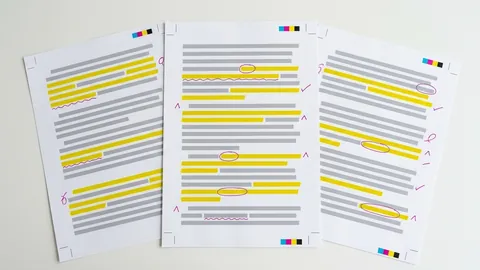
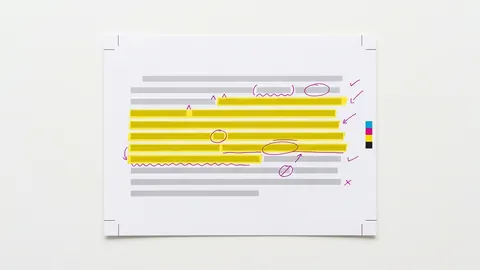
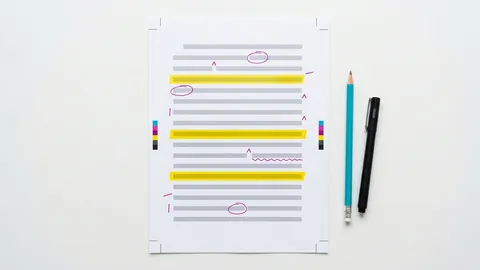
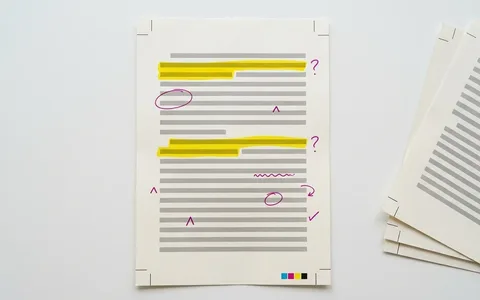
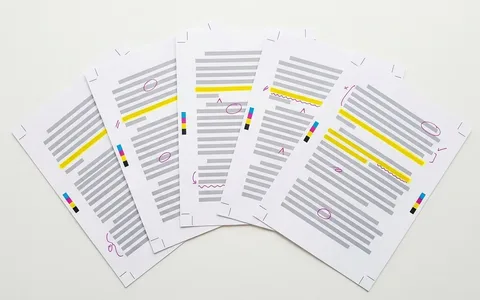
Work on the passages you have already highlighted. If you have not marked the draft yet, do that first with the markup pass for AI drafts; rewriting unmarked text means you are guessing at what needs to change.
Read the passage aloud
Listen for places you would never say out loud. The UNC Writing Center's handout on revising drafts recommends this for every draft: look for places where you stumble or lose focus.
Say the point in one sentence, without looking
Close the draft and tell yourself, in your own words, what the passage is supposed to say. Write that sentence down. It is usually shorter and clearer than the original, and it is in your voice.
Cut the trailing commentary
Find every sentence that ends in a comma plus an -ing phrase. End the sentence before the comma. Then decide whether the commentary is something you believe. If so, write it as its own sentence, with I or a named subject. If not, delete it.
Turn nouns back into verbs
Look for words ending in -tion, -ment and -ance that hide an action. Ask who did what, and write that. The UNC handout's advice to replace long verb phrases with one forceful verb applies directly.
Add what only you know
A detail from your own reading, data, class, job or experience. A model cannot supply it, and one specific detail does more for voice than any amount of rewording.
Vary the rhythm
Check sentence openings and lengths. If three sentences in a row start the same way, change one. Let at least one sentence per paragraph be short.
Check every fact and source
Rewriting can change meaning. Confirm each figure against its source after the rewrite, not before.
A worked example: one highlighted passage, rewritten
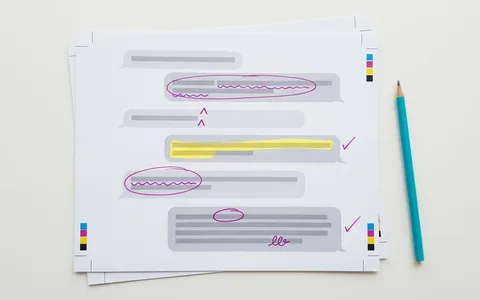
Here is a sample passage of the kind a chatbot returns for a reflection on a group project. It was written for this page, not taken from a student.
Applying the method: the restated point, said aloud with the draft closed, was we got better once we started meeting every week. The trailing -ing phrases go. The nominalizations implementation and improvement become verbs. The not just X, but Y line goes. Then the writer adds a detail from the actual project. The rewrite, also an example:
Every sentence now has a person doing something, and one detail (two people writing the same section) could only come from someone who was there.
Where a humanizer tool fits
A humanizer rewrites text to read less like model output. Used after your own rewrite, it can smooth phrasing you are unsure about; used instead of your own rewrite, it cannot add your detail or your point. Walter Writes AI's humanizer is one option: an AI humanizer with a built-in AI detector, supporting over 80 languages, with voice matching included in every plan. Its output still needs your own read and edit, detectors disagree with one another, and no detector, Walter's included, can guarantee 100% accuracy.
Disclose AI help where it is required
Rewriting AI text in your own voice does not change whether you used AI. The APA Style team's guidance on citing generative AI says submitting AI-generated work as your own would be unethical, and academic misconduct for students. It also says what AI use is allowed, and how to disclose it, depends on instructor, departmental and publisher policies. Where you used AI to edit or refine your own writing, APA suggests disclosing that in the Method section or author note and citing the tool generally, and it notes that you, as the human author, must check the output for accuracy.
For wording you can adapt, see how to disclose AI help in your writing. Keeping your marked drafts helps too: they show what the tool produced and what you changed.
Pitfalls when rewriting AI text
- Synonym swapping. Changing words while keeping the sentence shape leaves the pattern intact. Rebuild the sentence.
- Rewriting the facts away. A rewrite can quietly change a number or a claim. Check sources after rewriting.
- Skipping disclosure because it sounds like you now. The policy is about how the text was made, not how it reads.
Tips for keeping your voice
- Keep a sample of your own writing open. Compare sentence length and openings against it.
- Use I where your assignment allows it. Stance is a human habit that models tend to soften.
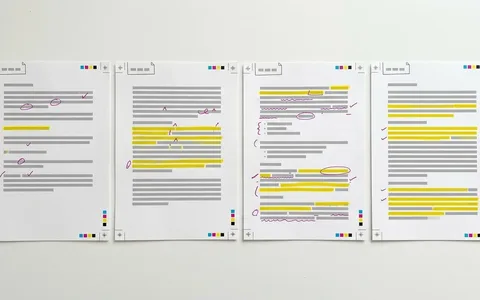
- Start from the AI writing mark key so you rewrite only what was marked, and keep what was already yours.
Voice is partly tone, and a guide to tone in writing with examples shows how to hear and change it. If you used an editing assistant along the way, whether Grammarly counts as AI depends on which features you used.
Knowing how to make AI sound more human is mostly knowing what to rebuild. End sentences at the fact, give actions back to the people who did them, cut the significance talk, vary the rhythm, and add the detail only you have. Check the facts after rewriting, use a tool only after your own pass, and disclose what your course or publisher asks you to. The result reads like you because, sentence by sentence, it is. If you are choosing a tool for that step, the ranking of AI humanizers for revising your own draft compares seven on documented features.
Common questions
Why does my writing sound like AI even though I wrote it?
Some human writing shares the features models overuse: long noun-heavy sentences, abstract nouns, and summary phrases about importance. Formal styles often encourage them. Reinhart and colleagues found these features at much higher rates in model output, but people use them too. Read your text aloud, turn abstract nouns into verbs and add specific details.
How do I make ChatGPT text sound human?
Rewrite it yourself rather than asking the model to sound more human. Restate the point in your own words, end sentences before trailing -ing phrases, turn abstract nouns into verbs, cut lines about significance, vary sentence length and add a detail only you know. Then check every fact and follow your institution's disclosure rules.
Does changing words stop AI text from sounding like AI?
Usually not. Researchers comparing human and model text have measured large grammatical differences, such as how often models use present participial clauses and nominalizations, not just which words they choose. Swapping synonyms leaves those shapes in place. Rebuilding the sentence around a subject and a verb changes the pattern itself.
Is it allowed to humanize AI text for school?
That depends entirely on your instructor's and institution's policy. APA Style's guidance is that submitting AI-generated work as your own is academic misconduct for students, while some AI assistance may be allowed if disclosed. Ask before using a tool, and if you do use one, say how. Rewriting the text does not change what the policy requires.
Can a humanizer guarantee text passes an AI detector?
No. No detector is 100% accurate, detectors disagree with one another about the same text, and a humanizer only changes wording. A better aim is text that reads like you and says what you mean. Use any tool after your own rewrite and read its output as another draft.
How long should a rewrite of an AI paragraph take?
Plan for the read-aloud, the restated point, the sentence work and a fact check, in that order. The first few take longest. Working one pattern at a time across the passage is faster than fixing each sentence completely before moving on.
Sources
- Reinhart, A., Markey, B., Laudenbach, M., Pantusen, K., Yurko, R., Weinberg, G., and Brown, D. W. (2025). Do LLMs write like humans? Variation in grammatical and rhetorical styles. Proceedings of the National Academy of Sciences 122, e2422455122 (arXiv:2410.16107)
- APA Style (McAdoo, Denneny and Lee, 2025): Citing generative AI in APA Style, Part 1: Reference formats
- The Writing Center, University of North Carolina at Chapel Hill: Revising Drafts
- Wikipedia: Signs of AI writing (WikiProject AI Cleanup field guide)
sign-off
Checked against its sources and signed before it went out.
Nora Feld
Editor · reviewed 1 Nov 2026