How to Annotate a Book: A Simple System With Pencil, Highlighter, Tabs and a Symbol Key
Book annotation works when it is small and consistent: a pencil, one highlighter, a handful of tabs and a key you can remember. Here is a system you can start on the next chapter you read.
in short
To annotate a book, write a symbol key inside the cover, read a section before marking it, then underline or highlight one key line per section, add a symbol and a few words in the margin, and put a tab on pages you will return to. In library books, use paper slips and separate notes instead.
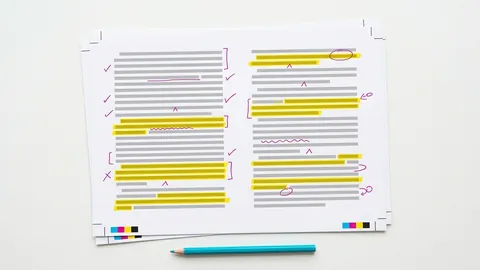
Most people who want to know how to annotate a book have tried once already and ended up with a page that is either untouched or entirely yellow. The fix is a system small enough to use without thinking: a pencil for words, one highlighter used sparingly, a few tabs on the page edge, and a five-symbol key written inside the cover. This guide sets that system out, shows how it changes for library books (where you mark nothing at all), and walks through one page annotated step by step. For shorter readings such as articles and handouts, the guide to annotating a text covers the same habits at a smaller scale.
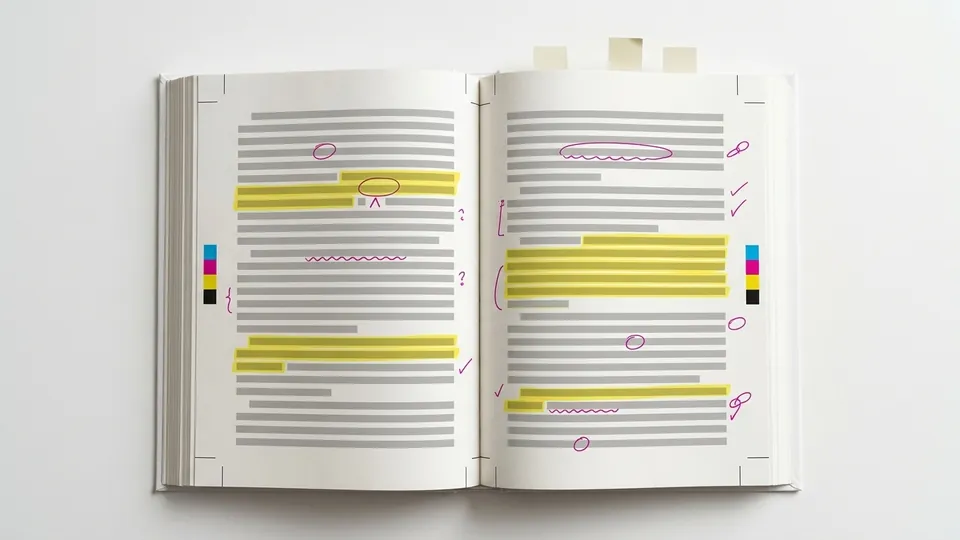
How to annotate a book: the four tools
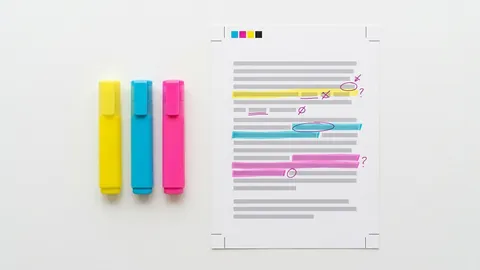
One pencil, one highlighter, a few tabs, five symbols.
Each tool does one job. Keeping them separate is what makes the marks readable months later.
| Tool | Its job | Use it for | Avoid |
|---|---|---|---|
| Pencil | Words and symbols | Margin notes, symbols, underlines, brackets around a passage | Pressing hard on thin paper |
| Highlighter | The one line that matters | The thesis, a definition, a quotation you expect to use | Highlighting while you read the first time |
| Tabs | Finding your way back | Pages you will cite, return to or discuss | More than a few per chapter |
| Symbol key | Consistency | A short list of marks written inside the front cover | Inventing a new symbol mid-book |
Pencil suits margins because it is quiet on the page, it can be corrected, and it does not bleed through. A highlighter is the loud tool, so it gets the least use. The University of North Carolina Learning Center's handout on highlighting warns that highlighting tends not to be a very effective reading strategy on its own, because sorting text into important and unimportant can crowd out thinking about it. Its tips include highlighting only after you reach the end of a paragraph or section, and limiting yourself to one sentence or phrase per paragraph.
Make an annotation key before you start
A key is a short list of marks and what each one means, written where you will see it. Eastern Washington University's Writers' Center guide to annotating a text recommends including a key or legend that says what each marking is for, and using a different marking for each type of information. The UNC Learning Center's handout on annotating texts suggests three symbols to start with and then asks you to think about what other symbols would make sense to you. Here is a five-mark key built on those suggestions.
| Mark | Meaning | When to use it |
|---|---|---|
| ? (question mark) | I have a question, or this needs checking | You are confused, doubtful, or want to look something up (UNC) |
| ! (exclamation mark) | Interesting, surprising or a connection | Something links to another book, a lecture or your own experience (UNC) |
| * (asterisk) | Evidence or an example I may use | A line you expect to quote or cite (UNC) |
| Circle around a word | Key term or unfamiliar word | Look it up and write the meaning in the margin (EWU) |
| Vertical line in the margin | This whole passage matters | Marking a paragraph without underlining every line |
The method, section by section
The UNC handout's last tip is to separate reading from annotating: read through a section first, then go back and mark it. The EWU guide goes further, with three passes (survey, skim, read). For a whole book, a two-pass rhythm per section is practical.
Preview the book
Before chapter one, read the contents page, the introduction and the chapter headings. Note on the inside back cover what the book seems to be arguing or telling.
Read a section without a pen
Read a chapter section, or a few pages of fiction, straight through. You will mark better once you know where the passage is going.
Go back and mark one key line
Underline or highlight the sentence that carries the section: a claim, a definition, a turning point. One per section is a good ceiling.
Add a symbol and a few words
Put the symbol from your key in the margin and write a short note in your own words: what the line means, why it matters, what you doubt.
Tab the page if you will need it
Put a tab on the page edge if you expect to cite it, discuss it or reread it. Write a word on the tab if it has room.
Summarize at the chapter end
On the last page of the chapter, or a slip tucked there, write two or three sentences on what the chapter did. UNC suggests asking yourself how you would explain it to a friend.
Annotating library and borrowed books: tabs only
A library book belongs to the next reader as well, so the method changes: mark nothing on the page. Washington University Libraries' preservation guide, Dos and Don'ts of Book Handling, says to take notes on your own paper, or buy your own copy if you must mark in a book. It advises against pencils, pens, highlighters and sticky notes, explaining that pens and highlighters can bleed through pages and sticky notes leave residue. For saving your place it recommends a bookmark or a piece of scrap paper, and warns against folding corners.
- Use paper slips as tabs. Cut strips of scrap paper, write a page number and a word on each, and lay them between the pages. They do the tabs' job without adhesive.
- Keep the key and notes on a separate sheet. Write the page number, the symbol and your note on a single sheet that travels in the book; it becomes the margin you are not allowed to write in.
- Copy key lines by hand, word for word. Note the page with each quotation so you can cite it after the book goes back.
- Check before you return it. Take every slip out. A forgotten slip with your notes on it is a note you have lost.
A worked example: one page, annotated
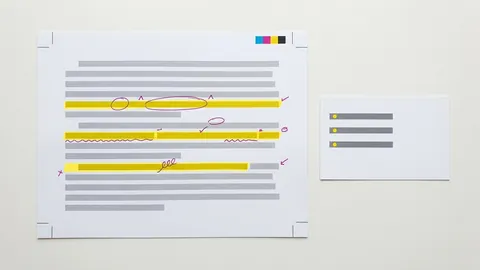
Here is an example of how one paragraph from a history book might be annotated with this system. The paragraph is a sample written for this guide:
- First pass: read the whole page without marking.
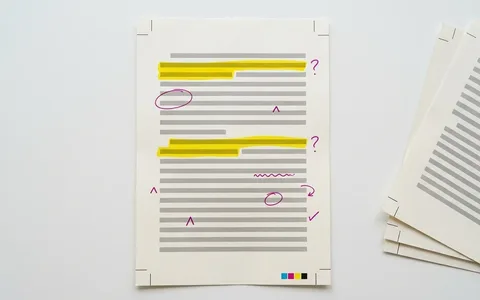
- Second pass: underline the last sentence, the claim the chapter is about, in pencil. Add a highlight to it, because it is the one line on the page you expect to use.
- In the margin beside it:
*and the note main debate: caused or sped up? - Beside cut the cost:
?and how much? check the figure in the notes. - Circle interior and write here: inland farm regions in the margin.
- Put a tab on the page edge with the word debate on it.
Six small marks, one highlight, and the page now answers three questions at a glance: what the argument is, what to check, and where to come back to. When you write about the book, copy the starred lines and their page numbers into your notes; turning highlights into notes describes that step.
Pitfalls
- Highlighting on the first read. You do not know yet what matters. UNC's tip is to highlight only after finishing the paragraph or section.
- Marks without words. A line under a sentence says it caught your eye, not why. Add a symbol or a few words every time.
- A key that changes halfway. If the star means evidence in chapter two and a favorite line in chapter nine, neither meaning survives.
Tips from university learning centers
- Preview before you read. UNC's highlighting handout suggests looking through headings, bold words and end of chapter questions first, so you know what the chapter will focus on.
- Know your purpose. Decide what you need to know or do after reading, and mark what serves that purpose.
- Summarize in your own words. UNC notes that summarizing can be more effective than highlighting or annotating, because it shows you what you do and do not understand.
- Mix description and reaction. The EWU guide recommends including descriptions of the text as well as your own reactions, so you can later find key quotations and recall your thinking.
A key works best with a fixed set of marks; the annotation symbols chart has one, and annotating a text so your marks become a record covers shorter readings.
A book annotation system lasts when it is small: one pencil, one highlighter, a few tabs and a five-symbol key inside the cover. Read a section before you mark it, give each section one key line, a symbol and a few words of your own, and tab only what you will need again. For library books, move the whole system onto paper slips and a separate sheet. The other guides to keeping highlights as a record cover what to do with your annotations once the book is finished.
Common questions
What do you need to annotate a book?
A pencil, one highlighter, a few tabs or paper slips, and a short symbol key written inside the front cover. The pencil does most of the work: underlines, brackets, symbols and margin notes. The highlighter is for the one line per section that matters most. Tabs mark pages you will return to.
What symbols should I use when annotating a book?
Start with three that the UNC Learning Center suggests: a question mark for questions, an exclamation mark for something interesting or a connection, and an asterisk for evidence or examples you may use. Add a circle for key or unfamiliar words and a vertical margin line for important passages. Write the key inside the cover.
Should I annotate in pen or pencil?
Pencil, for most books. It can be erased, it is quiet on the page, and it does not bleed through thin paper. Use a highlighter only for the single most important line in a section. Do not mark library or borrowed books at all; use separate notes and paper slips instead.
How do I annotate a library book without damaging it?
Do not write, highlight or use sticky notes in it. Washington University Libraries advises taking notes on your own paper and using a bookmark or scrap paper to mark your place. Lay paper slips between pages as tabs, keep your symbols and notes on a separate sheet with page numbers, and remove every slip before returning the book.
How much should I highlight when annotating?
Less than feels natural. The UNC Learning Center suggests highlighting only after finishing a paragraph or section, and limiting yourself to one sentence or phrase per paragraph. Pair each highlight with a symbol or a short note in your own words, so the mark says why the line matters.
Is annotating a book worth the time?
It slows reading a little and saves time later. The UNC Learning Center describes annotation as an active learning strategy that improves comprehension and retention, and says the time spent is invested rather than lost, because annotated pages make review faster. Keeping the system small keeps the cost low.
Sources
- The Learning Center, University of North Carolina at Chapel Hill: Annotating Texts
- The Learning Center, University of North Carolina at Chapel Hill: Highlighting
- Eastern Washington University Writers' Center: Reading and Study Strategies: Annotating a Text
- Washington University Libraries: Dos and Don'ts of Book Handling
sign-off
Checked against its sources and signed before it went out.
Nora Feld
Editor · reviewed 2 Nov 2026