Tone in Writing: What It Is, Examples of Each Tone, and How to Change the Tone of Your Draft
Tone is the attitude a reader hears in your sentences. You can see it on the page if you know where to look, and you can change it one word and one sentence at a time.
in short
Tone in writing is the attitude toward your topic and your readers that your word choice and sentence structure convey. Common tones include formal, informal, objective, persuasive, enthusiastic and critical. To change tone, adjust formality, point of view, sentence length and absolute words, and keep the new tone consistent from start to finish.
The tone of writing is the attitude a reader hears in it: respectful or curt, warm or detached, confident or unsure. Two sentences can carry the same fact and land completely differently because of tone. This guide gives a working definition from university writing centers, a table of ten common tones with an example sentence for each, the features that create tone, a highlighter method for marking tone shifts in a draft, why AI drafts often sound flat or relentlessly upbeat, and steps for changing the tone of your own writing.
What the tone of writing means
Tone is what the reader hears between the facts.
The Utah Valley University Writing Center's handout on tone defines it as the way you "express the attitude you have toward your topic and audience," and says an effective tone can reinforce your purpose and help establish credibility. Purdue OWL's page on tone and purpose makes the same two-sided point: your tone reflects your attitude toward the subject and toward the readers, and its example is an email to a professor, which has to be polite and formal whatever you think of the grade.
Tone is related to voice but not the same thing. Voice is how you sound across everything you write; tone is the attitude you choose for one piece and one audience. The UVU handout says to pick tone from the audience, the context and the purpose: what you want readers to feel, believe or do afterward.
Examples of tone in writing
The table below holds the fact steady and changes only the attitude. Every row says the same thing: the library will close early on Fridays. The example sentences were written for this page.
| Tone | Example sentence | Where it fits |
|---|---|---|
| Formal | Beginning March 1, the library will close at 5 p.m. on Fridays. | Official notices, reports, emails to people you do not know |
| Informal | Heads up: the library's shutting at five on Fridays from March. | Messages to friends or classmates |
| Objective | Friday closing time will move from 9 p.m. to 5 p.m. on March 1. | Lab reports, news writing, summaries |
| Persuasive | Closing at 5 on Fridays cuts four hours from the week's busiest study night, and the board should reverse it. | Op-eds, proposals, petitions |
| Enthusiastic | Good news for weekend plans: Friday evenings are now yours, with the library closing at 5! | Promotions, announcements meant to cheer |
| Critical | The new 5 p.m. Friday closing ignores the students who study after evening shifts. | Reviews, critiques, analysis |
| Reflective | I did my best work in that library on Friday nights, so the early closing feels like losing a room. | Personal essays, journals, memoir |
| Urgent | From this Friday, the library closes at 5 p.m. Return laptops before then. | Deadlines, safety notices |
| Apologetic | We are sorry to shorten Friday hours; the library will close at 5 p.m. starting March 1. | Service messages, letters after a mistake |
| Ironic | Nothing says finals season like closing the library early on Fridays. | Satire, columns, casual commentary |
What creates tone on the page
The UVU handout lists the levers. Each is something you can point at in a sentence, which is what makes tone editable:
- Point of view. First person can feel personal or inclusive, second person direct or conversational, third person academic or impartial.
- Sentence structure. Short, direct sentences emphasize and focus; complex ones can express nuance. Punctuation shifts mood and pace, and active voice reads more direct than passive.
- Word choice and formality. Formal writing avoids slang and casual phrasing; informal writing is more personal. Jargon suits experts and needs defining for everyone else.
- Absolute language. Words such as never, always, every and proves can make a claim sound biased or exaggerated; often, might and may leave room for discussion.
- Consistency. The handout says to keep a tone once you set it, because abrupt shifts confuse readers.
How to mark tone shifts in a draft with a highlighter
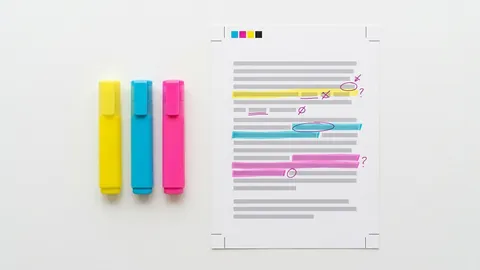
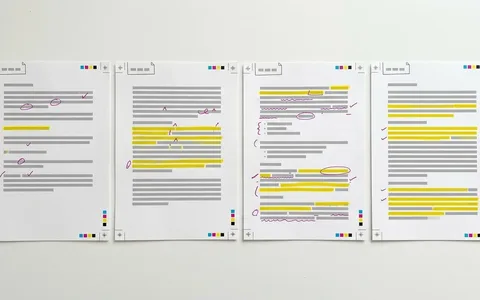
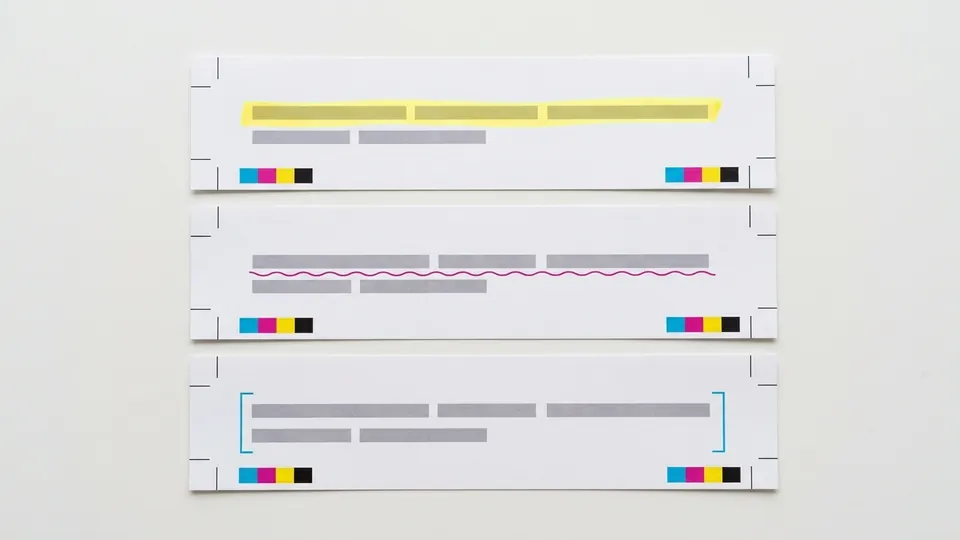
Tone problems hide when you read for meaning. Reading for attitude, with a pen in hand, makes them visible. Use two colors from a highlighter color code: one for sentences that match the tone you want, one for sentences that drift.
Write the target tone at the top
One or two words, such as formal and calm or warm but direct. Decide from the audience and purpose, not from the draft.
Read once, aloud if you can
Listen for the sentence where the voice changes, such as a joke in a report.
Highlight drift in the second color
Mark the whole sentence, then underline the exact word or punctuation that causes the shift. Usually it is one word.
Mark absolutes and intensifiers
Circle always, never, very, truly, incredibly. A cluster of circles is often where tone tips into hype or anger.
Note the pattern in the margin
Write what kind of drift it is: too casual, too salesy, too cold. Patterns tell you what to fix across the whole draft.
Why AI drafts often sound flat or overly upbeat
Chatbot drafts tend to land on a narrow range of tones. Wikipedia's editors, in their field guide to signs of AI writing, write that language models "have serious problems keeping a neutral tone" and that, even when asked for an encyclopedic style, output often drifts toward advertisement-like or travel-guide prose. Treat that page as editors' observations, not proof. A peer-reviewed study gives firmer ground: Reinhart and colleagues, in PNAS (2025), compared human and model-written texts from the same prompts using Douglas Biber's set of lexical, grammatical and rhetorical features, and found systematic differences that were larger for instruction-tuned models than for base models. They conclude that the models "struggle to match human stylistic variation."
In practice that shows up two ways. Some drafts are flat: every sentence the same length and the same mild register, so nothing sounds like it matters more than anything else. Others are upbeat by default: enthusiastic adjectives, praise for the subject, and conclusions that end on a bright note no reader asked for. Highlighting the sentences that sound machine-written and the list of AI words and phrases worth marking help you find both.
A worked example: fixing a tone shift
Here is an example paragraph from a lab report, written for this page, with a target tone of objective:
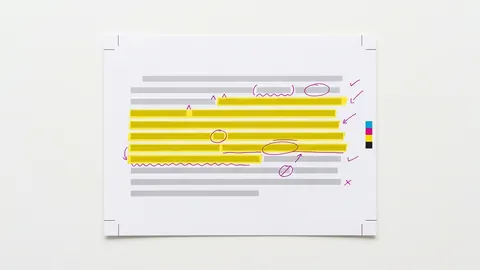
Marked up, sentences one, two and four are on tone. Sentence three is highlighted in the drift color, with honestly, total game changer, incredibly and the exclamation mark underlined. The margin note says too casual, too excited. The fix keeps the point: "This drop was the largest change in the data set." The paragraph now has one tone from start to finish, and the important result is signaled by the word largest rather than by exclamation.
How to change the tone of your writing
- Decide the tone from the reader. Name the audience and what you want them to do; choose the tone that serves that.
- Adjust formality first. Swap slang for plain words to go formal, or contractions and shorter words to go informal.
- Change the point of view if needed. Moving from you must to students should cools a sentence; moving from the author to I warms it.
- Vary or steady the sentence length. Short sentences add force; longer ones add nuance. Flat drafts need variety; frantic ones need steadier rhythm.
- Trim absolutes and intensifiers. Replace always and incredibly with the specific fact that justified them.
For an AI draft, rewriting the marked passages yourself is the surest fix, and the method for rewriting highlighted passages in your own voice walks through it. A rewriting tool is another option once your content is settled. Walter Writes AI's humanizer is one such tool: an AI humanizer with a built-in AI detector that supports over 80 languages, and every plan includes voice matching. Its output still needs your own read and edit for tone, because no tool knows your audience as well as you do, detectors disagree with one another, and no detector, Walter's included, can guarantee 100% accuracy.
Pitfalls
- Confusing tone with mood. Tone is the writer's attitude; mood is what the reader feels. A calm tone can describe a frightening event.
- Over-correcting into stiffness. Formal does not mean pompous. Plain words in complete sentences are formal enough for most academic work.
Expert tips
- Read the first and last paragraphs together. Tone drifts over a long draft, and the two ends show it fastest.
Tone is one of the things close readers listen for; close reading for AI writing patterns puts it to work, and disclosing AI help covers what to say if a tool shaped the voice of a draft.
The tone of writing is a choice you can see and edit. Name the attitude your reader needs, read the draft for sentences that drift from it, highlight the trigger words, and change formality, point of view, sentence length and absolutes until the whole piece holds one tone. With a marked draft, most tone fixes take one word. More reading and annotation methods are on the study guides hub.
Common questions
What is the tone of writing?
The tone of writing is the attitude toward the topic and the audience that a text conveys. Writing center handouts, such as those from Utah Valley University and Purdue OWL, define it that way. Word choice, formality, point of view, sentence structure and punctuation create it, and an effective tone supports the writer's purpose.
What are some examples of tone in writing?
Common tones include formal, informal, objective, persuasive, enthusiastic, critical, reflective, urgent, apologetic and ironic. The same fact can be written in each: a formal notice, a casual message, a neutral report, an argument for change. The table on this page shows all ten applied to one sentence about library hours.
How do I change the tone of my writing?
Name the tone your reader needs, then adjust formality, point of view and sentence length, and trim absolute words and intensifiers. Highlight sentences that drift from the target and fix the trigger word in each. Read the whole piece again at the end to check that the tone stays consistent.
What is the difference between tone and voice?
Voice is how a writer sounds across everything they write: their habits of rhythm and word choice. Tone is the attitude chosen for one piece and one audience. A writer keeps one voice but uses different tones for a complaint, an apology and a report.
Why does AI writing sound flat or too positive?
Language models tend toward a narrow range of styles. A 2025 PNAS study by Reinhart and colleagues found systematic stylistic differences between model and human text, larger for instruction-tuned models, and Wikipedia's editors note that model output often drifts toward promotional language. Marking those sentences and rewriting them yourself restores a deliberate tone.
Sources
- Utah Valley University Writing Center: Tone
- Purdue OWL (Purdue University): Tone and Purpose
- Reinhart, A., Markey, B., Laudenbach, M., Pantusen, K., Yurko, R., Weinberg, G., and Brown, D. W. (2025). Do LLMs write like humans? Variation in grammatical and rhetorical styles. Proceedings of the National Academy of Sciences 122, e2422455122 (arXiv:2410.16107)
- Wikipedia: Signs of AI writing (WikiProject AI Cleanup field guide), section on promotional language
sign-off
Checked against its sources and signed before it went out.
Nora Feld
Editor · reviewed 2 Nov 2026