How to Annotate a Poem: A Step-by-Step Method, With a Worked Example on a Short Blake Poem
A poem is short enough to mark in full and dense enough that you have to. Five passes with a pencil, each looking for one thing, will show you how it works.
in short
To annotate a poem, read it twice, once aloud, then make separate passes for sound (rhyme, repeated sounds, rhythm), form (lines, stanzas, punctuation), imagery (concrete pictures and comparisons) and turns (where the thought shifts). Finish by paraphrasing it line by line and writing one sentence on what the poem does.
Knowing how to annotate a poem is mostly knowing what to look for, one thing at a time. A poem does several jobs at once: it makes sounds, takes a shape on the page, builds pictures and changes direction, and a first read tends to blur all of them into a single impression. The method below separates them into five short passes with a pencil, then puts them back together as a statement of what the poem does. The worked example uses an eight-line poem by William Blake, quoted in full because it is in the public domain.
Before you start: a pencil and two readings
One pass, one question. The poem will wait.
The University of Wisconsin-Madison Writing Center's handbook page How to Read a Poem opens with the instruction that matters most: read a poem with a pencil in your hand. Mark it up, write in the margins, circle important, striking or repeated words, draw lines to connect related ideas, and mark difficult words, lines and passages. It also advises reading the poem several times, both silently and aloud, listening to the sound and rhythm of the words.
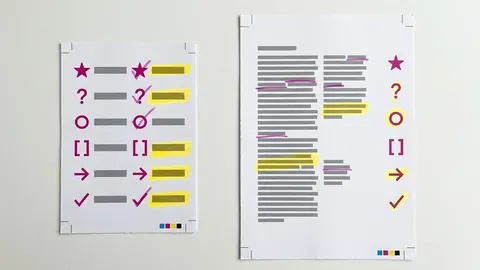
Print the poem with wide margins, or copy it out by hand, which forces you to notice every line break. Read it once straight through without marking anything. Then read it aloud. Only then pick up the pencil. If you already use a set of reading marks, keep them; if not, the chart of annotation symbols and what each means gives a small key you can adopt.
How to annotate a poem, step by step
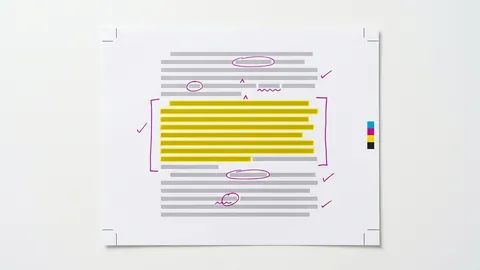
Each pass asks one question. Use a different mark for each, or a different color, so you can see the layers separately afterwards.
Title and situation
Write a note beside the title: what it promises about subject and tone. Then answer the Wisconsin handout's questions in the margin: who is speaking, to whom, where, and what is going on.
Sound
Circle rhyming words and link each pair with a line. Underline repeated consonant or vowel sounds. Read a line aloud and mark the stressed syllables lightly above it. Note anything that sounds harsh, soft, fast or slow.
Form
Count the lines and stanzas and write the numbers at the top. Mark where sentences end and where they run over a line break. Note the punctuation that carries weight: colons, dashes in older texts, a single full stop.
Imagery and word choice
Bracket each concrete picture. Box words that belong to one group, such as colors, weather or the body. List the verbs in the margin; the Wisconsin handout suggests this as a way to see the action of a poem.
Turns
Draw a horizontal arrow at any point where the thought shifts: a new stanza, a but, a change of tense or speaker. In a sonnet, look for the volta, the turn of thought or argument.
Paraphrase and the so-what
Rewrite the poem line by line in plain prose at the bottom of the page. Then write one sentence that answers the handout's last question: so what? What does the poem do?
What to mark in each pass
| Pass | Look for | Mark | Question to write in the margin |
|---|---|---|---|
| Sound | Rhyme, alliteration, assonance, rhythm | Circle rhymes, underline repeated sounds, light stress marks | What do the sounds emphasize? |
| Form | Line count, stanza breaks, line length, run-on lines | Numbers at the top, a slash at each sentence end | Where do the sentences and the lines disagree? |
| Imagery | Concrete nouns, color, comparisons, groups of related words | Brackets around images, boxes around word groups | What picture does this leave, and why this one? |
| Turns | Stanza breaks, but or yet, shifts in tense or address | A horizontal arrow in the margin | What changes here? |
| Meaning | The situation and the poem's purpose | A prose paraphrase at the foot of the page | So what? What does the poem do? |
The term for a turn has a precise meaning in one form. The Poetry Foundation glossary entry for volta defines it as the turn of thought or argument in a sonnet: in Petrarchan or Italian sonnets it comes between the octave and the sestet, and in Shakespearean or English sonnets before the final couplet. Short poems that are not sonnets turn too, often at a stanza break, and the same arrow marks them.
A worked example: The Sick Rose by William Blake
William Blake published this poem in Songs of Experience, which the Poetry Foundation's biography of Blake dates to 1794, when he combined it with his earlier Songs of Innocence. It is in the public domain. The text below follows the Poetry Foundation's text of The Sick Rose, with its punctuation.
Title and situation
Margin note at the title: a diagnosis before the poem starts. The speaker addresses the rose directly (O Rose), the way you might speak to a person. The situation: something has got into the flower and is killing it.
Sound
Circle worm and storm (lines 2 and 4) and joy and destroy (lines 6 and 8), and join each pair. Only the even lines rhyme, so each stanza clicks shut on its last word. Note in the margin that joy rhymes with destroy: the pleasure and the ruin are bound by sound. Underline the hard k sounds in sick, dark and secret. Read aloud, most lines carry two strong beats, which keeps the poem quick and close to a chant.
Form
Write 8 lines, 2 stanzas of 4 at the top. Put a slash after sick. and after destroy.: the poem has two sentences, and the first is only four words long. The second runs from line 2 to line 8, and its main verb, Has found out, does not arrive until line 5. Mark the colon after storm: it holds the reader at the stanza break before the verb lands.
Imagery and word choice
Bracket the images: the worm, the night, the howling storm, the bed of crimson joy. Box the words of love and intimacy, bed, joy, love, secret, and note how odd they are in a poem about disease. List the verbs: art, flies, has found out, does destroy. The worm does all the acting; the rose only is.
Turns
Draw the arrow at the stanza break. The first stanza describes the worm; the second says what it has done. A second, smaller turn sits inside the last two lines, where love becomes the thing that destroys. Draw a line linking sick in line 1 to destroy in line 8: the poem begins with the symptom and ends with the cause.
Paraphrase and so-what
Paraphrase at the foot of the page: Rose, you are ill. A worm nobody can see, flying through a stormy night, has found your red bed, and its hidden love is killing you. So-what sentence, as an example of the kind of claim the marks support: The poem makes love and destruction the same act, and its rhymes and its delayed verb make the reader feel the damage arrive late, after it is already done. Every part of that sentence points back to a mark on the page.
Pitfalls when annotating poetry
- Jumping to the meaning. A theme written in the margin after one read is a guess. Do the four passes first and let the marks support the claim.
- Naming devices without effects. Alliteration in the margin is a label. Hard k sounds make the love sound harsh is an observation.
- Ignoring the line break. Where a line ends is a choice. Mark every place a sentence runs past one.
- Skipping words you think you know. The Wisconsin handout advises looking up any word you are even slightly unsure of, and using a historical dictionary for older poems, since meanings shift over time.
- Marking so much the poem disappears. Use light pencil and keep the marks small. Copy the poem twice if you need room.
Tips for annotating poetry
- Read aloud at every pass. Sound and rhythm are easier to hear than to see.
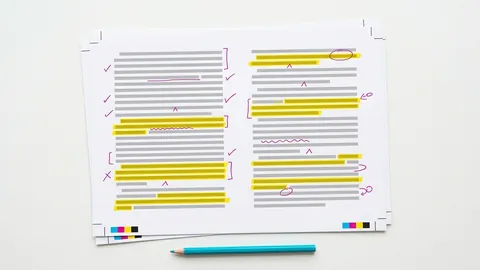
- Use one color per pass. It shows which kind of evidence you have most of. The highlighter color code can be adapted to the five passes.
- Annotate the title last as well as first. The Wisconsin handout suggests returning to the title after reading to reconsider how it relates to the poem.
- Keep the annotated copy. When you write the essay, the marked page is your evidence list. More reading guides for coursework are in the study guides section.
The same slow reading carries over to prose: close reading for patterns in a draft uses the method on essays, and turning highlights into notes shows how to keep what your annotations found.
Annotating a poem means slowing down enough to see its parts. Read it twice, once aloud, then make one pass each for sound, form, imagery and turns, and finish with a plain paraphrase and a single so-what sentence. The Blake example shows how eight lines can hold a whole argument once every rhyme, colon and verb is marked. Try the same five passes on the next poem you are assigned.
Common questions
What should I look for when annotating a poem?
Look for four things, one pass at a time: sound (rhyme, repeated sounds, rhythm), form (lines, stanzas, where sentences end), imagery (concrete pictures and groups of related words) and turns (where the thought shifts). Then paraphrase the poem and write one sentence on what it does, with each part of that sentence tied to a mark.
How many times should I read a poem before annotating?
Read it at least twice before marking: once silently straight through, and once aloud. The University of Wisconsin-Madison Writing Center advises reading a poem several times, both silently and aloud, listening to the sound and rhythm. Then make the annotation passes, reading the poem again during each one.
What is a turn or volta in a poem?
A turn is the point where a poem's thought or argument shifts direction. The Poetry Foundation glossary defines the volta as the turn in a sonnet: between the octave and sestet in a Petrarchan sonnet, and before the final couplet in a Shakespearean one. Other poems often turn at a stanza break or at a word like but.
How do you annotate poetry for an essay?
Annotate with your essay question in mind, then mark evidence for each claim you might make. Bracket the lines you would quote, write the effect beside each device rather than just its name, and finish with a paraphrase and a one-sentence claim. The marked page becomes your evidence list when you start writing.
Can I annotate a poem on a screen?
Yes. Most PDF readers and e-book apps let you highlight words and attach comments, and you can type the same marks as the first character of each comment. Many readers still find it easier to see rhymes and line breaks on paper, so print or copy out short poems when you can.
Sources
sign-off
Checked against its sources and signed before it went out.
Nora Feld
Editor · reviewed 2 Nov 2026