- job ticket
- section
- ai writing
- slug
- highlight-ai-sounding-sentences
- checked
- editor
- Nora Feld
Signs of AI Writing: How to Highlight the Sentences That Give a Draft Away
Most tells are habits, not single words. Mark them in two colors, look for the clusters, and the paragraphs that need a rewrite pick themselves.
in short
Signs of AI writing are patterns that machine-generated text shows more often than human text: stock words such as delves or pivotal, claims of significance with no detail, lists of three, trailing participle clauses and noun-heavy phrasing. Highlight each one where it appears, then judge the cluster. One sign alone proves nothing about who wrote a sentence.
Most signs of AI writing are not single words. They are habits: a sentence that announces significance without saying what happened, a list that always comes in threes, a closing line that restates a paragraph the reader has just finished. One habit proves nothing. A cluster of them in the same paragraph is worth a closer look. This guide shows how to highlight AI-sounding sentences on the page, which patterns researchers have actually measured, how to tell a real sign from ordinary formal prose, and what to do with the marks once they are on the draft.
What a sign is, and what it is not
One sign is a coincidence. A cluster is a question worth asking.
A sign is a pattern that appears more often in machine-generated text than in human text of the same kind. The last part matters. Academic prose already uses long words and tidy structure, so a sign has to be judged against what a person in the same genre would write. Wikipedia's editors keep a long field guide to signs of AI writing, built from cleanup work on the encyclopedia. It notes that one or two of its listed words in an edit may be coincidence, while an edit full of them is one of the strongest tells.
The same guide lists ineffective indicators, signs people lean on that do not work: perfect grammar, a mix of casual and formal registers, prose that feels bland or formal. Experienced human writers produce all of those. It also warns against relying on detection tools alone, since they have non-trivial error rates. Before you mark anything, decide which marks mean check this and which mean rewrite this.
Signs of AI writing at the sentence level
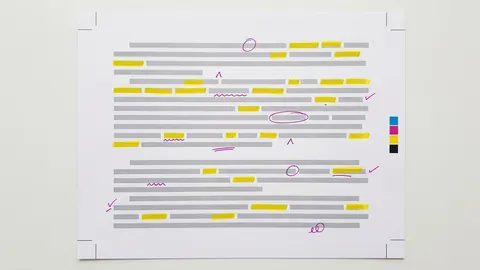
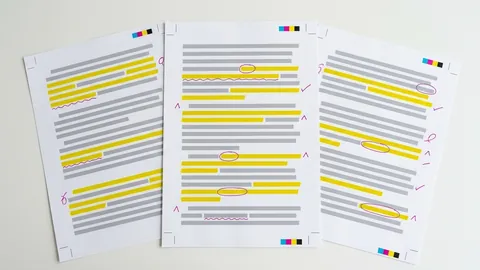
The table lists the patterns that are easiest to see and mark, with the evidence behind each. Use one highlighter color for word choice and another for sentence shape, so clusters show at a glance. If you already keep a color key, a color-coded highlighting system takes these two marks without changes.
| Sign | What it looks like | What to highlight | Where it was observed |
|---|---|---|---|
| Stock vocabulary | delves, showcase, underscore, pivotal, intricate, realm | The word itself | Excess use measured in PubMed abstracts and arXiv papers (Kobak et al.; Liang et al.) |
| Inflated significance | plays a pivotal role in the broader landscape | The phrase that claims importance without a fact | Wikipedia guide: undue emphasis on significance, legacy and broader trends |
| Rule of three | fast, flexible, and reliable | The list, when the third item adds nothing | Wikipedia guide: rule of three |
| Negative parallelism | not just a tool, but a partner | The whole construction | Wikipedia guide: negative parallelisms |
| Participle tails | ..., highlighting the need for change | The trailing clause | Reinhart et al.: 2 to 5 times the human rate in instruction-tuned models |
| Noun-heavy phrasing | the implementation of improvements | The noun made from a verb | Reinhart et al.: 1.5 to 2 times the human rate |
| Challenges-and-future ending | Despite these challenges, the town continues to thrive. | The closing sentence | Wikipedia guide: outline-like conclusions about challenges and future prospects |
| Chat residue | I hope this helps. Certainly! | The phrase; it was pasted from a chat | Wikipedia guide: collaborative communication |
The vocabulary row has the strongest numbers behind it. In their study of more than 15 million biomedical abstracts indexed by PubMed from 2010 to 2024, Kobak and colleagues measured each word's 2024 frequency against the frequency expected from earlier years. Delves came in at 28 times the expected rate, underscores at 13.8 times and showcasing at 10.7 times. From the combined excess they set a lower bound: at least 13.5% of 2024 abstracts were processed with large language models. The word-by-word list is on the page of AI words and phrases to mark.
Patterns below the word level
Word lists are easy to game: swap delves for explores and the word is gone. Grammar is harder to change. Reinhart and colleagues built paired corpora of human and model text written from the same prompts and compared them on Douglas Biber's 66 lexical, grammatical and rhetorical features. The instruction-tuned models used present participial clauses at 2 to 5 times the rate of the human text, and nominalizations at 1.5 to 2 times. GPT-4o used present participial clauses at 5.3 times the human rate, and the agentless passive at roughly half the human rate.
On the page, that looks like sentences that end in a comma and an -ing clause (..., reflecting a broader shift) and nouns built out of verbs (the enhancement of the implementation). They deserve their own color, because they explain why a draft can still read as machine-made after every stock word has been replaced. The grammar stays until someone rewrites the sentence.
How to highlight AI-sounding sentences
Read once without a pen
Read the whole draft for its argument first. Note which paragraph felt most generic; it is usually the opening or the conclusion.
Mark word choice in one color
Highlight stock vocabulary and stock phrases: delves, pivotal, a testament to, in the heart of. Mark the word, not the sentence, so the density shows.
Mark sentence shape in a second color
Highlight the lists of three, the not just ... but constructions, the trailing -ing clauses, the claims of significance and the challenges-and-future endings.
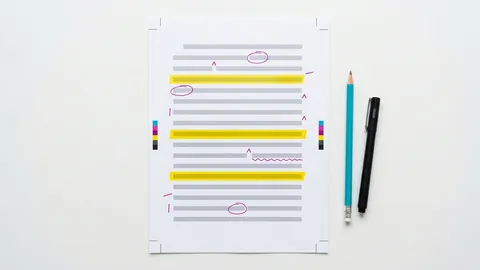
Underline claims that need a source
Machine drafts often state facts without saying where they came from. Underline each one; checking them is a separate job, covered in the guide to annotating sources to verify claims.
Find the clusters
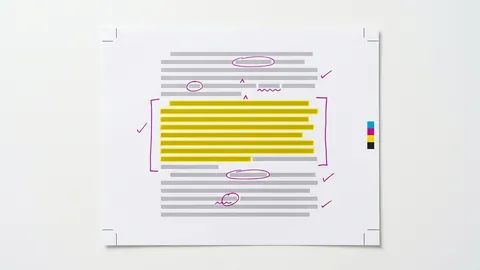
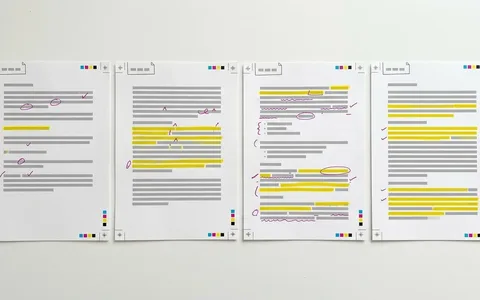
Look for paragraphs where marks of both colors pile up and nothing is underlined because there is no fact to check. Those go to the top of the rewrite list.
Write one margin note per cluster
Say in plain words what the passage should tell the reader. The note is the brief for the rewrite, which rewriting highlighted passages in your own voice walks through.
A worked example: one marked paragraph
The paragraph below was written for this page to show the method. It is an example, not anyone's real work.
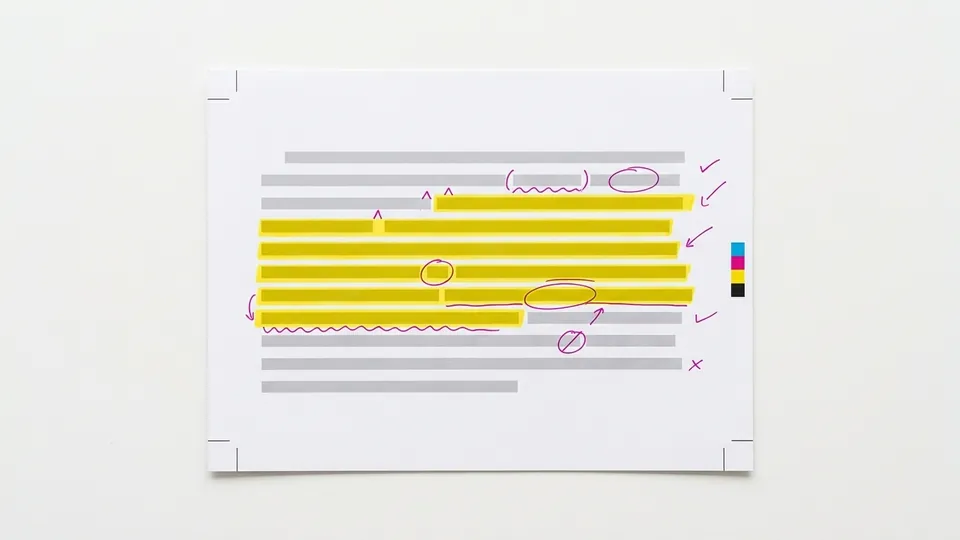
- First color (word choice): pivotal, landscape, vital, thriving, foster, transformative, flourish.
- Second color (shape): the not just ... but construction, the list connection, education, and resilience, the tail highlighting the transformative power of local action, and the challenges-and-future ending.
- Underlines: none, because there is no fact to check. No city, no number, no health result.
Every sentence carries a mark, and not one gives the reader a fact. The margin note reads: Name the garden, the number, the result. A rewrite from real notes might read, again as an example: The two gardens on Elm Street grew about 900 pounds of vegetables last summer, and the food bank took most of it. The marks disappear because the sentence now has something to say.
What experienced readers notice
Reading practice works. Russell, Karpinska and Iyyer hired annotators to label 300 non-fiction English articles as human-written or AI-generated. Among five annotators who often use language models for their own writing, the majority vote misclassified only 1 of the 300 articles, beating most of the commercial and open-source detectors the authors evaluated, even when the text had been paraphrased or humanized. Their written explanations leaned heavily on AI vocabulary, but also on formality, originality and clarity.
Two lessons follow. The experts had no special training, so the habit can be learned. And their strongest signals went beyond single words to whether the text said anything original, which is why the worked example ends with the missing facts. If you mark drafts for a class, close reading for AI writing patterns builds the habit, and fair markup for suspected AI writing covers what to do before you raise a concern with a writer.
Pitfalls when marking signs of AI writing
- Treating one word as proof. Every word in the vocabulary studies was used by people before 2022. The evidence is about frequency across many texts, not about one sentence.
- Ignoring genre. Grant proposals, abstracts and press releases were formal and formulaic long before chatbots. Compare a draft with others of its kind.
- Marking clean grammar. The Wikipedia guide lists perfect grammar as an ineffective indicator. Plenty of people write cleanly.
- Forgetting second-language writers. A writer working in a second language may rely on set phrases learned from textbooks. Mark the pattern, not the person.
Tips for a cleaner markup pass
- Mark a copy. Keep the original draft clean so the history stays readable; annotating drafts to show your process explains why that record matters.
- Move on to the fix. The rest of the AI writing guides cover editing the marked draft, proof marks and fair process.
Many of the sentences you mark share a flat or relentlessly upbeat register; reading tone in a draft gives you words for what you hear.
Signs of AI writing are tendencies, measured across large bodies of text, that become useful on a single page only when you mark them carefully. Then write the note that says what the passage should have said.
Common questions
What are the most common signs of AI writing?
The most common signs are stock words such as delves, pivotal and showcase, claims of significance with no supporting fact, lists of three, not-just-but constructions, trailing participle clauses, noun-heavy phrasing and endings about challenges and future prospects. Chat residue such as I hope this helps is the most direct sign, because it was pasted from a conversation.
Can one word prove a text was written by AI?
No. The vocabulary studies measure how often words appear across millions of texts, and every word on the lists was used by people before chatbots existed. One word is a reason to read more closely. A dense cluster of word-level and sentence-level patterns in a passage with no specific facts is a stronger signal, and still not proof.
Are people good at spotting AI writing?
Some are. In a study of 300 non-fiction articles, the majority vote of five annotators who often use language models for writing misclassified only one article. Their explanations relied on AI vocabulary but also on originality and clarity. Readers without that experience do less well, which is why marks should lead to a conversation, not a verdict.
Do AI detectors look for the same signs?
Most detectors return a score for the whole text rather than pointing to tells a reader can see, so a score rarely tells you which sentence caused it. Wikipedia's cleanup guide warns against relying on detectors alone because of their error rates. A highlighted draft shows exactly what drew attention, which makes it easier to discuss and to fix.
What should I do with the sentences I highlighted?
Write a short margin note for each cluster saying what the passage should actually tell the reader, then rewrite it from real facts and your own phrasing. Swapping one stock word for another rarely works, because the sentence shape stays. Cut sentences that only restate or praise, and keep the ones that carry information.
Sources
- Wikipedia: Signs of AI writing (WikiProject AI Cleanup field guide)
- Kobak, Gonzalez-Marquez, Horvat and Lause: Delving into LLM-assisted writing in biomedical publications through excess vocabulary (arXiv 2406.07016, published in Science Advances)
- Reinhart et al.: Do LLMs write like humans? Variation in grammatical and rhetorical styles (arXiv 2410.16107, published in PNAS 2025)
- Russell, Karpinska and Iyyer: People who frequently use ChatGPT for writing tasks are accurate and robust detectors of AI-generated text (ACL 2025)
sign-off
Checked against its sources and signed before it went out.
Nora Feld
Editor · reviewed 1 Nov 2026