How to Paraphrase Without Plagiarizing: Five Steps, a Bad and a Good Example, and Where AI Tools Fit
A paraphrase is the source's idea in your words and your sentence structure, with the source still named. Miss any one of those three and it is not a paraphrase.
in short
To paraphrase, read the passage until you understand it, set it aside, write the idea from memory in your own words and structure, compare your version with the original for accuracy and borrowed phrases, then cite the source. A paraphrase without a citation is plagiarism, even if every word is new.
Learning how to paraphrase is learning to separate an idea from the words it arrived in. A good paraphrase keeps the source's meaning, changes both the wording and the sentence structure, and still names the source. Most paraphrasing problems come from skipping one of those: swapping a few synonyms into the original sentence, or rewriting well and forgetting the citation. This guide gives a five-step method based on the Purdue OWL, a bad and a good paraphrase of the same example sentence, what APA and MLA say about citing paraphrases, and where AI paraphrasing tools fit.
What a paraphrase is, and what it is not
New words, new structure, same idea, source named.
The Purdue OWL's page Paraphrase: Write It in Your Own Words defines a paraphrase as your own rendition of essential information and ideas expressed by someone else, presented in a new form. It calls paraphrasing one legitimate way to borrow from a source when it is accompanied by accurate documentation, and it distinguishes a paraphrase from a summary: a paraphrase is a more detailed restatement, while a summary focuses on a single main idea.
The APA Style page on paraphrases adds the reason it matters: published authors paraphrase their sources most of the time rather than quoting them, and APA says student authors should do the same, paraphrasing more than quoting. A paraphrase shows you understood the source. A string of quotations shows only that you found it.
| Quotation | Paraphrase | Summary | |
|---|---|---|---|
| Wording | The source's exact words | Your words | Your words |
| Length | As long as the passage quoted | About as long as the passage | Much shorter than the passage |
| Detail | Everything in the passage | All the essential points | The main idea only |
| Quotation marks | Yes | Only around any unique phrase you keep | Only around any unique phrase you keep |
| Needs a citation | Yes | Yes | Yes |
How to paraphrase in five steps
The Purdue OWL lists six steps for effective paraphrasing. The five below compress them into the order most writers actually work in; the OWL's note-card advice is folded into the last step.
Read until you understand
Reread the passage until you could explain it to someone else without looking. Highlight the one or two ideas you need. If you cannot explain it, you cannot paraphrase it yet.
Set the original aside
Close the tab or turn the page over. This is the step that prevents copying: you cannot borrow a sentence structure you cannot see.
Write the idea from memory
Write it the way you would say it, in your own sentence order. Start from a different point than the source does, for example with the result instead of the cause.
Compare with the original
Put the two side by side. Check that every essential point survived and nothing was added. Mark any run of words you kept from the source; the Purdue OWL says to put quotation marks around any unique term or phrase you borrowed exactly.
Cite it and record where it came from
Add the in-text citation now, not later, and note the page or paragraph. The Purdue OWL's last step is to record the source, including the page, so you can credit it easily.
A worked example: a bad and a good paraphrase
Suppose this sentence comes from a 2024 article by a writer named Dana Ruiz. The sentence and the author are invented for this example.
A bad paraphrase
Every clause is still in the original order, and each word has simply been swapped for a near synonym: because for since, wait for hold off, rarely for seldom. The structure is the author's, and there is no citation. The Purdue OWL's own plagiarized example fails the same way, and the OWL notes that it is classed as plagiarism in part because it gives no citation. Even with a citation added, it would still be the author's sentence with new paint.
A good paraphrase
The idea is the same: late starts leave no time to revise, and the writing is weaker. The sentence now begins with the drafts rather than the students, uses its own vocabulary, and is shorter. It names the source. In MLA style the citation would be the author's name and the page number, for example (Ruiz 14), since the Purdue OWL's MLA examples put the page in parentheses after the name.
Paraphrase vs plagiarism: why a citation is still required
New words do not make an idea yours. The MLA Style Center's page on plagiarism and academic dishonesty, adapted from the ninth edition of the MLA Handbook, defines plagiarism as presenting another person's ideas, words or entire work as your own, and states that paraphrasing someone's ideas or arguments without giving proper credit is plagiarism.
APA's rule is the same in practice. Its paraphrasing page says to cite the original work whenever you paraphrase, in either narrative form, Ruiz (2024) found that, or parenthetical form at the end of the sentence. A page or paragraph number is not required, but APA says you may include one when it would help a reader find the passage in a long or complex work. For a paraphrase that runs over several sentences, cite on first mention; if it continues into a new paragraph or switches between sources, cite again.
The citation is also what makes your paraphrase checkable. A reader who doubts your version can open the source and compare. For the formats in each style, see how to cite a quote in APA, MLA and Chicago, which uses the same in-text patterns.
Where AI paraphrasing tools fit
AI paraphrasing tools rewrite a passage on request. They can be useful for seeing a sentence from another angle, but they do not remove the need for any of the steps above. Three problems come with them. First, the tool cannot know which part of the meaning matters to your argument, so it can drop or shift the point you needed; you still have to compare its output against the source. Second, the result still carries the source's idea, so it still needs the citation. Third, using the tool may itself be something your course limits.
APA's 2025 guidance on citing generative AI says that submitting AI-generated work as if you did it yourself would be considered unethical, for example academic misconduct for students, and that what AI use is allowed and how it should be disclosed depends on instructor, departmental and publisher policies. If you use AI to edit or refine your own writing, APA recommends disclosing it and citing the tool. If you use AI only to help you understand a source, the citation goes to the original source as usual.
Before you run any source text through a tool, check your syllabus. Where the line falls between allowed help and misconduct is covered in where schools draw the line on AI and plagiarism, and how to say what you used is in the guide to disclosing AI help.
Pitfalls when paraphrasing
- Synonym swapping. Changing words while keeping the source's sentence structure is the most common failure. Close the source before you write.
- Dropping the citation. A paraphrase without a source is plagiarism under the MLA definition, however different the words.
- Changing the meaning. Making a cautious claim sound certain, or leaving out a condition, misrepresents the author. Compare line by line.
- Keeping a distinctive phrase unmarked. If the author coined a term, keep it in quotation marks, as the Purdue OWL advises.
- Paraphrasing a paraphrase. APA advises reading and citing the primary source where possible, and using a secondary source citation only when you cannot.
Tips for better paraphrases
- Change the starting point. Lead with the effect, the person or the number instead of the source's opening word.
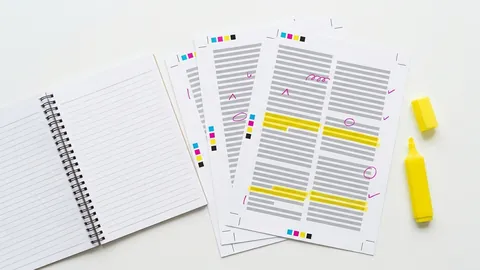
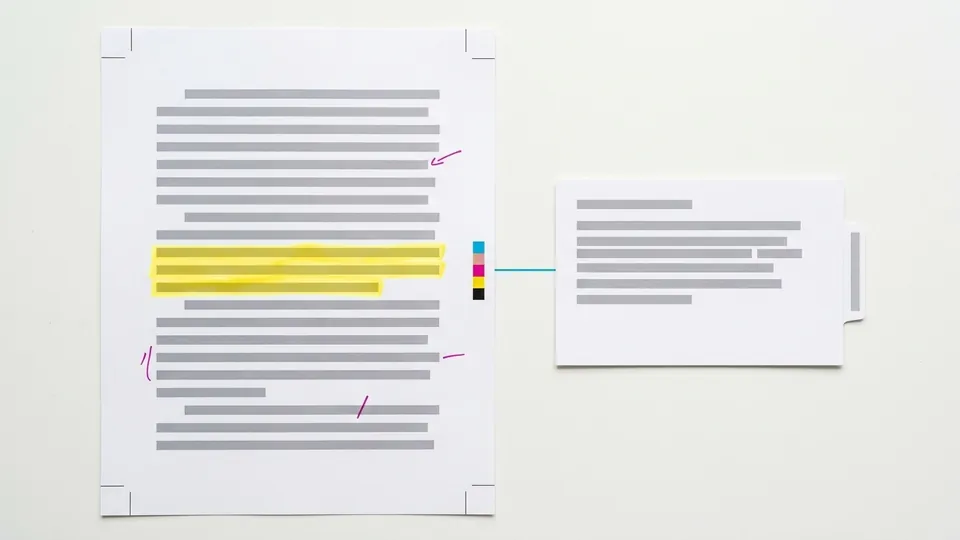
- Keep the highlighted original with your note. A dated highlight of the source passage beside your paraphrase shows what you read and how you rewrote it; the guides to keeping a reading record cover how to file it.
- Quote when the wording is the point. If the exact words matter, a short quotation is more honest than a strained paraphrase.
When the exact words matter, quote instead: how to cite a quote so a reader can check it. Paraphrased summaries are also the core of an annotated bibliography built from your highlights.
Paraphrasing is a five-step habit: read until you understand, set the source aside, write the idea from memory, compare the two, and cite. The steps take a few minutes per passage, and they produce a sentence that is yours in form and honest about whose idea it carries. When a tool offers to do the rewriting, the comparing and the citing are still your job.
Common questions
How do you paraphrase without plagiarizing?
Understand the passage, set it aside, write the idea from memory in your own words and sentence structure, compare your version with the original, and cite the source. The citation is the part that prevents plagiarism: the MLA Style Center states that paraphrasing someone's ideas without proper credit is plagiarism, however much the wording changes.
Do you have to cite a paraphrase?
Yes. APA says to cite the original work whenever you paraphrase, in narrative or parenthetical form, and MLA treats an uncredited paraphrase as plagiarism. A page number is optional in APA but helpful for long works. In MLA, the usual in-text form is the author's name and the page number in parentheses.
What is the difference between a paraphrase and a summary?
A paraphrase restates a passage in your own words with all its essential points, so it is about as long as the original. A summary is much shorter and gives only the main idea. The Purdue OWL describes a paraphrase as a more detailed restatement than a summary. Both need a citation.
Is changing a few words a paraphrase?
No. Swapping synonyms into the original sentence keeps the author's structure, and many instructors treat it as plagiarism even with a citation. A real paraphrase changes the structure as well as the words. The reliable way to get there is to write from memory with the source out of sight.
Can I use an AI tool to paraphrase a source?
Only if your course allows it, and the result still needs a citation to the original source. APA's 2025 guidance says that passing off AI-generated work as your own is academic misconduct for students and that permitted uses depend on instructor policy. Check the tool's output against the source, since it can change the meaning.
How long should a paraphrase be?
About as long as the passage it restates, sometimes a little shorter. If yours is much shorter, it has probably become a summary; if it is much longer, you may have added your own interpretation, which should be kept separate from the source's idea and marked as yours.
Sources
sign-off
Checked against its sources and signed before it went out.
Nora Feld
Editor · reviewed 2 Nov 2026