Active Recall: How Retrieval Practice Works and How to Use It
Rereading feels like learning. Answering a question from memory is learning. Here is what the studies found, and how to build recall into the way you already read.
in short
Active recall means testing yourself on material instead of rereading it: answering questions, writing what you remember with the book closed, or using flashcards. Studies by Roediger and Karpicke and others found that retrieval improves long-term retention more than restudying, and a 2013 review rated practice testing as a high utility technique.
Active recall is studying by retrieving: closing the book and pulling the material out of memory, instead of reading it again. Researchers call the same thing retrieval practice or practice testing, and the effect it produces the testing effect. It is one of the best supported study methods in cognitive psychology, and also one of the least comfortable, because it shows you what you do not know. Below: what the key studies found, stated as their authors state it, four ways to practice, and how to turn the passages you highlight into questions you can answer later.
What active recall is
Retrieval is not only a check on learning. It is part of learning.
Every time you bring a fact or idea back from memory without looking, you practice retrieval. A flashcard you answer before flipping, a quiz question, a blank page on which you write everything you remember from a chapter: all of these are active recall. Rereading, reviewing highlights and copying notes are not, because the answer is in front of you the whole time.
The distinction matters because the two feel different from how they work. Rereading is fluent: the words look familiar, so it seems as if you know them. Retrieval is effortful, and errors are visible. The research below suggests that the feeling is a poor guide.
What the research on active recall found
Roediger and Karpicke, 2006
The most cited starting point is Henry Roediger and Jeffrey Karpicke's 2006 paper in Psychological Science, “Test-enhanced learning: taking memory tests improves long-term retention”. Its abstract describes two experiments in which students studied prose passages and then either took one or three immediate free-recall tests, without feedback, or restudied the material the same number of times. They took a final retention test 5 minutes, 2 days or 1 week later.
The result had two sides. When the final test came after 5 minutes, repeated studying improved recall relative to repeated testing. On the delayed tests, prior testing produced substantially greater retention than studying, even though repeated studying increased students' confidence in their ability to remember the material. The authors conclude that testing is a powerful means of improving learning, not just assessing it.
Two lessons follow for anyone studying for a test that is days away. Rereading wins only in the short run. And confidence after rereading is not evidence of what you will remember next week.
Karpicke and Blunt, 2011
A common objection is that recall only helps with memorizing facts. Karpicke and Janell Blunt's 2011 paper in Science, “Retrieval practice produces more learning than elaborative studying with concept mapping”, tested it against concept mapping, a technique built for understanding. Its abstract reports that practicing retrieval produced greater gains in meaningful learning than elaborative studying with concept mapping, with texts like those found in science education, on test questions that assessed comprehension and required inferences, and even when the final test involved creating concept maps.
Dunlosky and colleagues, 2013
John Dunlosky, Katherine Rawson, Elizabeth Marsh, Mitchell Nathan and Daniel Willingham reviewed 10 learning techniques in a 2013 monograph in Psychological Science in the Public Interest, “Improving Students' Learning With Effective Learning Techniques”. They judged each by whether its benefits generalize across learning conditions, student characteristics, materials and criterion tasks.
| Utility assessment | Techniques (as the abstract lists them) |
|---|---|
| High | Practice testing; distributed practice |
| Moderate | Elaborative interrogation; self-explanation; interleaved practice |
| Low | Summarization; highlighting; a mnemonic technique for vocabulary; imagery use for text learning; rereading |
The abstract says practice testing and distributed practice received high utility assessments because they benefit learners of different ages and abilities and have been shown to boost performance across many criterion tasks and even in educational contexts. Of rereading and highlighting it says most students report using them, yet they do not consistently boost performance, so other techniques should be used in their place, giving the example of practice testing instead of rereading. The low rating for highlighting is discussed in whether highlighting helps you learn.
Four active recall methods
Any method works if it makes you produce the answer before you see it. These four cover most courses.
| Method | How it works | Best for |
|---|---|---|
| Flashcards | A question or cue on one side, the answer on the other. Answer aloud or in writing before you turn the card. | Terms, dates, formulas, vocabulary |
| Closed-book summary | Close the book and write everything you remember from a section. Then open it and mark what you missed. | Chapters, lectures, arguments |
| Cue column questions | In Cornell notes, cover the notes and answer the questions in the left-hand cue column. | Lecture and reading notes |
| Practice questions | Answer end-of-chapter questions, past papers or questions you wrote, without notes, then check. | Exams with problems or essays |
The cue column is the one most people already have and never use. If you take notes in the Cornell note-taking format, the left-hand column is a ready set of recall prompts: cover the right side, answer each cue, then uncover and check.
Whichever method you use, check your answers against the source. The Roediger and Karpicke experiments gave no feedback, but in your own study, checking is how you catch and fix the errors that retrieval reveals.
How to turn highlights into questions
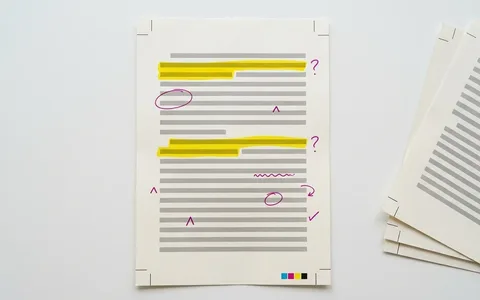
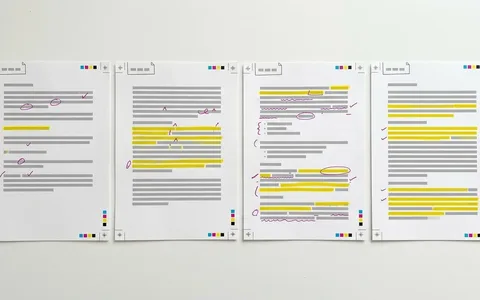
Highlighting on its own rates low in the Dunlosky review, but it is a fine first step if you treat each highlight as a question waiting to be written. The steps below convert one reading session into recall practice.
Highlight less
Mark only the lines you would expect to be tested on: definitions, claims, causes, results. If a whole paragraph is marked, choose the one line that matters.
Write a question in the margin
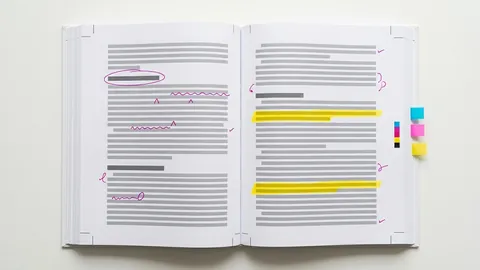
For each highlight, write a question whose answer is the highlighted line. Write it in your own words, not the book's.
Cover the page and answer
Later that day, cover the text, read only the margin questions, and answer each one aloud or on paper.
Check and mark
Uncover the text. Tick the questions you answered well and circle the ones you missed.
Move the misses forward
Copy the circled questions onto flashcards or a list for your next session. Retire a question once you answer it correctly on two separate days.
A worked example
Suppose you highlighted this sentence in a biology chapter. The sentence and questions are written for this page as examples.
The weak question can be answered with half the idea. The better one requires the mechanism. The second question in the best pair asks you to apply it, closer to the inference questions in Karpicke and Blunt's study. For more ways to question a text as you read, see active reading strategies that keep you asking questions.
Pitfalls with active recall
- Peeking. Turning the card before you commit to an answer turns recall back into rereading. Say or write the answer first.
- Recognizing instead of recalling. Choosing from options is easier than producing an answer. Use open questions where you can.
- Copying the book's wording. A question phrased exactly like the text can be answered by sound alone. Rephrase it.
- Stopping after one correct answer. One success right after studying says little about next week. Come back on a later day.
- Judging by how it feels. Recall feels harder than rereading. In Roediger and Karpicke's study, the students who restudied were more confident and remembered less after a delay.
Tips for using active recall
- Start recall early. Test yourself the same day you read, not only the night before the exam.
- Space the sessions. Distributed practice is the other technique the Dunlosky review rated high utility. Short recall sessions over several days combine the two.
- Mix question types. Some definitions, some explanations, some applications.
- Explain it to someone. Teaching from memory is retrieval too. The Feynman technique builds a study method around it.
- Keep a miss list. The questions you get wrong are your study plan for the next session.
Active recall asks you to do the hard part on purpose: close the book and produce the answer. The studies are consistent that it pays off when the test is days away, even though rereading feels more reassuring. Turn your highlights into questions, answer them from memory, check, and come back to the misses. More methods for reading and remembering are in the study guides on reading, notes and recall.
Common questions
What is active recall?
Active recall is a study method in which you retrieve information from memory instead of looking at it again, by answering questions, using flashcards or writing what you remember with the book closed. Researchers usually call it retrieval practice or practice testing. The benefit it produces for later memory is known as the testing effect.
Is active recall better than rereading?
For remembering material after a delay, the research says yes. In Roediger and Karpicke's 2006 experiments, restudying gave better recall on a test 5 minutes later, but prior testing produced substantially greater retention on tests 2 days and 1 week later. The 2013 Dunlosky review suggests practice testing instead of rereading.
Is active recall the same as retrieval practice?
Yes, for practical purposes. Active recall is the term students tend to use; retrieval practice is the term in much of the research; the Dunlosky review calls it practice testing. All three mean producing an answer from memory, which can be checked afterwards, as opposed to reviewing material that is already in front of you.
Does active recall work for understanding, or only memorizing?
It is not limited to memorizing facts. Karpicke and Blunt's 2011 study in Science found that retrieval practice produced greater gains in meaningful learning than concept mapping, including on test questions that assessed comprehension and required inferences. Write questions that ask how and why, not only what.
How do I use active recall with highlighting?
Treat each highlight as an answer and write the question for it in the margin. Later, cover the text, answer the questions from memory, check, and carry the ones you missed into your next session. This keeps highlighting, which the Dunlosky review rated low on its own, as the first step rather than the whole method.
How often should I practice active recall?
Test yourself soon after you first study, then again on later days, rather than in one long session. Distributed practice, spreading study over time, was rated high utility alongside practice testing in the Dunlosky review. Retire a question once you have answered it correctly on separate days, and keep the misses.
Sources
- Roediger, H. L., and Karpicke, J. D. (2006). Test-enhanced learning: taking memory tests improves long-term retention. Psychological Science, 17(3), 249 to 255 (PubMed abstract)
- Karpicke, J. D., and Blunt, J. R. (2011). Retrieval practice produces more learning than elaborative studying with concept mapping. Science, 331(6018), 772 to 775 (PubMed abstract)
- Dunlosky, J., Rawson, K. A., Marsh, E. J., Nathan, M. J., and Willingham, D. T. (2013). Improving Students' Learning With Effective Learning Techniques. Psychological Science in the Public Interest, 14(1), 4 to 58 (PubMed abstract)
sign-off
Checked against its sources and signed before it went out.
Nora Feld
Editor · reviewed 2 Nov 2026