How to Write an Essay Outline: Templates, Types and a Worked Example
An outline is the essay with the sentences taken out. Build it from your thesis and your highlights, then check the finished draft against it.
in short
An essay outline lists your thesis, the main point of each body section and the evidence for each point, arranged in the order you will write them. The most common format uses Roman numerals for main sections, capital letters for points, Arabic numerals for evidence and lowercase letters for detail.
An essay outline is a plan that shows what each part of the essay will say and in what order, before you write the sentences. Below: the three outline formats the Purdue OWL describes, a template you can copy, an invented argumentative essay outlined from start to finish, how to build the outline from what you highlighted while reading, and how to reverse outline a draft to see whether it kept the plan.
What an essay outline does
If the outline does not hold together, the essay will not either.
The Purdue OWL page on why and how to outline lists what an outline is for: it aids the writing process, helps you organize your ideas, presents your material in a logical form, shows the relationships among ideas, constructs an ordered overview and defines boundaries and groups. It shows the whole argument on one page while it is cheap to change.
Before you outline, the same page says to settle three things: the purpose of the paper, the audience and the thesis. Then it gives four steps: brainstorm the ideas you want to include, organize them by grouping related ideas, order the material from general to specific or from abstract to concrete, and label it with main and sub headings. If you do not yet have a thesis, start with writing a thesis statement you can argue; every line of the outline will be measured against it.
Three types of essay outline
The Purdue OWL page on types of outlines describes three formats. They hold the same content; what changes is the labeling and how much you write at each level.
| Type | How it is labeled | What goes at each level | Best for |
|---|---|---|---|
| Alphanumeric | I, II, III; then A, B, C; then 1, 2, 3; then a, b, c | Short phrases | Most school essays; quick planning |
| Full sentence | The same labels as alphanumeric | A complete sentence at every level | Traditional essays, where each line can become a topic sentence |
| Decimal | 1.0, 1.1, 1.1.1 and so on | Phrases or sentences | Long or technical papers, where you need to see how each part relates to the whole |
For the alphanumeric outline, Purdue gives the order exactly: Roman numerals, capitalized letters, Arabic numerals, lowercase letters. If you need to go deeper, it says to use Arabic numerals inside parentheses and then lowercase letters inside parentheses. Purdue calls this the most common type. A full sentence outline uses the same labels with a complete sentence at every level; a decimal outline, Purdue says, adds a notation that clearly shows how every level relates to the larger whole.
An essay outline template
This template follows the alphanumeric format for a five-section essay. Replace each line and add or remove body sections to fit the assignment.
| Label | Part | What to write |
|---|---|---|
| I. | Introduction | The section that opens the essay |
| A. | Hook | One line that gives the reader a reason to keep going |
| B. | Context | What the reader needs to know to follow the argument |
| C. | Thesis | Your claim, in one full sentence |
| II. | Body section 1 | Your first main point, stated as a claim |
| A. | Evidence | A quotation, figure or example, with its source |
| B. | Analysis | How the evidence supports the point |
| III. | Body section 2 | Your second main point, with evidence and analysis |
| IV. | Body section 3 or counterargument | A third point, or the strongest objection and your reply |
| V. | Conclusion | What the reader should take away, and why it matters |
Each Roman numeral in the body usually becomes one or more paragraphs, and its first line becomes the topic sentence. For how a body paragraph turns that point and its evidence into prose, see how to write a paragraph with a clear structure, and for the first line itself, what makes a good topic sentence.
A worked example: an argumentative essay outline
The thesis and points below were written for this page as an example; the figures in the evidence lines are placeholders that a real essay would fill from real sources. The assignment: argue for or against a later start time for high schools.
Three things make this outline argumentative. The thesis takes a side and names its reasons. Each body section is one of those reasons, in the same order. And section IV answers an objection, which most argumentative assignments expect. If you can read only the Roman-numeral lines and still follow the argument, the structure is sound.
How to build an essay outline from your highlights
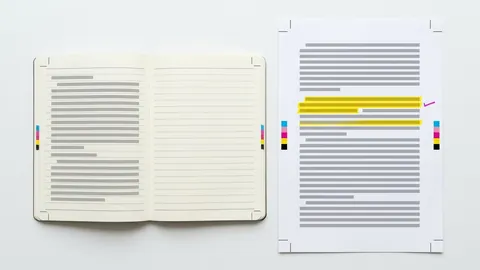
If you highlighted your sources as you read, most of the outline already exists. The steps below follow Purdue's brainstorm, organize, order and label sequence, with highlights as the raw list.
Write the thesis at the top
One sentence. Every highlight you keep must support it or answer an objection.
Pull every highlight into one list
Copy each marked passage with its source and page. If your highlights sit in several places, turning highlights into notes covers how to gather them.
Group related highlights
Sort the list into piles that make the same point. Three to five piles is typical for a short essay. Give each pile a one-line label in your own words.
Turn each label into a claim
A label says what the pile is about; a claim says what it shows. These become your Roman numerals.
Order the claims
Put them in the order a reader needs: general to specific, or the strongest point last, or the order your thesis names them.
Place the evidence
Under each claim, list the two or three strongest highlights as capital letters. Leave the rest out.
Mark the gaps
A claim with no highlight under it needs more reading before you draft.
If you marked evidence and counterarguments in different colors, the piles almost sort themselves. A simple highlighter color system sets one up.
How to reverse outline a draft
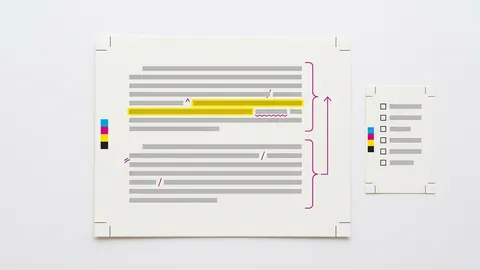
A reverse outline is made after the draft, from the draft. The Grand Valley State University writing center page on reverse outlines puts the difference this way: an outline is a planning and prediction tool used before drafting, while a reverse outline is a reflection tool, a kind of reality check for your draft. It represents what is really on the page, not just what you intended to be there.
To make one, read the draft a paragraph at a time and write a one-line summary of each paragraph's main point in the margin or a separate list. GVSU says you can use any code you like: numbers, symbols, brief phrases or questions. Then compare the list with your original outline. GVSU suggests five things to check:
- Thesis. Does every paragraph connect to the argument?
- Order. Does the paper have a beginning, middle and end, with like ideas grouped together?
- Persuasion. Is there enough support, and have you considered a counterargument?
- Clarity. Are there too many ideas in one paragraph, or paragraphs that repeat each other?
- Balance. Are any paragraphs too long or too short for the weight of their idea?
A paragraph whose one-line summary needs the word and twice is usually two paragraphs. After the structure passes, an editing checklist for the sentence-level pass takes over.
Pitfalls when outlining an essay
- Outlining topics instead of claims. Attendance is a topic; a later start would improve attendance is a claim. Only claims can be argued.
- Points that do not match the thesis. If the thesis names three reasons and the outline has four sections, one of them belongs elsewhere or the thesis needs a fourth reason.
- Treating the outline as fixed. Drafting often shows a better order. Change the outline, then keep writing.
Tips for a faster, sharper outline
- Write the conclusion line early. If you know what the reader should take away, the body has a direction.
- Use full sentences for the Roman numerals. Even in a phrase outline, a full sentence at the top level gives you ready topic sentences.
A good essay outline starts with a thesis, turns each reason into a claim, and places the strongest evidence under each one, in the order a reader needs. Pick the format that suits the length of the paper, build it from your highlights, and once the draft exists, reverse outline it to check that the plan survived. More planning and reading guides are in the study guides for reading, notes and essays.
Common questions
What are the parts of an essay outline?
A standard essay outline has an introduction with a hook, context and thesis; two or more body sections, each with a main point, evidence and analysis; and a conclusion. Argumentative essays usually add a section that states the strongest objection and answers it. The parts are the same in every format; only the labeling changes.
What is the most common outline format?
The Purdue OWL calls the alphanumeric outline the most common type. It labels main sections with Roman numerals, then capital letters, Arabic numerals and lowercase letters. Deeper levels use Arabic numerals and then lowercase letters in parentheses. A full sentence outline uses the same labels with complete sentences at every level.
How long should an essay outline be?
Long enough to show every main point and its evidence, and no longer. For a short school essay that is often half a page to a page. If the outline is nearly as long as the essay should be, you are drafting rather than outlining; cut each line back to the point it makes and the source it uses.
What is a reverse outline?
A reverse outline is an outline made from a finished draft, one line per paragraph, summarizing what each paragraph actually says. The Grand Valley State University writing center describes it as a reflection tool and a reality check, used to find gaps, repetition and paragraphs that drift from the thesis. Compare it with your original plan.
Do I need an outline for every essay?
Not always, but a short one helps almost every time. The Purdue OWL says that whether you follow its guidelines is up to you, and that even jotting down a few main ideas will benefit your writing. For timed essays, a five-line list of thesis, points and conclusion is often enough.
Sources
sign-off
Checked against its sources and signed before it went out.
Nora Feld
Editor · reviewed 2 Nov 2026