Active Reading Strategies That Actually Work, and What the Research Says About Each
Active reading means making your brain do something while your eyes move: predict, ask, answer, recall. Some of the most popular habits, highlighting included, do less of that than they seem to.
in short
Active reading strategies make you work with a text: preview its structure, turn headings into questions, read to answer them, annotate sparingly, and recall the main points from memory after each section. SQ3R packages these steps. A major research review rated highlighting and rereading low in usefulness and practice testing high.
Active reading strategies are the things you do while reading that force you to think about the text, rather than letting the words pass by. The University of North Carolina's Learning Center describes two passive habits most students fall into: reading every word and copying pages of notes, or skimming and flipping pages. Neither involves active, critical thought. This page covers the strategies learning centers recommend in their place, including SQ3R, previewing, questioning, annotating and recall, and is exact about what research says each one does, highlighting alone included.
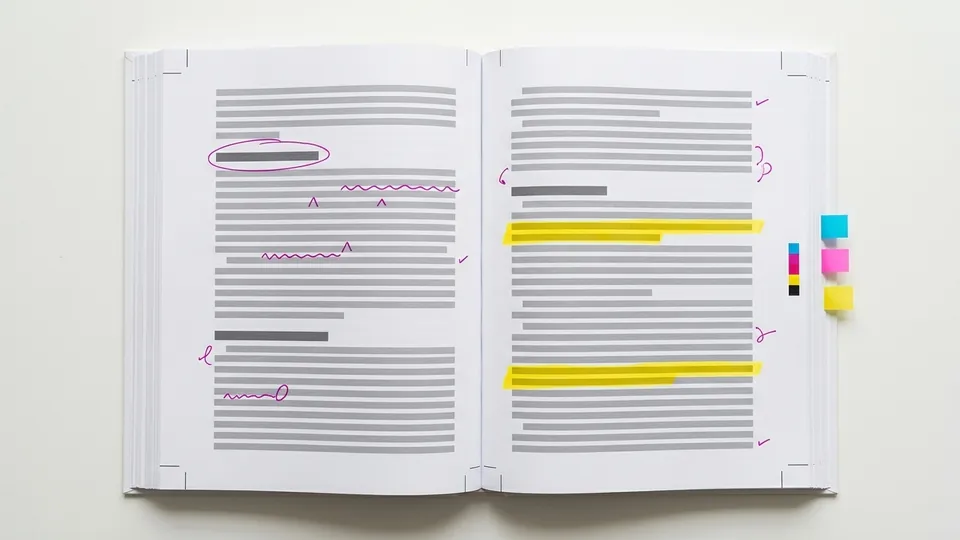
What active reading is
If you could not answer a question about the page you just read, you were not reading actively.
The UNC Learning Center's handout on reading textbooks defines active reading strategies as ones in which you make your brain actually do something effective while reading. The first passive habit turns the reader into a copying machine; the second is quick but involves no engagement with the text. The handout says neither leads to a high level of comprehension or retention.
The practical test is simple. Close the book after a section and try to say what it argued. If you cannot, the time was spent looking, not reading. Every strategy below is a way of making that test pass.
Active reading strategies, before, during and after
The UNC handout groups its strategies by when you use them. The table below follows that grouping and adds the advice from the University of Oregon's Tutoring and Academic Engagement Center.
| When | Strategy | What you actually do |
|---|---|---|
| Before | Preview | Look at titles, headings, bold words, graphs, introductions, end-of-chapter summaries and review questions before reading |
| Before | Set a purpose | Decide what you need to understand or be able to do after reading |
| Before | Predict | Right after previewing, guess what the section will say |
| During | Question | Turn each major heading into a question, then read for the answer |
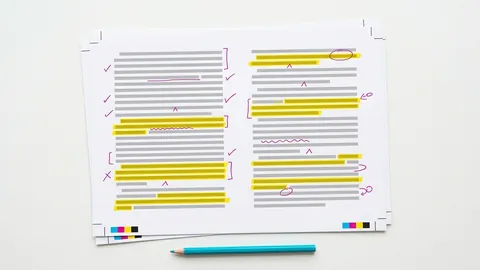
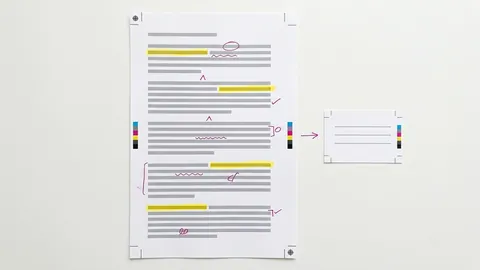
| During | Annotate sparingly | Note questions, connections and ideas; do not mark every word |
| During | Stop and summarize | After each section, write a brief summary from memory in your own words |
| After | Recall before rereading | Outline or map the chapter from memory, then fill gaps from the text |
| After | Self-test | Use flashcards or your own test questions and answer before checking |
Reading comprehension strategies: the six named ones, mapped to this page
Teachers often teach reading comprehension strategies by name: predicting, questioning, visualizing, monitoring comprehension, summarizing and making connections. They are not a separate method from the active reading strategies above; most are the same moves with a classroom label. The table maps each name to what you do and where it appears in the handouts this page draws on.
| Named strategy | What the reader does | Where it shows up here |
|---|---|---|
| Predicting | Guesses what a section will say, then reads to check | UNC's "make predictions" step, right after previewing |
| Questioning | Turns headings into questions and reads for the answers | UNC's question step and the Question step of SQ3R |
| Visualizing | Pictures a process, scene or diagram while reading | Not named in these handouts; see the note below |
| Monitoring comprehension | Notices when understanding breaks down and fixes it | Oregon's "check your comprehension afterwards"; the covered-page test |
| Summarizing | States the main points in a few words of their own | UNC's "stop and summarize" after each section |
| Making connections | Links the text to what they know, other texts or the world | UNC's "activate prior knowledge"; Oregon's notes on connections |
Two of the names need a word of care. Monitoring comprehension is the habit behind the practical test at the top of this page: close the book after a section and try to say what it argued. If you cannot, reread only the part that failed. Visualizing does not appear in the UNC or Oregon handouts, and the closest techniques in the Dunlosky review, the imagery-based ones, were rated low utility. It can still help with a process or a setting, but pair it with a question you answer from memory.
Two strategies sit underneath the rest. Finding the main idea is the start of every summary; how to find the main idea of a paragraph walks through stated and implied main ideas. And summarizing, which the review rated low utility on its own, does more when it is a written check of what you understood; writing a short, fair summary from your highlights shows that step.
For a lesson, teach the strategies in the order a reader uses them: predict before reading, question and visualize during, monitor and summarize at each stop, connect at the end. The University of Oregon's General Reading Strategies handout adds one more that fits any list: teach or explain the concept to someone else.
SQ3R: the five-step method
SQ3R bundles several of those strategies into one routine. Stanford's Center for Teaching and Learning describes it as an approach that turns reading assignments into notes that promote deeper learning, in five steps: survey, question, read, recite and review.
Survey
Pre-read the chapter: the title, subtitles, boldface and italics, graphs and diagrams, the summary or conclusion and the end-of-chapter questions, so you have the big picture before the details.
Question
Before you read, turn titles and subtitles into questions and write them down. Stanford's handout puts it simply: inquiry makes you an active reader.
Read
Read the chapter thoroughly and fill in the answers to your questions as you go. Read for meaning, not only for the answers, and note anything that seems important.
Recite
Say your questions, answers and notes out loud, and put key ideas and new terms into your own words. Look up any answer that still seems unclear.
Review
Reread your notes as often as you can; frequent review is what helps you retain the material. Once the routine is familiar, adapt it to your own purposes.
The step closest to the research on self-testing is Recite, especially if you answer your questions before looking back at the text; that link to practice testing is this page's reading of the method, not a claim Stanford's handout makes. The research section below explains why it matters.
What the research says about each strategy
The best-known review of study techniques is Dunlosky, Rawson, Marsh, Nathan and Willingham (2013) in Psychological Science in the Public Interest. The authors examined 10 learning techniques and rated each as high, moderate or low utility, judging whether its benefits generalize across learning conditions, student characteristics, materials and criterion tasks such as memory, problem solving and comprehension.
| Technique | Rating in Dunlosky et al. (2013) | How it shows up in active reading |
|---|---|---|
| Practice testing | High utility | The Recite and Review steps of SQ3R, self-made test questions, flashcards |
| Distributed practice | High utility | Reading in short sessions spread across the week instead of one long block |
| Self-explanation | Moderate utility | Explaining to yourself how a new point fits what you already know |
| Elaborative interrogation | Moderate utility | Asking why a stated fact is true as you read |
| Summarization | Low utility | Writing summaries of sections |
| Highlighting or underlining | Low utility | Marking passages while reading |
| Rereading | Low utility | Reading the chapter again |
Two details in the abstract matter for readers. First, the authors write that most students report rereading and highlighting, yet these techniques do not consistently boost students' performance, so other techniques should be used in their place. Second, summarization's low rating is not a verdict that summaries are useless: the authors say summarization has been shown to help some students on some criterion tasks, but the conditions under which it helps are limited. Self-explanation and elaborative interrogation were rated moderate partly because, the authors note, they had not been adequately evaluated in educational contexts.
The link between SQ3R's Recite step and practice testing is this page's interpretation, not a finding of the review: Recite asks you to answer questions from memory, which is a form of self-testing. The review does not evaluate SQ3R as a package.
Where highlighting fits
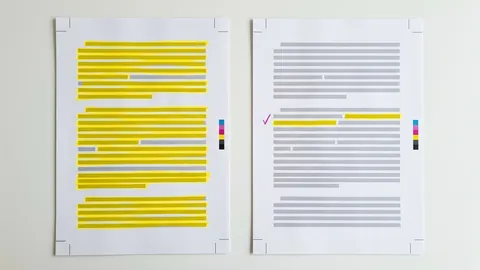
Highlighting is the habit most people mean when they say they read actively, and it is the one the evidence supports least on its own. Dunlosky and colleagues rated it low utility. Learning centers do not tell you to stop; they tell you to do it later and less. The University of Oregon's General Reading Strategies handout says to use the highlighter sparingly, resist the urge to mark every line, and try to finish the whole page or section before taking notes. The UNC handout gives the same order: finish a section before taking notes, and keep notes brief and in your own words.
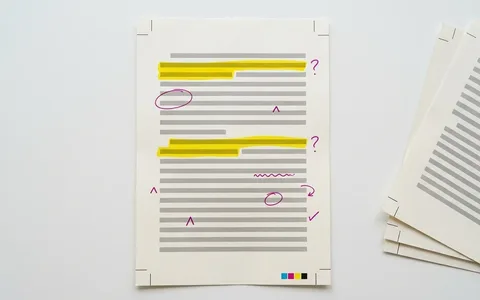
Read that way, a highlight is not the learning; it is a pointer to what you will test yourself on. Mark the claim, then write a question beside it, then answer the question with the page covered. The longer argument, with the studies behind it, is in what the research says about whether highlighting helps you learn.
A worked example: one textbook section, read actively
Suppose a biology chapter has a section headed How cells make energy. Here is the routine applied to it.
- Survey (one minute). Note the heading, two subheadings (Glycolysis, The role of oxygen), one diagram and a review question at the end of the chapter.
- Question. Write in the margin: "How do cells make energy? What happens in glycolysis? Why does oxygen matter?"
- Read. Read the section once without marking.
- Mark. Go back and highlight the one sentence under each subheading that answers your question. Two highlights in total.
- Recite. Cover the page. Answer the three questions aloud or in three lines at the bottom of your notes. One answer is shaky; reread only that paragraph and try again.
- Review (two days later). Answer the same three questions from memory before opening the book.
The highlights took seconds. The questions and the covered-page answers took most of the time, and they are the part the research rates highest.
Pitfalls
- Highlighting on the first pass. You do not yet know what matters. Read the section, then mark.
- Questions you can answer without reading. "What is this chapter about?" is a start, but questions built from the headings, as SQ3R asks, force you into the text.
- Reciting with the page open. Looking at the answer while you say it is rereading. Cover the page first.
- Long sessions. UNC suggests no more than five to ten pages at a time, spread across the day and week.
- Treating a summary as the finish line. Summarizing helps some students on some tasks, per Dunlosky and colleagues. Turn the summary into questions and test yourself on them.
Tips that make the strategies stick
- Begin at the end. UNC suggests reading the summary, vocabulary list and chapter questions first, so you know what you are expected to understand.
- Write test questions as you read. UNC suggests drafting the questions you would set if you were the professor, then using them to self-test later.
- Map from memory first. After reading, UNC suggests making an outline or concept map without the textbook, then using the book to fill what you did not know.
- Keep your marks meaningful. A small set of colors with fixed meanings makes margins easier to review; see a color-coding system for highlighting and the method for annotating a text in the margins.
Two strategies covered on their own pages: how to find the main idea of a paragraph and how to take notes from a textbook.
Active reading strategies all aim at one thing: making you retrieve and explain what you read instead of only seeing it. Preview, ask questions from the headings, read a section, mark the main claim, then answer from memory with the page covered, and come back to the questions days later. Highlighting has a place, as a pointer to what you will test yourself on. More study methods built on the same idea are in the guides to studying with a highlighter.
Common questions
What are active reading strategies?
Active reading strategies are things you do while reading that make you think about the text: previewing headings, turning them into questions, reading for answers, annotating sparingly, and recalling the main points from memory after each section. The UNC Learning Center contrasts them with passive habits such as copying pages of notes or skimming without engaging.
What is the SQ3R method?
SQ3R is a reading comprehension method named for its five steps: survey, question, read, recite and review. You pre-read the chapter for the big picture, turn headings into questions, read for the answers, recite your answers and notes in your own words, and review your notes often, as Stanford's Center for Teaching and Learning describes.
Does highlighting count as active reading?
Only partly. Highlighting marks what seems important but does not by itself make you recall or explain anything. Dunlosky and colleagues (2013) rated highlighting low utility and wrote that it does not consistently boost performance. It works best as a pointer: mark the main claim after reading the section, then quiz yourself on it.
Which active reading strategy works best?
The strongest evidence is for testing yourself and spreading study out. In Dunlosky and colleagues' 2013 review, practice testing and distributed practice were the two techniques rated high utility. In reading terms, that means answering questions from memory after each section and returning to the material in short sessions over several days.
Is summarizing a good reading strategy?
It helps some students on some tasks. Dunlosky and colleagues rated summarization low utility because the conditions under which it helps are limited, not because it never works. Write short summaries from memory, then check them against the text and turn them into questions you can test yourself on.
How can I read actively on a screen?
The same steps work on screen. Preview the headings, write questions in a notes file or a comment, read a section, then hide the window and answer from memory. Highlight sparingly, after reading each section. UNC also suggests learning how your e-textbook handles bookmarks and navigation so you do not lose your place.
What are the main reading comprehension strategies?
The six most often taught are predicting, questioning, visualizing, monitoring comprehension, summarizing and making connections. In practice they overlap with active reading: preview and predict, turn headings into questions, stop after each section to summarize from memory, check what you could not recall, and link the text to what you already know.
Sources
- Dunlosky, Rawson, Marsh, Nathan and Willingham (2013): Improving Students' Learning With Effective Learning Techniques, Psychological Science in the Public Interest 14(1)
- Stanford Center for Teaching and Learning: Reading Efficacy, the SQ3R Method
- UNC Learning Center: Reading Textbooks Effectively
- University of Oregon Tutoring and Academic Engagement Center: General Reading Strategies (PDF)
sign-off
Checked against its sources and signed before it went out.
Nora Feld
Editor · reviewed 2 Nov 2026