The Feynman Technique: How to Explain an Idea Simply, and What the Evidence Says
If you cannot explain an idea on a blank page, you do not understand it yet. The Feynman technique turns that test into a study routine, and the gaps it exposes tell you exactly what to reread.
in short
The Feynman technique has you pick one idea, write an explanation of it on a blank page as if teaching someone else, return to the source wherever you get stuck, then simplify. The steps come from the study writer Scott H. Young, not Feynman. The closest researched method, self-explanation, received a moderate utility rating in a 2013 review.
The Feynman technique is a study method built on one test: can you explain an idea in plain words, on a blank page, with your notes closed? Where your explanation goes vague or stops, your understanding has a gap, and that gap is what you study next. The method carries the name of the physicist Richard Feynman, but he did not write its steps. Below: the steps as they were first set out, a worked example, what is and is not documented about the name, and what research on explaining to yourself has found.
What the Feynman technique is
Write the explanation first. The places it breaks are your reading list.
In a March 2024 post on getting the most out of the technique, Scott H. Young calls the Feynman Technique “the most popular piece of studying advice I’ve ever come up with” and says the technique “is only loosely based on Richard Feynman’s practices.” He gives the basic idea in three steps, quoted here as he wrote them:
- “Pick an idea you don’t understand very well.”
- “On a blank sheet of paper, write an explanation for the idea as if you are teaching it to someone else.”
- “Whenever you get stuck, go back to the textbook to fill in the gaps in your understanding.”
Some versions add a fourth step: simplify the explanation and give it an example or analogy. That matches Young’s own later advice in the same post: “Once you have the general gist of an understanding, generating analogies, diagrams or examples can be helpful.”
The reason it works, in Young’s words, is that “by trying to generate the explanation yourself, in your own words, you’ll invariably hit an impasse at the weak link in your understanding.”
Where the name comes from, and what is documented
Feynman (1918 to 1988) is remembered as a gifted explainer, and many quotations about explaining things simply are pinned to him without a source. Here is what the record supports.
| Claim | What the record shows | What it does not show |
|---|---|---|
| Feynman wrote the steps | Young describes the technique as advice he came up with, “only loosely based” on Feynman’s practices | Any step-by-step study method written by Feynman under this name |
| “What I cannot create, I do not understand” | The line is in chalk at the top left of a 1988 photograph in the Caltech Archives catalogued as Richard Feynman’s blackboard at the time of his death | That he meant it as study advice; the board gives no context |
| He kept a list of things to learn | The same photograph shows a list headed “TO LEARN,” with physics topics such as “Bethe Ansatz Probs.” and “2-D Hall” | A method for working through the list |
| Quotations about explaining an idea to a child | None of the sources cited here contains one | That he said it; do not quote it as his without a primary source |
The Caltech Archives record for the blackboard photograph dates it to 1988. Below the famous line, the board also reads “Know how to solve every problem that has been solved.” Reading the technique as a way of “creating” an idea on paper is a fair interpretation of that line, but it is an interpretation. Before quoting him in an essay, check the quotation against a primary source, as tracing a quote back to its source explains.
How to use the Feynman technique, step by step
These steps follow Young’s three, with simplifying added. Young advises using the technique selectively: when you cannot apply a concept to practice questions, when it does not make sense to you, and when you know it is central to the class.
Pick one narrow idea
Choose a single concept or one confusing step, not a whole chapter. Young’s advice: if a particular problem confused you, explain that exact problem.
Explain it with your notes closed
Write in full sentences, in plain words, as if to a classmate who missed the lecture. Working from memory makes this a form of retrieval too, the subject of active recall and how retrieval practice works.
Mark where the explanation breaks
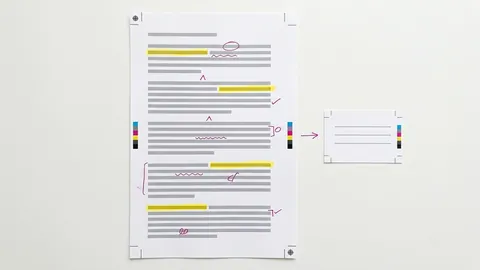
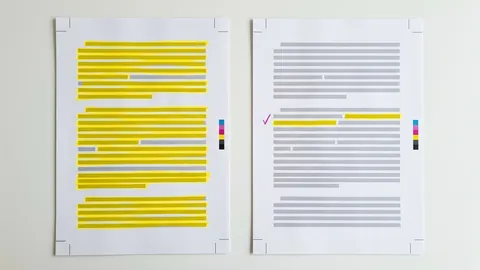
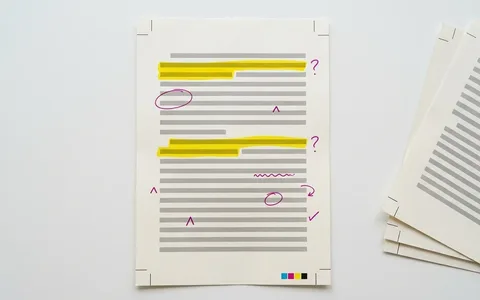
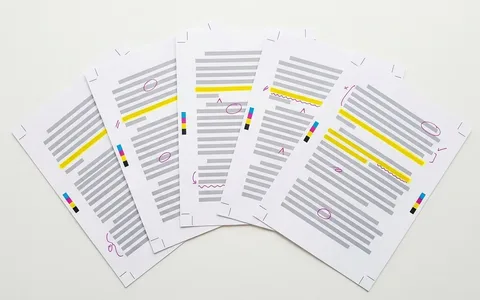
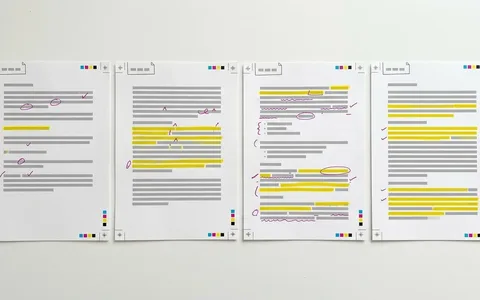
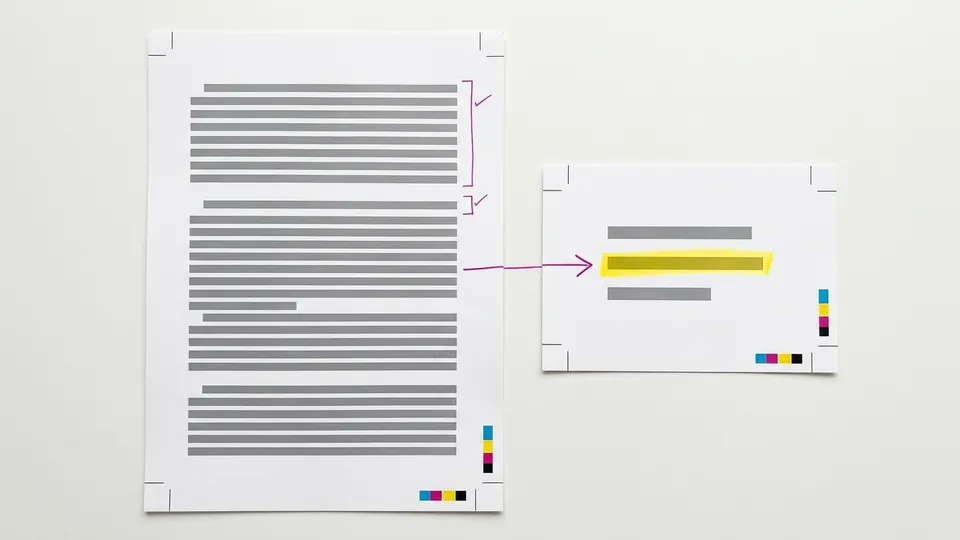
Reread what you wrote and highlight every sentence that goes vague, leans on a term you could not define, or skips a step. These marks are the point of the exercise.
Go back to the source for those gaps only
Open the textbook or your notes at the highlighted spots. Fix each sentence in a second color so you can see what changed.
Simplify and add an example
Read the explanation aloud. Replace jargon with plain words where you can, define the terms you must keep, and add one concrete example or analogy.
A worked example: explaining opportunity cost
This example is invented for this page. A student studying introductory economics explains opportunity cost from memory:
Step three marks all three sentences. Here is what each mark says and how the student fixes it after checking the textbook:
| Sentence | Why it is highlighted | Fix after checking the source |
|---|---|---|
| “Basically what something costs” | Vague; it does not say which cost | Opportunity cost is the value of the best alternative you give up when you choose. |
| “If a ticket is $40, that is the opportunity cost” | Confuses the price with what the money could have bought | The $40 matters because it could have gone to the next best use. |
| “It also includes time, kind of” | A hedge; the writer is unsure | The evening spent at the concert is given up too, so the best other use of that time counts. |
The revision names what is given up and shows it with an example. The first attempt did its job: it found the gaps.
What research says about the Feynman technique
Research does not test the technique under Feynman’s name. The closest method it studies is self-explanation: explaining to yourself what you are reading or how a step works.
In a study by Michelene Chi and colleagues, “Eliciting self-explanations improves understanding” (Cognitive Science, 1994), 14 eighth-grade students were asked to self-explain after reading each line of a passage on the human circulatory system, while ten students in a control group read the same text twice without that prompt. The prompted group had a greater gain from pretest to posttest, and the students who produced many self-explanations all reached the correct mental model of the circulatory system. It was a small study with one text.
The broadest review is the 2013 monograph by John Dunlosky and four coauthors in Psychological Science in the Public Interest, “Improving Students’ Learning With Effective Learning Techniques”. It rated ten techniques by how well their benefits generalize across learners, materials, learning conditions and tests.
| Technique | Rating in Dunlosky et al. (2013) | How it relates to the Feynman technique |
|---|---|---|
| Self-explanation | Moderate utility | The core of the method: explaining in your own words |
| Elaborative interrogation | Moderate utility | Asking why each statement is true as you explain it |
| Practice testing | High utility | Explaining with notes closed is a form of retrieval |
| Summarization | Low utility | A summary restates; an explanation must also say how and why |
| Highlighting and rereading | Low utility | Useful here only to mark gaps, not as the study itself |
The review explains the moderate rating for self-explanation directly: “elaborative interrogation and self-explanation have not been adequately evaluated in educational contexts.” Its verdict on highlighting and rereading is that they “do not consistently boost students’ performance,” which is the argument of whether highlighting helps you learn. The fair reading: the technique rests on a moderately supported idea, and writing from memory adds the high-rated practice testing.
Pitfalls to avoid
- Explaining with the book open. Copying the textbook’s sentences hides every gap the method is meant to find.
- Choosing an idea that is too big. “The French Revolution” fills pages without testing anything. “Why the Estates-General was called in 1789” can be checked.
- Skipping the marking step. An explanation you never reread for weak sentences is just a page of notes.
- Using it instead of practice problems. Young warns against substituting self-explanations for genuine practice, since solving problems relies on different knowledge than explaining a concept.
Tips that make it stick
- Use two colors. One for gaps, one for fixes, as in a simple highlighter color code.
- Compare with a summary. A summary keeps the author’s points in order; an explanation rebuilds the reasoning. For the first, see how to write a summary of what you read.
The Feynman technique is a simple test with a useful by-product: a page that shows what you do not understand yet. Pick one idea, explain it with your notes closed, highlight where it breaks, fix those spots from the source and simplify. Treat the name as a tribute, not a quotation, and pair the method with practice questions. For more study methods tested against the research, see the study guides.
Common questions
What are the steps of the Feynman technique?
The Feynman technique has three core steps as Scott H. Young set them out: pick an idea you do not understand well, write an explanation of it on a blank page as if teaching someone else, and go back to the textbook wherever you get stuck. Some versions add a fourth step: simplify the explanation and add an example or analogy.
Did Richard Feynman invent the Feynman technique?
No. The study writer Scott H. Young describes the technique as his own advice and says it is only loosely based on Feynman’s practices. What is documented about Feynman is a 1988 Caltech Archives photograph of his blackboard reading “What I cannot create, I do not understand,” beside a list headed “TO LEARN.”
Is the Feynman technique backed by research?
Not under that name. Its core is self-explanation, which Dunlosky and colleagues rated moderate utility in a 2013 review, noting it had not been adequately evaluated in educational settings. A 1994 study by Chi and colleagues found that eighth graders prompted to self-explain a text gained more from pretest to posttest than a group who read it twice.
How long should a Feynman technique session take?
No source sets a time. Keep each session to one narrow idea, so a single page of explanation can be written, marked and fixed in one sitting. The biggest complaint about the technique, Young notes, is that it takes too much time, so he advises using it only for ideas that are confusing and central to the course.
What is the difference between the Feynman technique and active recall?
Active recall means retrieving information from memory, for example with flashcards or practice questions. The Feynman technique includes retrieval, because you write with notes closed, but it asks for more: a connected explanation of how and why. Use recall for facts and terms, and the Feynman technique for concepts you can state but not explain.
Sources
- Scott H. Young, “5 Keys to Get the Most out of the Feynman Technique” (March 2024)
- Caltech Archives and Special Collections: Richard Feynman’s blackboard at time of his death (photograph, 1988, identifier 1.10-29)
- Chi, De Leeuw, Chiu and Lavancher, “Eliciting self-explanations improves understanding,” Cognitive Science 18, no. 3 (1994): 439 to 477
- Dunlosky, Rawson, Marsh, Nathan and Willingham, “Improving Students’ Learning With Effective Learning Techniques,” Psychological Science in the Public Interest 14, no. 1 (2013): 4 to 58
sign-off
Checked against its sources and signed before it went out.
Nora Feld
Editor · reviewed 2 Nov 2026