How to Find the Main Idea of a Paragraph or a Whole Text, Stated or Implied
The topic is what a paragraph is about. The main idea is what the writer says about it. Find the first, then ask for the second, and test your answer.
in short
To find the main idea, first name the topic: ask who or what the passage is about, in a few words. Then ask what the writer says about that topic. Look for a sentence that states it, often near the start. If none does, write one complete sentence that covers all the supporting details.
Knowing how to find the main idea is the skill under every other reading skill: summaries, notes, test answers, arguments. The method is short. Name the topic in a few words, ask what the writer is saying about that topic, then check whether one sentence in the paragraph already says it. If none does, the main idea is implied and you write the sentence yourself. This guide covers the difference between a topic and a main idea, where topic sentences usually sit, how to build an implied main idea from the details, a worked example on three paragraphs, and a simple way to highlight the main idea so you can find it again.
Topic vs main idea: the difference
The topic is a few words. The main idea is a sentence.
The two terms get mixed up because they point at the same paragraph. The open textbook Developmental Studies text from the Community College of Allegheny County advises identifying the topic before you try to identify the main idea. It defines the topic as the general subject of the reading, not as specific as the main idea, and usually only a few words rather than a complete sentence. Its test question is simple: "Who or what is this reading selection about?"
The main idea goes one step further. The College Reading and Writing text on Lumen Learning calls it the most important point that the writer wants to communicate. That point needs a verb and a claim, which is why the Roadrunner's Guide to English insists that a main idea must be expressed in a complete sentence; a fragment will not do.
| Topic | Main idea | Supporting details | |
|---|---|---|---|
| What it answers | Who or what is this about? | What is the writer saying about it? | How does the writer show it? |
| Form | A word or short phrase | One complete sentence | Facts, examples, reasons, figures |
| Example (written for this page) | Library noise | The main library is too noisy for focused study in the evenings. | Group tables in the quiet zone, a café cart at 6 p.m., complaints logged each week |
| Common mistake | Too narrow, so it misses part of the paragraph | Too broad, or only a restatement of the topic | Mistaken for the main idea because it is vivid |
The same open textbook lists the clues that point to the topic: headings and titles, pictures, and repeated words and phrases. A good topic is general enough to cover the whole paragraph; the main idea narrows it to one point.
How to find the main idea when it is stated
Many paragraphs state their main idea in a topic sentence. The learning center at St. Louis Community College says the topic sentence is often found at the beginning of the paragraph, where it sets up the details that follow. Beginning is common, not guaranteed. The Allegheny text notes that main ideas may be stated in the beginning, middle or end of a selection, or at both the beginning and the end.
Read the whole paragraph once
Do not mark anything yet. A sentence that looks like the point on line one can turn out to be background by line four.
Name the topic in two to four words
Ask who or what the paragraph is about. Look at the heading, the repeated words and any picture or caption.
Ask what the writer says about the topic
Say it in your own words. This is your draft.
Find the sentence that matches your draft
Check the first sentence, then the last, then any sentence after a turn word such as but or however. If one matches, that is the stated main idea.
Check that the details support it
The other sentences should explain or prove it. St. Louis Community College notes that phrases like for example and such as signal supporting details.
For a whole article or chapter, the Lumen text adds that main ideas are often stated toward the start, usually in an introductory paragraph, and often repeated in fuller form toward the end. Headings, subheadings and abstracts carry them too, so read those first; a fuller routine is in the guide to active reading strategies.
Stated vs implied main idea
An implied main idea is one the writer never puts into a single sentence. This is not rare. The Roadrunner's Guide states that the majority of college textbooks do not contain stated main ideas, and that the material is presented with enough clues for you to work the point out.
The method is the same as for a stated main idea, with one change at the end: instead of finding the sentence, you write it. The Roadrunner's Guide gives two tests for that sentence. It must be a complete sentence, and it must be general enough to include the points of the paragraph. St. Louis Community College adds the clues to use: headings and subheadings, words and phrases that keep coming back, and how you would summarize the content if someone asked what it is about.
A worked example: three paragraphs, three kinds of main idea
The three paragraphs below were written for this page as examples. Each one hides its main idea in a different place.
Topic: bike lanes on Elm Street. What the writer says about them: they made the commute faster. The first sentence says exactly that, and the other two sentences give the before and the after. Stated main idea, first sentence.
Topic: study space on campus. The first three sentences are evidence; the last one is the point they lead to. Highlight the first sentence here and you have marked a detail.
No sentence states the point. Topic: Maya's day before a deadline. What the details say: she overslept, her apartment is a mess, the draft is not started, she ignores her friend. One sentence that covers all four: Maya is behind on her draft and has cut everything else out to catch up. Every detail fits, and the sentence would not fit a calm morning. That is the implied main idea, written by the reader.
Highlight the main idea in one color
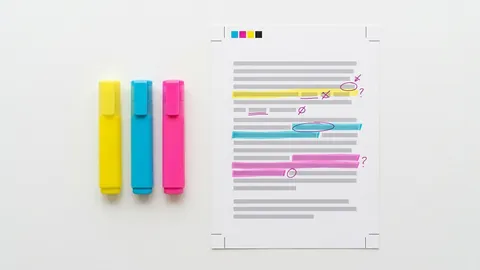
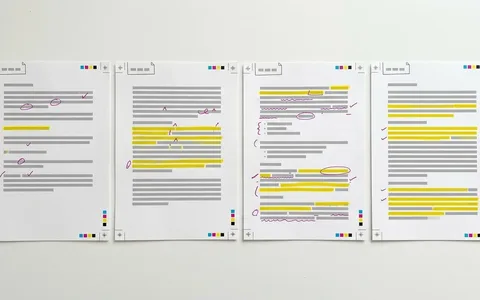
Highlighting works best when each color has one job. Give the main idea its own color and nothing else: one mark per paragraph at most, on the topic sentence if there is one. For an implied main idea, highlight nothing and write your sentence in the margin instead, so you never mistake a detail for the point. Supporting details can take an underline or a second color. A full scheme is set out in the color-code system for study highlights.
Read only the main-idea color down a chapter and you have the skeleton of a summary; the steps for turning that skeleton into prose are in the guide to writing a summary. For notes, the main ideas become the questions in a Cornell notes cue column. If you wonder whether all this marking helps at all, the research on whether highlighting helps you learn explains why selective marking beats coloring whole pages.
Pitfalls when looking for the main idea
- Stopping at the topic. "Bike lanes" is a topic. "Bike lanes made the commute faster" is a main idea. If your answer has no verb, you are not done.
- Assuming the first sentence is the point. It often is, but paragraph B above puts the point last. Read to the end before you mark.
- Picking the most vivid detail. A striking example (the group of forty turned away) is memorable, so it gets mistaken for the main idea. Ask whether the other sentences support it.
- Writing an implied main idea that is too narrow. "Maya overslept" covers one detail out of four. Test your sentence against every detail.
Tips for finding the main idea faster
- Read headings as claims in waiting. A heading usually names the topic. Turn it into a question, and the paragraph's answer is often the main idea.
- Go up a level for whole texts. The main ideas of the paragraphs support the main idea of the section, which supports the thesis of the whole piece. Find each level in turn.
Finding the main idea comes down to two questions asked in order: what is this about, and what does the writer say about it. Answer the first in a few words and the second in one sentence, test it against every detail, and mark it in its own color. The rest of the study guides on this site build on that habit, from summaries to notes to close reading.
Common questions
What is the main idea of a paragraph?
The main idea of a paragraph is the most important point the writer wants you to take from it, stated as one complete sentence. It is narrower than the topic, which is only the subject in a few words, and broader than any single supporting detail. Every other sentence in the paragraph should explain, prove or illustrate it.
What is the difference between topic and main idea?
The topic answers who or what the paragraph is about, usually in a word or a short phrase such as "library noise." The main idea answers what the writer says about that topic, in a complete sentence such as "the library is too noisy for evening study." Open reading textbooks advise naming the topic first and the main idea second.
Where is the main idea usually found?
Often in the first sentence, which is why it is the first place to look. It is not always there. College reading textbooks note that a stated main idea can come at the beginning, the middle or the end of a paragraph, or at both the beginning and the end. Read the whole paragraph before deciding.
What is an implied main idea?
An implied main idea is a point the writer suggests through the details but never states in a single sentence. You find it by naming the topic, listing what each detail says, and writing one complete sentence that covers them all. One open textbook notes that most college textbooks do not state their main ideas directly.
How do I know if my main idea sentence is right?
Test it against every detail in the paragraph. If one detail does not fit, your sentence is too narrow. If the sentence would fit many other paragraphs just as well, it is too broad. It should also be a complete sentence that mentions the topic and makes a claim about it.
Sources
- Community College of Allegheny County, Developmental Studies (LibreTexts): 5.1 Topics, Supporting Details, and Main Ideas
- The Roadrunner's Guide to English (LibreTexts): 1.7 Unstated Main Idea
- College Reading and Writing (Lumen Learning, SUNY Empire State): Main Idea
- St. Louis Community College tutoring resources: Identifying Main Ideas and Supporting Details
sign-off
Checked against its sources and signed before it went out.
Nora Feld
Editor · reviewed 2 Nov 2026