



Topic Sentence: What It Is, Where It Goes, Examples, and How to Check Yours
A topic sentence tells the reader what one paragraph is about and why it belongs in the paper. Read only the topic sentences of a draft and you should be able to follow its argument.
in short
A topic sentence states the main idea of a paragraph, usually as its first sentence. Everything else in the paragraph should support or explain that idea. In an essay, each topic sentence also connects back to the thesis, so reading only the topic sentences should give a reader the outline of the argument.
A topic sentence is the sentence that states what a paragraph is about. It names the paragraph's one main idea, and in an essay it also shows how that idea serves the larger argument. This guide gives the definition as university writing centers state it, where the sentence can go, weak and strong topic sentence examples, how a topic sentence differs from a thesis, and a quick way to check every topic sentence in a draft with a reverse outline. Every example sentence and paragraph on this page was written for it.

What is a topic sentence?
One paragraph, one controlling idea, one sentence that names it.
The Purdue OWL's page on paragraphs defines a topic sentence as "a sentence that indicates in a general way what idea or thesis the paragraph is going to deal with." It lists the topic sentence as one of four elements an effective paragraph should have, alongside unity, coherence and adequate development.
The UNC Writing Center's handout on paragraphs uses the term "controlling idea" for the paragraph's main point, "because it controls what happens in the rest of the paragraph." It says the controlling idea is often expressed in the topic sentence, and adds that in some cases you may need more than one sentence to express it. So a topic sentence is a job, not a fixed sentence count: it is whatever tells the reader the point of the evidence that follows.
Purdue also gives a test that works even when a paragraph has no obvious topic sentence: "you should be able to easily summarize what the paragraph is about." If you cannot sum up a paragraph in one line, it probably has more than one main idea. The same skill in reverse, finding the point of someone else's paragraph, is covered in how to find the main idea.
Where a topic sentence goes
Purdue notes that topic sentences "can occur anywhere in the paragraph (as the first sentence, the last sentence, or somewhere in the middle)," but that putting it near the beginning is an easy way to make sure your reader understands the topic. It calls that "a good general rule for less experienced writers, although it is not the only way to do it."
UNC compares a paragraph to a sandwich: the evidence is the filling, the first sentence is the top slice that explains the topic, and the last sentence is the bottom slice that tells the reader how the paragraph relates to the broader argument. It adds that the topic sentence "can actually go at the beginning, middle, or end of a paragraph" as long as it is in there somewhere.
| Position | When it works | Example (written for this page) |
|---|---|---|
| First sentence | Most academic body paragraphs. The reader knows the point before the evidence arrives. | The town's new bus schedule helps commuters less than its planners claim, because the added routes run at hours few people travel. |
| Second, after a transition | When the paragraph must first connect to the one before it. | Transition: Cost was only part of the problem. Topic sentence: The bigger obstacle was timing, since the added routes run at hours few people travel. |
| Last sentence | When you want the evidence to build toward the point, as a conclusion the reader reaches with you. | Evidence about empty midday buses and crowded rush-hour stops comes first; the paragraph ends: The schedule, in short, adds service where riders are not. |
Topic sentence examples: weak and strong
A weak topic sentence usually does one of three things: it states a bare fact, it announces a subject without a point, or it tries to cover more than one paragraph can hold. Purdue's rule of thumb, "keep one idea to one paragraph," is the fix for the last one. Every sentence in the table is an example.
| Weak (example) | Stronger (example) | What changed |
|---|---|---|
| Thoreau lived at Walden Pond. | Thoreau's careful accounts of what he spent at Walden show that the experiment was as much about money as about nature. | A fact became a claim the paragraph can support with evidence. |
| This paragraph is about homework. | Nightly math homework helps most when it is short and checked the next morning, not when it is long and graded weeks later. | An announcement became a point with conditions. |
| Social media affects sleep, grades, friendships and self-esteem. | Late-night group chats cut into sleep more than any other kind of phone use. | Four topics became one, sized for a single paragraph. |
Topic sentence vs thesis statement
A thesis states the claim of the whole paper; a topic sentence states the claim of one paragraph. UNC says that before you build paragraphs you need a working thesis, and that your paragraphs "should remind your reader that there is a recurrent relationship between your thesis and the information in each paragraph." Each topic sentence is one step of the proof the thesis promises. For the larger sentence, see how to write a thesis statement.
| Thesis statement | Topic sentence | |
|---|---|---|
| Scope | The whole paper | One paragraph |
| Usual place | End of the introduction | Start of a body paragraph |
| How many | One per paper | One per body paragraph |
| Job | States the argument the paper will prove | States one point that supports the argument |
| Test | Could someone dispute it? | Does every sentence in this paragraph serve it? |
How to write a topic sentence in five steps
Start from the thesis
Write your working thesis at the top of the page. Ask which single reason or piece of the argument this paragraph will carry.
Name the point, not the topic
Write one sentence that says what is true about the subject, not just what the subject is. "Bus schedules" is a topic; "the new schedule adds service where riders are not" is a point.
Size it to one paragraph
If the sentence lists several separate claims, split it. Each claim gets its own paragraph and its own topic sentence.
Check the evidence fits
List the examples or quotations you plan to use. If one does not support the sentence, either drop it or rewrite the sentence so it does.
Add the link
Make the connection to the thesis visible, with a word or phrase that echoes the thesis or a transition from the paragraph before.
A worked example: adding a topic sentence
UNC's handout shows a paragraph with no topic sentence and says readers "don't know what to do with all the evidence you've given them." Here is the same problem in an example paragraph written for this page, from an imagined essay arguing that a school library should stay open later.
Before (example): "The library closes at 3:30, ten minutes after the last bell. Students with after-school jobs cannot use it at all. The computer lab next door is often full by 3:15. Several students said they finish assignments on their phones in the parking lot."
After (example): "The library's 3:30 closing time shuts out exactly the students who most need a quiet place to work after class. It closes ten minutes after the last bell, so students with after-school jobs cannot use it at all. The computer lab next door is often full by 3:15. Several students said they finish assignments on their phones in the parking lot."
The new first sentence tells the reader how to read the evidence, and it connects to the essay's thesis about longer hours. Notice that nothing else changed.
Check your topic sentences with a reverse outline
The UNC Writing Center's handout on reorganizing drafts describes a reverse outline as one "you make after you have written a draft." You read the draft and make very brief notes in the margin about what each paragraph is trying to accomplish, number the paragraphs, then list the notes in order. It warns to outline "what is actually in your paper, rather than what you intended to have in it." If you suspect a paragraph is not unified, it suggests a more detailed outline with a note on the main idea of each sentence.
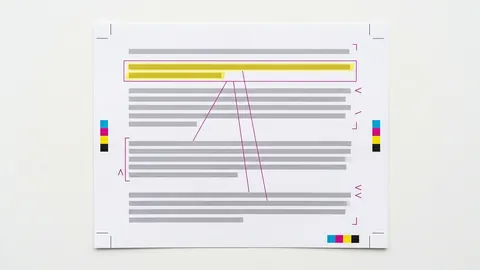
For topic sentences, add one step: compare each margin note with the paragraph's first sentence. If they match, the topic sentence is doing its job. If the note says something different, rewrite the topic sentence or the paragraph. A highlighter makes this fast: mark every topic sentence in one color, as in a simple highlighter color code, and read only the marked lines in order. Building the whole paragraph around the sentence is covered in how to write a paragraph, and planning them before you draft in how to build an essay outline.
Pitfalls
- Covering two ideas. UNC's advice for a paragraph with more than one controlling idea is to cut the sentences about the second idea or split the paragraph.
- Promising what the paragraph does not deliver. If the evidence drifted while you drafted, update the topic sentence to match.
Tips
- Draft them as a list first. Writing all your topic sentences in order before the paragraphs gives you an outline you can test against the thesis.
- Echo a word from the thesis. Purdue lists repeated key words among the "verbal bridges" that make writing coherent.
A good topic sentence is a small promise: here is the point, and the next few sentences will prove it. Write them from the thesis, check them with a reverse outline, and rewrite them whenever the paragraph changes. More writing and reading guides are on the study hub.
Common questions
What is a topic sentence?
A topic sentence is the sentence that states the main idea of a paragraph. Purdue OWL defines it as a sentence that indicates in a general way what idea the paragraph is going to deal with. The other sentences in the paragraph give the evidence and explanation that support it, and in an essay it also connects to the thesis.
Does a topic sentence have to be the first sentence?
No. Purdue OWL and the UNC Writing Center both say a topic sentence can come at the beginning, middle or end of a paragraph. Purdue recommends placing it near the beginning as a good general rule for less experienced writers, because it is the easiest way to make sure readers know the point before the evidence.
How is a topic sentence different from a thesis?
A thesis states the argument of the whole paper, usually at the end of the introduction. A topic sentence states one point of that argument for a single paragraph. A paper has one thesis and one topic sentence per body paragraph, and each topic sentence should show how its paragraph supports the thesis.
Can a topic sentence be a question?
It can open a paragraph, but it rarely works as the topic sentence itself, because a question names an issue without stating your point. If you start with a question, answer it in the next sentence, and treat that answer as the topic sentence the rest of the paragraph supports.
How long should a topic sentence be?
Long enough to state one clear point, which is usually a single sentence. UNC notes that a paragraph's controlling idea sometimes needs more than one sentence, for example when the paragraph also has to connect to the one before it. Cut any part that previews evidence the paragraph will give anyway.
Sources
sign-off
Checked against its sources and signed before it went out.
Nora Feld
Editor · reviewed 2 Nov 2026