How to Write a Thesis Statement: Steps, Weak and Strong Examples, and Where It Goes
A thesis statement is the one sentence that tells a reader what your paper argues. It usually starts rough and gets sharper as the draft teaches you what you think.
in short
A thesis statement is usually one sentence near the start of a paper, often at the end of the first paragraph, that states a specific, arguable claim answering the assignment's question. To write one, read the prompt as a question, gather evidence, draft a working answer, then test and sharpen it as you draft.
Learning how to write a thesis statement is mostly learning to turn a topic into a claim. A topic is what the paper is about; a thesis is what the paper says about it, in a sentence someone could disagree with. This guide gives the definition as university writing centers state it, six steps from an assignment prompt to a working thesis, weak and strong versions side by side, where the sentence usually goes, and how to keep it honest as the draft changes. Every example on this page was written for it.
What is a thesis statement?
A topic names the subject. A thesis tells the reader what to think about it, and why.
The UNC Writing Center's handout on thesis statements describes a thesis as a sentence that tells the reader how you will interpret the significance of your subject, acts as a road map for the paper, directly answers the question asked of you, and "makes a claim that others might dispute."
George Mason University's Writing Center frames the same idea by what a thesis is not: not a statement of fact or observation, not a statement of personal conviction or opinion, and not a generalization or overly broad claim. It notes that a thesis often answers a why or how question about the topic, and that its parts often line up with the paper's topic sentences.
The table shows the difference with one subject (all rows are examples).
| Kind of sentence | Example | Why it is or is not a thesis |
|---|---|---|
| Topic | School start times. | Names a subject. There is nothing to argue yet. |
| Fact | Many high schools in the district start before 8 a.m. | True or false, but not disputable. A paper cannot prove it for twenty pages. |
| Opinion | I think school starts too early. | A personal conviction with no reason attached. Readers can only agree or shrug. |
| Thesis | Moving the district's high school start time to 8:30 a.m. would do more for attendance than the new tardy penalties, because most first-period absences are students who slept through, not students who chose to skip. | Specific, disputable and supported with a reason. It answers how and why, and it predicts what the body will show. |
How to write a thesis statement in six steps
UNC's handout is blunt that "formulating a thesis is not the first thing you do after reading an essay assignment." You collect and organize evidence first, look for relationships between known facts, and arrive at what it calls a "working thesis" that will likely need adjustment. These six steps follow that order.
Turn the prompt into a question
UNC suggests rephrasing a prompt that is not a question: "Discuss the effect of X on Y" becomes "What is the effect of X on Y?" Your thesis is the answer to that question, so write the question at the top of your notes.
Name the kind of paper
The Purdue OWL's thesis statement tips sort papers into analytical (breaks an issue into parts and evaluates them), expository (explains something) and argumentative (makes a claim and justifies it with evidence). The kind decides what the thesis must do.
Gather and mark evidence
Highlight the passages that bear on the question, and look for a surprising contrast or a repeated pattern. Active reading strategies help here.
Draft a rough answer
George Mason's advice for getting stuck is to ask a genuine, difficult how or why question and state your response, even before you are sure why you want to give that answer. Write it down in one sentence, however clumsy.
Add the reason
Most weak drafts are missing a because. Attach the main reason or reasons your evidence supports, so the reader can see the shape of the argument.
Test it and sharpen it
Run the draft through the questions in the next section. Replace vague words, narrow the scope to what your paper can actually cover, and keep the result as your working thesis.
Weak and strong thesis statement examples
UNC's handout gives a set of questions for judging a working thesis: Do I answer the question? Have I taken a position that others might challenge or oppose? Is my thesis statement specific enough? Does it pass the "So what?" test, and the "how and why?" test? Does my essay support it without wandering? It flags words like "good" or "successful" as signs that a thesis is too vague. The pairs below apply those questions. Every sentence in the table is an example written for this page.
| Weak version (example) | Stronger version (example) | What changed |
|---|---|---|
| Social media has positive and negative effects on teenagers. | For teenagers, group chats do more harm to sleep than any public feed, because they carry an expectation of an instant reply that scrolling does not. | Picks one effect, names a cause, and takes a side someone could challenge. |
| The Great Gatsby is a great novel about the American Dream. | Gatsby's parties, not his love for Daisy, show the novel's real verdict on the American Dream: wealth buys an audience but never a place. | Replaces praise with an interpretation of specific evidence. |
| This paper will discuss recycling programs. | Single-stream recycling raised the town's collection numbers but lowered the share of material actually recycled, so the program should be judged by what leaves the sorting plant, not what arrives. | Swaps an announcement for a claim, with a reason and a consequence. |
| Remote work is good for employees. | For parents of young children, remote work matters less for the hours saved commuting than for control over when the workday starts. | Narrows who, defines "good" and passes the so what test. |
A worked example: one prompt, three drafts
Here is an example prompt written for this page, from an imagined history course: "Discuss the role of railroads in the growth of Chicago." Rephrased as UNC suggests, it becomes: what role did railroads play in Chicago's growth?
- Draft 1 (example): "Railroads were important to the growth of Chicago." It answers the question, but no one would dispute it, and "important" is the kind of vague word UNC warns about.
- Draft 2 (example): "Railroads helped Chicago grow by connecting it to other cities." Now there is a mechanism, but it is still a fact a textbook would state. It fails the so what test.
- Draft 3 (example): "Railroads made Chicago a city by turning it into the place where Western grain, lumber and livestock were sorted, priced and sold, so its growth depended less on its lakefront than on the rail yards behind it." It takes a position, names the evidence the body must show, and says why it matters.
Draft 3 is a working thesis, not a final one. If the reading shows that lumber mattered far less than grain, the sentence changes to match, which is the next section's point.
Where a thesis statement goes
UNC describes a thesis as "usually a single sentence near the beginning of your paper (most often, at the end of the first paragraph)." Purdue's tips say the same: "The thesis statement usually appears at the end of the first paragraph of a paper."
Both sources say usually, not always, so an assignment can ask for something different. UNC notes that an assignment may not say a thesis is required because the instructor assumes you will include one, and its advice when in doubt is to ask. A research paper may also need an abstract of the whole paper.
Revise the thesis as the draft changes
Purdue's fourth tip is the one students skip: "Your topic may change as you write, so you may need to revise your thesis statement to reflect exactly what you have discussed in the paper." UNC puts it more sharply. If your thesis and the body of your essay do not seem to go together, "one of them has to change," and it is fine to change the working thesis to reflect what you figured out while writing.
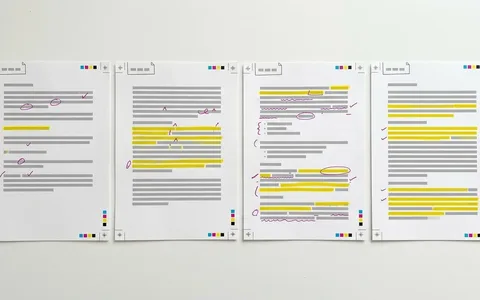
A quick check uses a highlighter. Mark the thesis in one color, then mark the first sentence of each body paragraph in the same color, a habit that fits a simple highlighter color code. Read only the marked sentences in order. If a paragraph's opening line does not support the thesis, either the paragraph wanders or the thesis is out of date. The editing checklist covers this and the other big-picture checks to make before you proofread.
If a chatbot helped you brainstorm or reword your thesis, the claim still has to be yours and the evidence has to back it. Course rules differ on that kind of help, so read how to disclose AI help in your writing before you submit.
Pitfalls
- Announcing instead of arguing. "This paper will discuss" tells the reader the topic, not your position.
- Promising too much. Purdue says the thesis should cover only what you will discuss. A five-page paper cannot settle the causes of a war.
Tips that save a draft
- Read it aloud to a skeptic. If the honest reply is "so what?" or "why?", the sentence needs a reason or a consequence.
- Circle the vague words. Good, important, interesting, many and society usually stand in for a more exact claim.
Writing a thesis statement is a loop, not a single step: question, evidence, rough claim, test, revise. Let the draft correct the working version until it promises exactly what the paper delivers. If you later need to condense the whole paper, the guide to writing a summary covers the next skill. More study guides are on the study hub.
Common questions
What is a thesis statement?
A thesis statement is a sentence, usually near the start of a paper, that states the writer's specific, arguable answer to the question the paper addresses. UNC's Writing Center calls it a road map for the paper and says it makes a claim others might dispute. A topic or a plain fact is not a thesis.
How long should a thesis statement be?
UNC and Purdue both describe the thesis as usually a single sentence, typically at the end of the first paragraph. Neither sets a word count. Aim for one clear sentence that names your claim and its main reason, and check the assignment or ask your instructor if a longer form is expected.
Where does the thesis statement go?
Usually at the end of the first paragraph. UNC says a thesis is most often placed there, and Purdue's tips say the same. The introduction sets up the question and the thesis answers it before the evidence begins. Both sources say usually, so follow your instructor's guidance when it differs.
Can a thesis statement be a question?
No. A question names what the paper will investigate; a thesis states the answer. UNC suggests turning the prompt into a question first, then writing the thesis as your direct answer to it. Keep the question in your notes and put the answer in the paper.
Can I change my thesis after I start writing?
Yes, and you often should. Purdue's tips say your topic may change as you write, so you may need to revise the thesis to reflect exactly what the paper discusses. UNC adds that if the thesis and the body do not fit together, one of them has to change.
Sources
sign-off
Checked against its sources and signed before it went out.
Nora Feld
Editor · reviewed 2 Nov 2026