How to Write a Paragraph: Structure, Length and a Worked Example
A paragraph is one idea, fully developed. Name the idea, give the evidence, explain what the evidence shows, and connect it to the point of the paper.
in short
To write a paragraph, start with a topic sentence that states one main idea, give evidence that supports it, explain how the evidence proves the idea, and end by linking back to your thesis or ahead to the next paragraph. Keep one idea per paragraph, and start a new one when the idea changes.
Knowing how to write a paragraph comes down to one rule: give each idea its own paragraph and develop it fully. This guide covers the parts of a body paragraph (a topic sentence, evidence, analysis and a link), the MEAL plan many writing centers teach, length guidance stated exactly as the sources state it, when to start a new paragraph, and a worked example built one sentence at a time. The example paragraph and the essay it belongs to were written for this page.
What a paragraph is (and what it is not)
Unity, not length, makes a paragraph.
The Purdue OWL defines a paragraph as "a collection of related sentences dealing with a single topic" and gives the basic rule of thumb: "keep one idea to one paragraph." It names four elements an effective paragraph should have: unity, coherence, a topic sentence and adequate development.
The UNC Writing Center's paragraphs handout pushes back on defining paragraphs by size. Many students think of a paragraph as at least five sentences or half a page, it says, but "the unity and coherence of ideas among sentences is what constitutes a paragraph," and "length and appearance do not determine whether a section in a paper is a paragraph." UNC lists four qualities every paragraph in a paper should have: unified around a single controlling idea, clearly related to the thesis, coherent, and well developed.
Paragraph structure: the four parts of a body paragraph
Writing centers describe the same parts with slightly different names. The Texas Tech Graduate Writing Center's MEAL handout uses four components: Main idea, Evidence, Analysis and Link. UNC's five steps for an illustration paragraph follow the same arc: a topic sentence, elaboration, an example, an explanation of the example, then completing the idea or transitioning to the next paragraph.
| Part | What it does | What the sources say |
|---|---|---|
| Main idea (topic sentence) | States the one point of the paragraph | Texas Tech: the main idea "can be 1-2 sentences" depending on how much introductory work the paragraph does. |
| Evidence | Gives the facts, quotations or examples that support the point | Texas Tech: be concise and relevant, and cite all information from an outside source. |
| Analysis | Explains how the evidence proves the point | UNC: "NONE of your examples should be left unexplained." |
| Link | Connects the point to the thesis or the next paragraph | Texas Tech: "It is better to have no distinct link than to make a weak or misleading connection for your reader." |
The order is a default, not a law. Texas Tech says "not every paragraph needs to follow the MEAL structure," and Reno shows paragraphs that put the main idea in the middle or at the end. For how to write and place the first part, see how to write a topic sentence.
How to write a paragraph in six steps
Pick the one idea
Decide which single point this paragraph will carry for your thesis. If you can't say it in one line, you have two paragraphs.
Write the topic sentence
State the point as a claim. Draft it plainly; you can polish it after the evidence is in.
Add evidence
Bring in the quotation, example or fact that supports the point. Introduce it and cite it, as shown in how to cite a quote.
Explain the evidence
Say what the evidence shows and why it supports the point. UNC says you can repeat the example and explanation steps as many times as you need.
Link it
Close by tying the point back to the thesis, or by setting up the next paragraph. Skip the link rather than force a weak one.
Check unity
Read every sentence against the topic sentence. Cut or move any sentence that belongs to a different idea.
A worked example, one sentence at a time
This example paragraph is written for an imagined essay whose thesis is that Thoreau presents Walden as a practical experiment, not an escape from society. The quotation is from Thoreau's Walden (1854), which is in the public domain.
- Main idea (example): "Thoreau frames his move to the pond as a test with a stated purpose, not a retreat."
- Evidence: "He explains, 'I went to the woods because I wished to live deliberately.'"
- Analysis (example): "The word deliberately matters: it describes a choice made on purpose and carried out with care, the language of someone running a trial rather than fleeing a problem."
- More analysis (example): "By giving a reason for going, Thoreau invites readers to judge the results, which is what an experiment asks of its audience."
- Link (example): "That framing prepares the reader for the chapters that follow, where he measures his life at the pond in costs, hours and harvests."
Read together, the five sentences form one unified paragraph: one claim, one piece of evidence, two sentences of analysis, and a link forward. If the essay's next paragraph is about the cost accounts in Walden, the link has already set it up. Analyzing a writer's choices this closely is also the core of a rhetorical analysis.
How long should a paragraph be?
There is no single rule, and the sources disagree in emphasis. Purdue's paragraphing rules of thumb suggest you "aim for three to five or more sentences per paragraph," include about two handwritten or three typed paragraphs per page, and make paragraphs proportional to the paper, with short paragraphs for short papers and longer ones for longer papers. Purdue's main paragraph page adds that writers "should be wary of paragraphs that only have two or three sentences," since such a paragraph is probably not fully developed.
UNC, by contrast, says length does not define a paragraph at all and notes that in journalistic styles a paragraph can be one sentence. The two views fit together: length is a warning light, not the goal. A two-sentence paragraph in an academic essay usually needs more analysis or belongs inside a neighbor; a page-long one usually holds two ideas.
| Symptom | Likely cause | Fix |
|---|---|---|
| Two sentences | A claim and one piece of evidence, with no explanation | Add analysis, or merge it into a related paragraph |
| Half a page or more | Two ideas sharing one paragraph | Split at the point where the idea changes |
| All quotations | Evidence standing in for your point | Cut a quotation and add your own explanation |
| Ends on a quotation | No analysis or link | Add a sentence that says what the quotation shows |
When to start a new paragraph
Purdue lists four moments to break: when you begin a new idea or point, to contrast information or ideas, when your readers need a pause because the paragraph is long or the material is complex, and when you end your introduction or start your conclusion. The last one is its own skill; see how to write a conclusion for the final paragraph.
Pitfalls
- Dropped quotations. A quotation with no sentence after it leaves the reader to do your analysis.
- Drift. UNC's example of a paragraph about piranhas that ends on recipes for cooking them shows how a paragraph slides into a second topic. Cut the drift or give it its own paragraph.
- Forced links. "This shows how important this topic is" adds nothing. Link to a specific idea or leave the link out.
- Missing transitions inside the paragraph. Purdue lists repeated key words, synonyms, pronouns and transition words as verbal bridges between sentences.
Tips
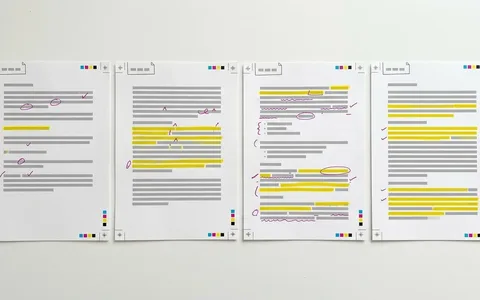
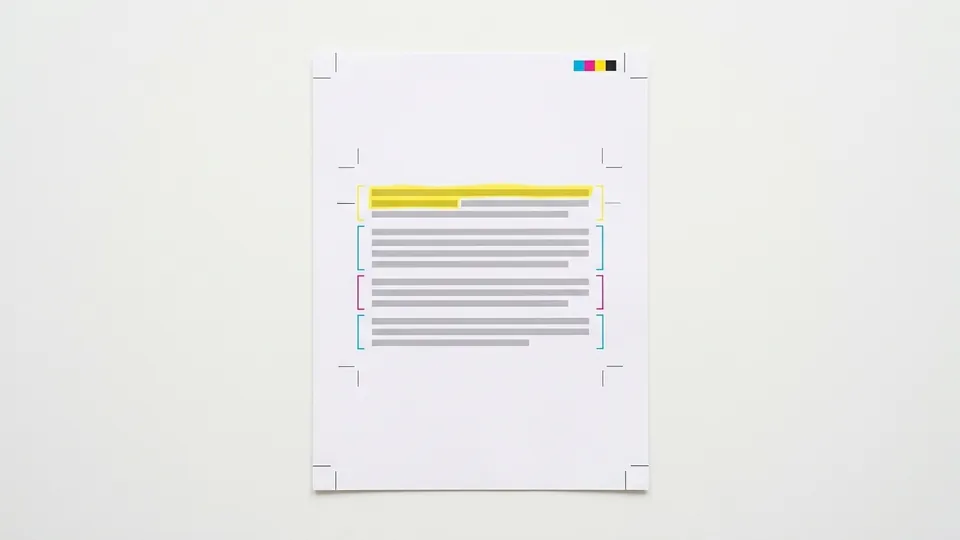
- Color-code one paragraph. Mark the main idea, evidence, analysis and link in four colors. Too much evidence color and too little analysis color shows the gap at a glance.
- Count analysis sentences. Aim for at least as many sentences explaining evidence as sentences presenting it.
- Revise structure before style. The editing checklist covers paragraph-level checks to make before you proofread.
A strong paragraph is one idea, proved and explained, then connected to the rest of the paper. Write the topic sentence, earn it with evidence and analysis, and break to a new paragraph when the idea changes. More guides to reading and writing are on the study hub.
Common questions
What are the parts of a paragraph?
A body paragraph usually has a topic sentence that states the main idea, evidence that supports it, analysis that explains the evidence, and a link to the thesis or the next paragraph. Writing centers often teach this as the MEAL plan: Main idea, Evidence, Analysis, Link. The order can change, but every part should serve one idea.
How many sentences are in a paragraph?
There is no fixed number. Purdue OWL suggests aiming for three to five or more sentences and warns that two or three may mean the paragraph is underdeveloped. UNC's Writing Center says length does not define a paragraph, and that some journalistic paragraphs are one sentence long. In academic writing, develop the idea fully rather than counting.
What is the MEAL plan?
The MEAL plan is a way to organize a body paragraph: Main idea, Evidence, Analysis and Link. Texas Tech's Graduate Writing Center describes the link as preparing the reader for the next stage of the argument. The University of Nevada, Reno credits the plan to Duke University and notes it does not have to follow that exact order.
When should I start a new paragraph?
Start a new paragraph when you begin a new idea, when you contrast two ideas, when a long or complex passage needs a pause, and when you move into the introduction or conclusion. Those are the four moments Purdue OWL lists. If one paragraph is carrying two ideas, split it where the second idea begins.
How do I end a body paragraph?
End with a sentence that ties the paragraph's point back to the thesis or leads into the next paragraph. Texas Tech's MEAL handout calls this the link and advises that no distinct link is better than a weak or misleading one. Avoid ending on a quotation, since that leaves the analysis to the reader.
Sources
sign-off
Checked against its sources and signed before it went out.
Nora Feld
Editor · reviewed 2 Nov 2026