- job ticket
- section
- ai writing
- checked
- editor
- Nora Feld
Editing Checklist: How to Revise an Essay Level by Level Before You Proofread
Editing comes before proofreading and works from the top down: first the argument, then the order, then paragraphs, sentences and words. This checklist follows that order, with the questions university writing centers ask at each level.
in short
Edit from the top down. Check that the paper answers the assignment and has a clear thesis, then that each paragraph supports it in a sensible order, then that each paragraph has one main idea, then sentence clarity and word choice. Proofread for spelling and punctuation only after all of that, because edits create new errors.
An editing checklist helps you revise a draft in the right order: big problems first, small ones last. Writing centers separate editing, which checks the argument, structure, paragraphs and sentences, from proofreading, which catches typos and punctuation at the very end. This page gives a level-by-level checklist drawn from university writing-center guidance, a short worked example, and a section on editing a draft that had AI help. When the editing is done, the proofreading checklist takes over.
Editing vs proofreading
The University of North Carolina Writing Center's handout on editing and proofreading says the two are "different stages of the revision process." Editing starts as soon as the first draft is done: you reread to see whether the paper is well organized, whether the transitions work, and whether "your evidence really backs up your argument." Proofreading is "the final stage," focused on surface errors, and the handout says to do it "only after you have finished all of your other editing revisions."
The order matters for a practical reason. If you polish commas in a paragraph you later cut, the work is wasted. UNC's handout on revising drafts puts it plainly: "Don't proofread as you go."
The editing checklist, level by level
Work down the table one level at a time. UNC suggests focusing on "two or three main areas during each revision session" rather than trying everything at once, so it is fine to spread the levels over two or three sittings.
| Level | Questions to ask | A quick test |
|---|---|---|
| Assignment and argument | Does the paper do everything the assignment asks? Is there a clear thesis? Do you still agree with it? | Write your thesis in one sentence without looking at the draft. |
| Evidence | Is each claim supported? Is everything relevant to the thesis? Are sources cited? | Highlight every claim; check each has evidence beside it. |
| Overall structure | Are paragraphs in a logical order? Does the introduction promise what the body delivers? Does the conclusion tie it together? | Make a reverse outline: one line per paragraph. |
| Paragraphs | Does each paragraph have a clear topic sentence and stick to one main idea? Is anything extra or missing? | Underline the key words in each paragraph. |
| Sentences | Is every sentence clear? Is it obvious what each pronoun refers to? Do sentence lengths vary? | Read one sentence at a time, starting from the end. |
| Word choice and style | Is the tone right for the reader? Any filler such as "due to the fact that"? Any words borrowed from a thesaurus? | Read aloud and mark where you stumble. |
| Hand-off | Is the content final? Only then check spelling, grammar and punctuation. | Move to a proofreading pass. |
Most of these questions come straight from UNC's editing handout, which sorts them into content, overall structure, structure within paragraphs, clarity, style and citations. The Purdue OWL's steps for revising add two useful habits: summarize your thesis and evidence as if the paper belonged to someone else, and ask whether anything "doesn't seem to fit." If it does not, "you either need to change your thesis to reflect the idea or cut the idea."
Before you start: get some distance
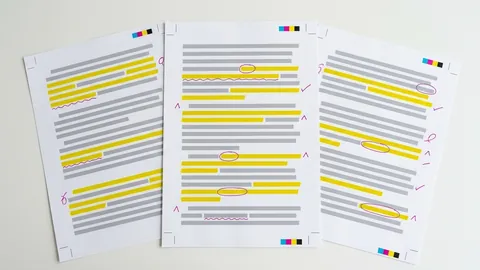
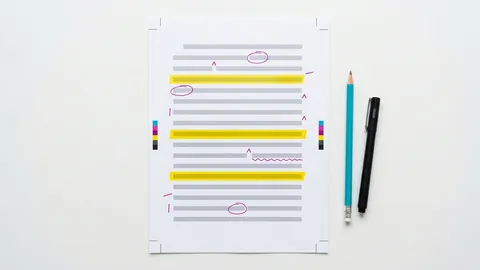
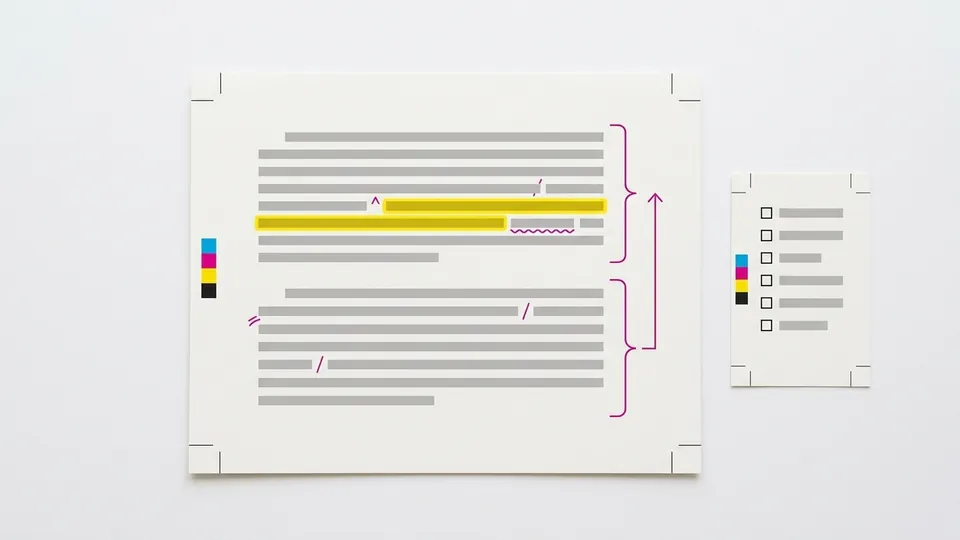
Both writing centers stress distance. UNC says to put the paper aside "for a few hours, days, or weeks," or give it to a friend. Purdue suggests putting it aside at least twice: once while you are reorganizing, and again before you polish details. Changing the font or printing the draft also helps, because a familiar page lets your eye skip errors. For marking a printed draft, how to mark up an AI draft shows a simple set of highlight colors and margin notes that works for any draft.
Check structure with a reverse outline
A reverse outline is the fastest way to see a draft's shape. The Brandeis University Writing Program's handout describes it as taking away the supporting writing so you are "left with a paper's main points."
Open a blank page
Keep the outline separate from the draft so you are not tempted to fix sentences yet.
List each paragraph's main idea
If the topic sentence sums up the paragraph, copy it. Otherwise write a one-sentence summary.
Number the lines
Numbers make it easy to say "move 5 before 3."
Ask the outline questions
Does every line relate to the thesis? Do two lines repeat one idea? Does one line juggle several topics? Do new ideas appear only near the end?
Revise the draft
Reorder, merge, split or cut paragraphs. If the new ideas at the end are better, revise the thesis instead.
Paragraphs, sentences and word choice
Once the order is settled, read each paragraph for one main idea. UNC suggests a trick if you tend to cover several topics at once: underline the key words in each paragraph, then break up any paragraph whose key words point in different directions.
For clarity, UNC recommends reading one sentence at a time, "starting at the end and working backwards so that you will not unconsciously fill in content from previous sentences." Check that every "this," "it" and "which" has a clear referent. For style, watch for passive voice used too often, phrases like "there is" and "due to the fact that," and words you would not normally use. Purdue's advice is short: read the paper aloud and "cut out extra words, vagueness, and misused words."
A worked example: editing one paragraph
Here is an example paragraph written for this page, from an essay arguing that schools should start later.
- Before (example): "There are many reasons why school should start later. Due to the fact that teenagers have different sleep patterns, this is important. Also, our cafeteria food is not very healthy. It can help grades."
- After (example): "Later start times would let teenagers sleep at the hours their bodies already keep. Students who arrive rested are more likely to concentrate in first period, which is where a later bell could help grades most."
The edits follow the checklist from the top. The cafeteria sentence was cut because it does not support the thesis. "Due to the fact that" and "there are many reasons" were removed as filler. The vague "this" and "it" were replaced with what they meant. Proofreading comes after, once the content will not change again.
Editing an AI-assisted draft
If a chatbot helped with any part of a draft, the editing levels still apply, with extra weight on two of them. At the argument level, check every claim and every source the tool supplied against the original, because a fluent sentence can still be wrong. At the word level, mark passages that sound generic or unlike you, then rewrite the highlighted passages in your own voice instead of swapping synonyms. Keep your drafts and notes as you go; they record which ideas were yours. And check the course rule before you start: if AI help was allowed, disclose it the way your instructor asks.
Pitfalls
- Proofreading first. Fixing commas before the content is final wastes time on sentences you may cut.
- Trying every level at once. UNC suggests two or three areas per session; a single pass misses things.
- Treating rewording as editing. UNC's revising handout says rephrasing ideas "won't make any difference" if the ideas themselves have not been thought through.
- Keeping a paragraph because you like it. If it does not serve the thesis, cut it or change the thesis.
Expert tips
- Track your patterns. UNC notes that knowing your usual problems helps you spot them faster next time. Keep a short list.
- Edit on paper for structure. Printed pages make it easier to see paragraph order and length at a glance.
- Ask a reader. Someone reading the paper for the first time sees what you meant to say but did not.
A good edit works from the top down: the argument first, then the order, then paragraphs, sentences and words. Use the editing checklist above across two or three sittings, then hand the finished draft to a proofreading pass. More guides to marking, revising and checking drafts are on the AI writing hub.
Common questions
What is the difference between editing and proofreading?
Editing checks content, structure, paragraphs, clarity and style; proofreading checks surface errors such as spelling, grammar and punctuation. The UNC Writing Center calls them different stages of revision and says to proofread only after all other editing is finished, because edits change the sentences you would be correcting.
What should an essay editing checklist include?
An essay editing checklist should cover whether the paper meets the assignment, whether the thesis is clear, whether evidence supports each claim, whether paragraphs are in a logical order with one main idea each, whether sentences are clear, and whether word choice suits the reader. Citations belong on the list too.
How do I edit my own essay?
Put the draft aside for a while, then work from the top down. Restate your thesis, make a reverse outline to check the order, read each paragraph for one main idea, and read sentences one at a time for clarity. Read aloud to catch wordiness, and proofread last.
What is a reverse outline?
A reverse outline lists the main idea of each paragraph of a finished draft, one numbered line per paragraph. Reading the list shows whether every paragraph supports the thesis, where two paragraphs repeat a point, and where one paragraph tries to cover too much. The Brandeis Writing Program recommends it for revision.
How many times should I edit an essay?
Writing centers suggest several short sessions rather than one long one. UNC advises focusing on two or three areas per revision session, and Purdue suggests putting the draft aside at least twice: once while reorganizing and once before polishing details. Proofread once more at the end.
How do I edit a draft that had AI help?
Use the same levels, with extra care on facts and voice. Check every claim and source the tool supplied, mark sentences that sound generic or unlike you, and rewrite them in your own words. Keep your drafts and follow your course rules on disclosing AI help.
Sources
sign-off
Checked against its sources and signed before it went out.
Nora Feld
Editor · reviewed 2 Nov 2026