How to Study for Exams: A Plan Built on Practice Testing and Spacing
Most exam study is rereading and highlighting, the two habits the research rates lowest. Here is a plan built on the two it rates highest.
in short
To study for an exam, start at least a week or two ahead, test yourself on the material instead of rereading it, and spread short sessions over several days. A 2013 review of 10 study techniques rated practice testing and distributed practice as the two with high utility, and rereading and highlighting as low.
Knowing how to study for exams comes down to two choices: what you do in a study session and when you do it. Research on learning gives a clear answer to both. Test yourself instead of rereading, and spread your sessions over days instead of saving them for the last night. Below: what the key studies found, stated as their authors state it, a four-week plan in a table, a session you can repeat, how to adjust for different kinds of exams, and what to do the night before, as one university handout sets it out.
What the research says works
The study habits that feel safest are the ones that do least.
The most useful single source is a 2013 monograph by John Dunlosky, Katherine Rawson, Elizabeth Marsh, Mitchell Nathan and Daniel Willingham, “Improving Students' Learning With Effective Learning Techniques”. The authors reviewed 10 techniques and judged whether their benefits generalize across learning conditions, student characteristics, materials and criterion tasks.
| Utility assessment | Techniques (as the abstract lists them) |
|---|---|
| High | Practice testing; distributed practice |
| Moderate | Elaborative interrogation; self-explanation; interleaved practice |
| Low | Summarization; highlighting; a mnemonic technique for vocabulary; imagery use for text learning; rereading |
The abstract says practice testing and distributed practice earned high ratings because they benefit learners of different ages and abilities and have been shown to boost students' performance across many criterion tasks and even in educational contexts. It notes that most students report rereading and highlighting, yet these techniques do not consistently boost students' performance.
Practice testing means retrieving the material from memory: flashcards, past papers, questions you write. Henry Roediger and Jeffrey Karpicke's 2006 paper, “Test-enhanced learning: taking memory tests improves long-term retention”, shows why rereading misleads. Students who restudied did better on a test 5 minutes later, but on tests 2 days and 1 week later, prior testing produced substantially greater retention than studying, even though repeated studying increased students' confidence. The method is set out in full in the guide to active recall and retrieval practice.
Distributed practice means spacing. Nicholas Cepeda and colleagues' 2008 study, “Spacing effects in learning: a temporal ridgeline of optimal retention”, found that the best gap between study and review grows with the time until the test, and put it at about 20 to 40% of a 1-week test delay. For an exam a week away, that means returning to material after roughly two days.
How to study for exams: a four-week plan
The plan below turns those two findings into a calendar. It is written for this page as an example for a midterm or final four weeks away; with less time, compress it but keep its order.
| Week | Goal | What to do |
|---|---|---|
| 4 weeks out | Map the exam | List every topic the exam covers. Gather notes, readings and past papers. Mark each topic strong, shaky or unknown. |
| 3 weeks out | Fill the gaps | Learn the unknown topics first. For each one, take notes and write questions you could be asked. |
| 2 weeks out | Test and space | Short recall sessions most days, rotating topics. Bring back missed questions after a day or two. |
| Final week | Simulate the exam | Timed practice under exam conditions. Review only your misses. Light review the last evening, then sleep. |
Two rules hold across all four weeks. Every session ends with you answering questions without notes. And no topic is studied once and left: it returns after a gap.
One study session, step by step
Each session in weeks two to four can follow the same shape. Forty-five minutes is enough for most of them.
Start with recall
Before opening anything, write down what you remember about the topic. This shows you where you stand.
Answer questions without notes
Use flashcards, past paper questions or the cue questions from your notes. Commit to an answer before you check.
Check and mark
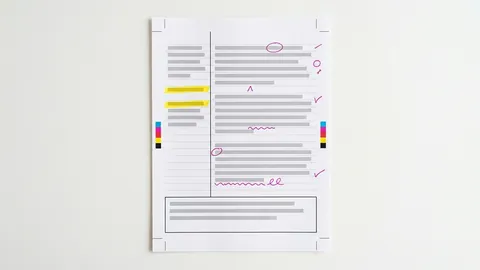
Compare each answer with the source. Tick what you got, circle what you missed.
Relearn the misses
Go back to the text only for the circled items. Explain each one in plain words, as if to a friend.
Schedule the return
Write the circled items on the plan for a session one or two days later.
The relearning step is where explaining helps. The Feynman technique is a structured way to do it: explain the idea simply, find where the explanation breaks, return to the source, and try again.
Notes and reading that feed the plan
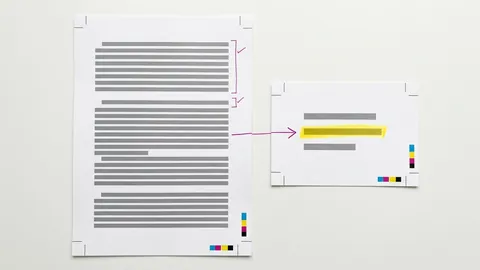
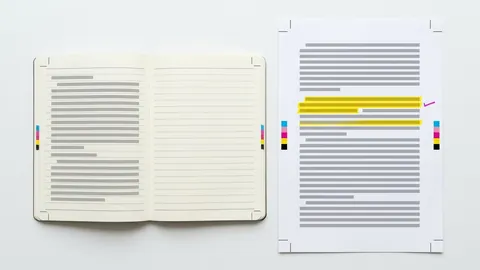
The plan assumes you have something to test yourself on. Notes taken in the Cornell format, with a column of cue questions give you that for free: cover the right side and answer the cues. If you highlight while reading, turn each highlight into a question in the margin so it becomes a test item rather than a line to reread.
If there is more reading than time, read for structure first: headings, summaries and the first line of each paragraph, then slow down for the parts the exam will test. Reading faster without losing the meaning covers how to choose where to skim and where to read closely.
Adjusting the plan to the type of exam
| Exam type | What to practice | Practice test format |
|---|---|---|
| Multiple choice | Definitions, distinctions between similar terms, applications | Write your own answer before looking at the options |
| Short answer | Key terms with a one-line explanation of each | Flashcards answered aloud or in writing |
| Essay | Arguments, evidence and how they connect | Outline answers to likely questions from memory, then check against notes |
| Problem sets | Methods, worked in full | Unseen problems under time, then check each step |
What to do the night before an exam
Sul Ross State University's Academic Center for Excellence gives a short list for the night before in its handout “How to Survive Finals Week”, adapted from the Learning Skills Center at the University of Texas at Austin:
- Review calmly. Spend your last hours calmly reviewing what you have learned, and try not to tackle new material.
- Do not stay up all night. The handout says the more sleep deprived you are, the less clearly you will be able to think and write what you know on the exam.
- Cram selectively. It calls the night before, when you are more anxious than usual, one of the least effective times to study. If you are unprepared, use the time to review key concepts instead of trying to learn it all.
- Avoid distractions that interfere with what you have learned or leave you studying far into the night.
The same handout advises starting early and scheduling study periods to avoid last-minute cramming, which is the four-week plan above in one sentence.
A worked example: three exams in one week
Suppose you have chemistry on Monday, history on Wednesday and Spanish on Friday, and two weeks to prepare. The plan is written for this page as an example.
Every subject is touched several times, with gaps, and the last evening before each exam is review of misses rather than new learning. Rotating unlike subjects also follows the handout's advice to vary what you study, chemistry then Spanish rather than chemistry then physics.
Pitfalls when studying for exams
- Rereading as the main method. It raises confidence more than recall, as the Roediger and Karpicke students found.
- Highlighting the whole chapter again. Rated low utility in the Dunlosky review. Turn marks into questions instead.
- One subject per day, once. A topic seen once two weeks ago has had no review.
- Skipping the timed practice. Knowing the material and producing it under a clock are different skills.
- The all-nighter. The handout above warns against it for exactly this reason: you think less clearly on the day.
Tips for exam study
- Ask the instructor what the exam covers and in what format.
- Keep a miss list per subject. It is your plan for the final week.
- Study in short, regular blocks and protect your normal sleep.
- Explain topics aloud to a friend or to an empty room.
A good plan for how to study for exams is simple to state: start early, test yourself instead of rereading, bring each topic back after a gap, practice under exam conditions in the final week, and sleep the night before. The research rates those habits highest, and they leave you with a clear list of what you still need to learn. More methods for reading, notes and review are in the study guides for students.
Common questions
What is the most effective way to study for exams?
Test yourself and space your study. The 2013 review by Dunlosky and colleagues rated practice testing and distributed practice as the only two high utility techniques among the 10 it reviewed. In practice, that means answering questions from memory, checking your answers, and coming back to the same material on several different days.
How far in advance should I start studying for an exam?
Start early enough to review each topic more than once with gaps of a day or more between sessions. For a midterm or final, two to four weeks is a workable range. Cepeda and colleagues (2008) found the best gap between study and review grows with the time until the test.
Is rereading notes a good way to study?
It is one of the weakest. The Dunlosky review rated rereading low utility, and in Roediger and Karpicke's 2006 experiments, students who restudied felt more confident but remembered less after 2 days or 1 week than students who had tested themselves. Turn your notes into questions and answer those instead.
What should I do the night before an exam?
Review calmly and avoid new material, then sleep. Sul Ross State University's finals handout advises against staying up all night, because the more sleep deprived you are, the less clearly you can think and write on the exam. If you are behind, review key concepts rather than trying to learn everything.
How long should a study session be?
Long enough to recall, check and relearn a topic, which for most students is 30 to 60 minutes, followed by a break. The research favors several shorter sessions spread over days over one long sitting with the same total time. Short recall sessions in odd moments also count.
Does highlighting help when studying for exams?
Not much on its own. The Dunlosky review rated highlighting low utility. It helps when it is a first step: mark the lines you expect to be tested on, then write a question for each one and answer it from memory in later sessions.
Sources
- Dunlosky, J., Rawson, K. A., Marsh, E. J., Nathan, M. J., and Willingham, D. T. (2013). Improving Students' Learning With Effective Learning Techniques. Psychological Science in the Public Interest, 14(1), 4 to 58 (PubMed abstract)
- Roediger, H. L., and Karpicke, J. D. (2006). Test-enhanced learning: taking memory tests improves long-term retention. Psychological Science, 17(3), 249 to 255 (PubMed abstract)
- Cepeda, N. J., Vul, E., Rohrer, D., Wixted, J. T., and Pashler, H. (2008). Spacing effects in learning: a temporal ridgeline of optimal retention. Psychological Science, 19(11), 1095 to 1102 (PubMed abstract)
- Sul Ross State University, Academic Center for Excellence: How to Survive Finals Week (skills handout, adapted from the Learning Skills Center, University of Texas at Austin)
sign-off
Checked against its sources and signed before it went out.
Nora Feld
Editor · reviewed 18 Nov 2026