
Close Reading: What It Is and How to Do It, With a Worked Example From Walden
Close reading means looking hard at a short passage until it tells you something a quick read would miss. Here is the method, step by step, on seventy words of Thoreau.
in short
Close reading is a method of reading a short passage slowly and closely, annotating details such as word choice, repetition and structure, then looking for patterns among them and using those patterns to make a claim about how the text creates meaning. The details come first; the claim comes last.
Close reading is slow, focused attention to a short piece of text: a paragraph, a stanza, a scene. Instead of reading for the gist, you read for how the words do their work, mark what you notice, look for patterns, and end with a claim about meaning that the details support. It is the first stage of most essays in literature and the humanities, and it works on speeches, articles and arguments as well as poems. Below: the method in five steps, drawn from writing guides at Yale, Duke and Rutgers, and a full close reading example on a public-domain passage from Thoreau's Walden.
What close reading is, according to the writing guides
Observe first. Interpret second. Claim last.
Yale's English department, in its guide Close Reading for Argument, describes close reading as a method for gathering and analyzing information, grounded in sustained and focused observation. Its key rule is about order: good close readers pay attention to specific details before drawing larger conclusions, so close reading precedes the formulation of claims about the texts you read. The same guide is blunt that it is not casual reading. You read actively, and you annotate.
Duke's Writing Studio handout on close reading as a genre calls it the first stage in writing an essay that responds to or builds on the original text, and notes it is sometimes called "reading to write." Rather than extracting facts, a close reading prepares you to analyze the text critically in your own writing. Both guides note that the method is not limited to written texts; Duke names a film or a painting, and Yale mentions songs, film and art.
A narrower use, reading a draft for the habits of machine-generated prose, has its own guide: close reading a draft for AI writing patterns.
How to do a close reading in five steps
The three guides divide the work a little differently. Yale names three steps (read actively, analyze, synthesize). Duke names four (pre-reading and mark-up, interpretation, critical reading, writing). Rutgers' learning centers give three (annotate the text, read consciously, going further). The five steps below line those up into one routine.
| Step | What you do | Where the guides say it |
|---|---|---|
| 1. Read | Read the passage through, twice, without judging it | Duke: pre-reading and previewing; Yale: read actively |
| 2. Annotate | Mark key words, odd phrases, surprises and anything you would ask about | Duke: highlight key words, phrases and ideas, note anything unusual; Rutgers: highlight, underline, star, write questions |
| 3. Question | Turn each mark into a how or why question | Rutgers: write down questions; Duke: what questions do you have? |
| 4. Pattern | Group the marks: repetitions, contrasts, shifts, contradictions | Duke: patterns, contradictions, repetitions, inconsistencies; Yale: synthesis identifies patterns and links |
| 5. Claim | State what the patterns show about how the passage makes meaning | Yale: a claim about how the text creates meaning |
Read the passage twice
Choose a short passage. Duke's advice is that less is usually more: focus on a single paragraph or short scene rather than skim a long stretch. Read it once for sense, once slowly, aloud if you can.
Annotate as you go
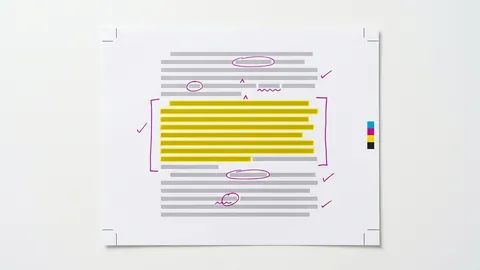
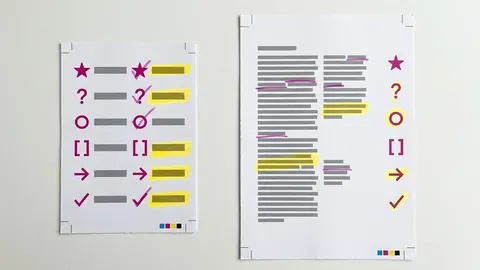
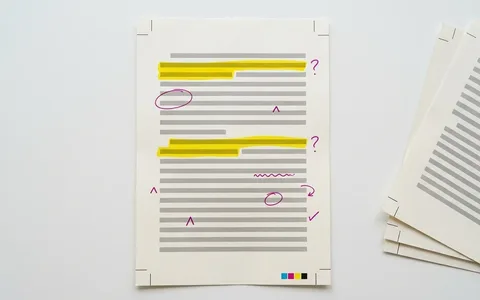
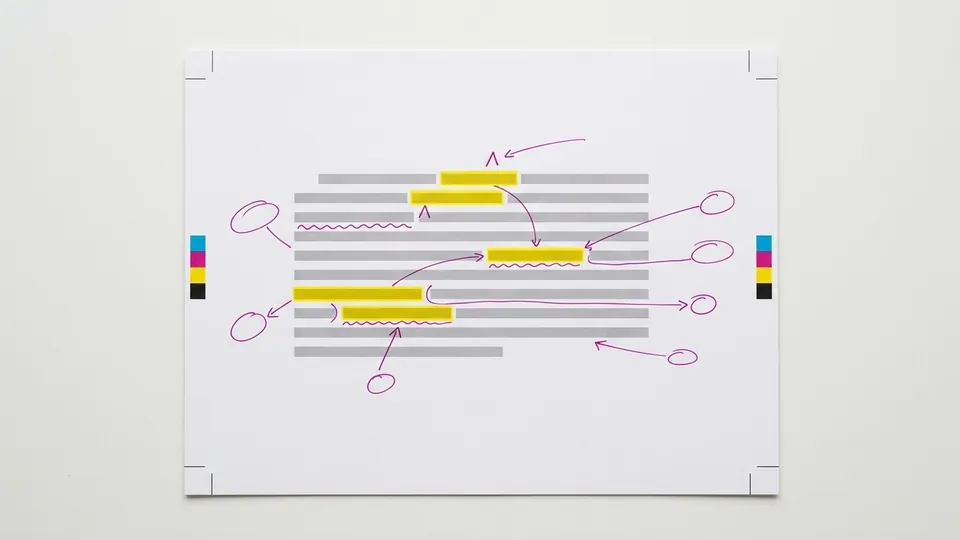
Mark key words, repeated words, unexpected images, shifts in tone and anything that puzzles you. Yale suggests highlighting the places you find puzzling and noting why. A small set of marks (circle, underline, question mark, star) keeps this fast; a key of annotation symbols gives one.
Ask questions of your marks
For each mark, ask how or why. Why this word and not a plainer one? Why does the sentence turn here? Rutgers advises writing the questions down while you read, so they are there when you start writing.
Look for patterns
Group the marks. Duke lists what to look for: patterns, contradictions, repetitions and inconsistencies. Yale calls this synthesis: drawing connections between the pieces of evidence and moving from particulars to conclusions grounded in the text.
Make a claim
State, in one or two sentences, what the patterns show about how the passage makes its meaning. Yale's guide says the goal is not only to point out a tension but to make a claim about what the writer does with it.
What to mark when you annotate
Annotation in a close reading is not underlining everything that seems important. It is marking the details you could build an argument from. Useful categories:
- Word choice. A word that is stronger, stranger or older than the plain choice. Look up any word whose meaning you are guessing.
- Repetition. The same word, root or sound coming back. Count them.
- Contrast. Pairs that pull against each other: life and death, inside and outside, then and now.
- Structure. Where sentences turn, which words come first and last, a list that grows or shrinks.
- Your reactions. Yale tells readers to be conscious of their own feelings toward the text, including surprise and frustration, because those moments can hold tensions and gaps worth exploring.
Poems add sound, line breaks and meter to the list; the guide to annotating a poem covers those. For prose, the categories above are enough.
A close reading example: Walden
The passage below is from Henry David Thoreau's Walden (1854), the chapter "Where I Lived, and What I Lived For." It is in the public domain, and the text here is copied from the Project Gutenberg edition, original spelling kept. The annotations and claim that follow are an example written for this page, one reader's work, not the only reading.
Steps 1 and 2: read and annotate
- "deliberately": circled. It means on purpose, but also slowly and with care. Both senses fit.
- "front": circled. A verb, not a noun: to face or confront. Facts are something you stand up to.
- "essential" and "only": underlined. The sentence is about cutting down to what matters.
- live, life, lived, live, life, living: six forms of one word in two sentences. Starred.
- "not": five times. Question mark in the margin: why so many negatives in a passage about wanting to live?
- "when I came to die": highlighted. The only mention of death, placed in the middle of the first sentence.
Step 3: question
Why does a passage about choosing to live keep saying what the speaker did not want? Why does death arrive in the middle of the sentence rather than the end? Why front rather than face?
Step 4: pattern
Two patterns hold the marks together. First, repetition: some form of live or life six times, wish three times. Second, negation: five uses of not, plus nor and unless. The second sentence defines life almost entirely by what it is not: not "what was not life," not resignation. The positive goal ("live deliberately") is stated once; the things to avoid take up most of the words.
Step 5: claim
The claim is arguable (another reader could disagree), it rests on details anyone can count in the passage, and it says how the words make the meaning, not only what the passage is about. A summary would say Thoreau went to the woods to live simply; the close reading explains how the words make that choice feel like a fight.
Pitfalls in close reading
- Summarizing instead of analyzing. Yale draws the line clearly: summary gives an overview, analysis interprets and explains the details. Duke adds: avoid summarizing the original text at length.
- Starting with the claim. If you decide what the passage means first and then hunt for support, you will find it and miss everything else. Observation comes first.
- Choosing too much text. A page of prose gives you too many marks to group. One paragraph is usually enough.
Close reading strategies that save time
- Count things. Repetitions, negatives, sentence lengths. A number turns a hunch into evidence.
- Swap a word. Replace a key word with a plainer synonym and ask what is lost. That loss is often your point.
- Write a one-sentence summary first. Rutgers suggests summarizing each reading in a sentence; doing it early stops you confusing the gist with your claim.
- Keep your marks. Annotated passages are part of your record of how you reached an argument. The study guides on this site cover how to keep and use them.
Close reading is a habit of order: read, mark, ask, group, and only then claim. The Walden example shows how far seventy words can take you when you count the repetitions and take the negatives seriously. Pick a short passage from whatever you are reading this week, annotate it with a small set of marks, and try to write one arguable sentence that only those details could support.
Common questions
What is close reading in simple terms?
Close reading is reading a short passage slowly and carefully, marking details such as word choice, repetition and structure, and then explaining how those details create the passage's meaning. Yale's English department describes it as sustained and focused observation that comes before you make any claim about the text.
What are the steps of close reading?
A practical sequence is read, annotate, question, find patterns and make a claim. University guides divide it differently: Yale uses three steps (read actively, analyze, synthesize) and Duke four (pre-reading and mark-up, interpretation, critical reading, writing). All of them put careful observation of details before interpretation.
How long should a passage for close reading be?
Short. Duke's Writing Studio advises that less is usually more and suggests focusing on a single paragraph or short scene rather than a large amount of material. A paragraph, a short scene or a single stanza of a poem gives you enough detail to find patterns without drowning in marks.
What is the difference between close reading and summary?
A summary says what a text is about in fewer words. A close reading explains how a short part of it works and makes an arguable claim about meaning, based on details in the language. Yale's guide distinguishes the two directly: summary gives an overview, while analysis interprets and explains the details.
Can you close read something other than literature?
Yes. Both Yale's and Duke's guides say the method applies beyond written literature; Duke names a film or a painting, and Yale mentions songs, film and art. It also works on speeches, legal texts and arguments, where word choice and structure carry as much weight as they do in a poem.
What makes a good close reading claim?
A good claim is arguable, rests on details a reader can find in the passage, and says how the language creates meaning rather than restating what the passage is about. If another careful reader could disagree with it, and you can point to the words that support it, the claim is doing its job.
Sources
sign-off
Checked against its sources and signed before it went out.
Nora Feld
Editor · reviewed 2 Nov 2026