- job ticket
- section
- ai writing
- checked
- editor
- Nora Feld
Proofreading Checklist: How to Proofread an Essay in Five Passes
Most proofreading fails because it is one quick read looking for everything at once. Five short passes, each hunting one kind of error, catch far more.
in short
To proofread well, finish revising first, take a break, then make five separate passes: read aloud for missing words and awkward sentences, check punctuation mark by mark, read backwards for spelling, check names, numbers and citations, then check format. Look for one kind of error per pass, and do not trust spell check alone.
A proofreading checklist works because it stops you reading for meaning. When you read your own essay the usual way, your brain fills in what you meant, and small errors slide past. The checklist below splits proofreading into five passes, each looking for one kind of error with a technique suited to it, drawn from the writing center handouts at the University of North Carolina and Purdue's Online Writing Lab. It ends with what changes when the draft was written with AI help, and a printable table you can keep beside the page.
Before you start: edit first, proofread last
Proofread for one kind of error at a time. Everything else waits.
UNC's Writing Center handout on editing and proofreading treats them as two stages. Editing comes first and covers content, structure, clarity, style and citations. Proofreading is "the final stage," focused on surface errors such as spelling, grammar and punctuation, and the handout says to do it only after other revisions are finished. Fixing a comma in a paragraph you later cut is wasted effort.
The same handout gives three setup tips. Get distance from the text: put it aside for hours or days, or hand it to a friend. Change how it looks: a different size, spacing or font can make your brain treat it as unfamiliar. Work in short blocks in a quiet place, because concentration fades. Purdue OWL's steps for revising makes the same point about time, suggesting you put the writing aside at least twice: once while reorganizing and once while polishing.
The proofreading checklist: five passes
| Pass | What to check | How |
|---|---|---|
| 1. Read aloud | Missing or doubled words, awkward or overlong sentences, copy and paste errors | Read slowly from a printed copy, pointing at each word; mark any place you stumble |
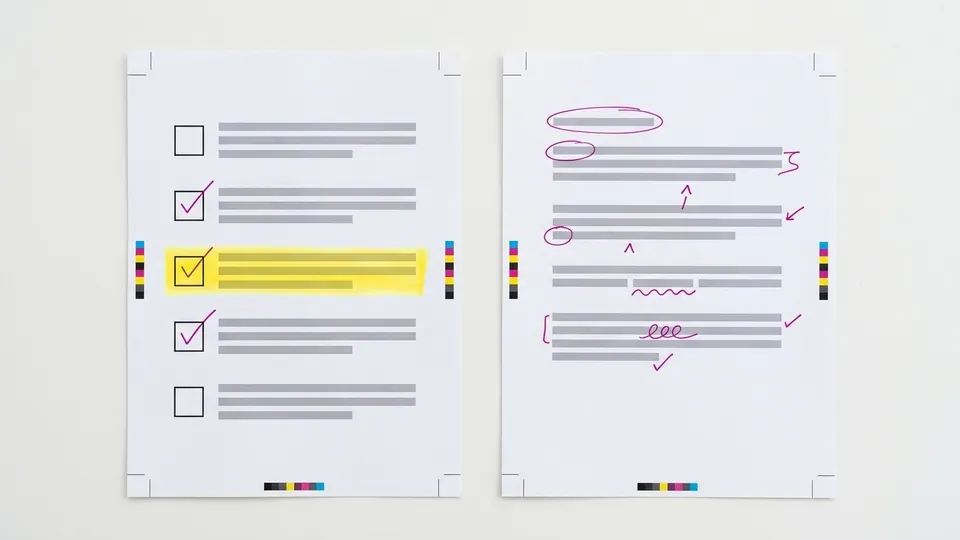
| 2. Punctuation | Commas, apostrophes, quotation marks, end punctuation | Circle every punctuation mark and ask whether each one is right |
| 3. Spelling | Typos, sound-alike words (their, there; your, you're), names | Read backwards word by word, so meaning cannot distract you |
| 4. Facts and citations | Names, dates, numbers, quotations, in-text citations, reference list | Check each against your notes or the source; match every citation to a reference |
| 5. Format | Title, headings, page numbers, spacing, margins, required style | Compare page by page with the assignment sheet or style guide |
Pass 1: read aloud
UNC's handout on reading aloud explains why this pass comes first. Most people have more practice hearing English than editing it on a page, so sentences with a missing word, a copy and paste slip or a grammar mistake often sound wrong even when they look fine. It also catches awkward sentences that are not technically wrong. The handout suggests working from a printed copy, following along with your finger, reading at a moderate pace, or asking a friend or a text-to-speech program to read it to you, since an automated reader will not smooth over errors.
Purdue OWL's proofreading suggestions put it simply: any time you have to pause or reread a passage while reading aloud, revise it, because if it is awkward for you it will be awkward for your reader.
Passes 2 and 3: punctuation, then spelling
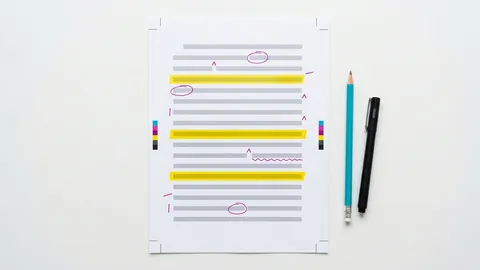
For punctuation, the UNC handout suggests circling every mark, which forces you to look at each one and ask whether it is correct. For spelling, it suggests reading backwards from the last word to the first: the content stops making sense, so your attention goes to each word on its own. You can also read backwards sentence by sentence to check grammar without being pulled into the argument.
Spell check helps, but the UNC handout lists its limits: it misses misspellings that form another real word, such as to for too or there for their, and grammar checkers work from a limited set of rules and often make mistakes. Use them as a first sweep, then do the pass yourself. Another technique from the same handout: press return after every period so each sentence starts a new line, then read the lines one at a time.
Passes 4 and 5: facts, citations and format
These two passes are less about language and more about accuracy. Check every name, date, number and quotation against your notes, and match every in-text citation to an entry in the reference list. UNC's editing checklist asks whether you have cited quotes, paraphrases and ideas from sources and whether the citations are in the correct format; this pass makes sure nothing changed between the editing stage and the final file. Then check the format against the assignment sheet: title, page numbers, spacing, headings.
A worked example: one sentence, five passes
Here is an example sentence written for this page, with six errors planted in it, and what each pass catches.
- Pass 1, read aloud: "the the" is easy to hear when you say every word, and easy to miss when you skim.
- Pass 2, punctuation: the comma before the parenthetical citation does not belong; the citation sits before the period with no comma.
- Pass 3, spelling, read backwards: then should be than, who's should be whose, and there should be their. Spell check accepts all three, because each is a real word.
- Pass 4, citations: the citation says 2091, the sentence says 2019. Check the source and fix the one that is wrong.
Corrected: "In their 2019 study, the researchers found that students whose notes were handwritten remembered more than those who typed (Lee, 2019)." Pass 5 would then check the reference list entry for Lee and the page format around it.
Proofreading an AI-assisted draft
A draft written with AI help tends to have fewer typos and more of a different kind of problem. The surface may be clean while facts, citations and voice are not. Three changes to the checklist help:
- Make pass 4 the longest. Check every claim, number and citation against a source you have actually opened. A reference that looks correct is not the same as one that exists.
- Read aloud for voice, not just errors. Mark sentences that do not sound like you, stock transitions, and lists of three that say little. Marking up an AI draft before you revise it gives a color system for this.
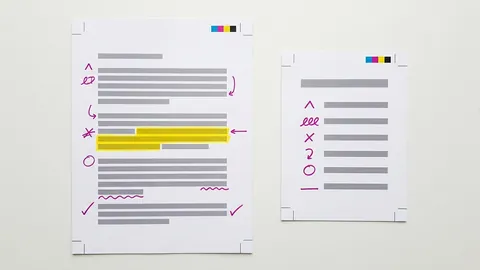
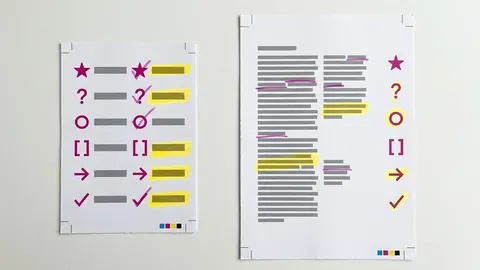
- Use proof marks to record what changed. Proof marks for AI drafts lists symbols for cut, check and rewrite, so your changes are visible on the page.
Then follow your course policy on disclosure. Proofreading a draft does not change who wrote it.
Pitfalls
- Proofreading before revising. Polishing sentences you later cut wastes the pass.
- Trusting spell check. It misses real words in the wrong place.
- Checking everything at once. The UNC handout warns that looking for too many things in one pass costs focus.
- Reading on the screen you wrote on. Print it, or at least change the font and size.
Expert tips
- Keep an error log. Purdue OWL suggests tracking the errors you make often; after a few papers you will know which pass deserves extra time.
- Use a ruler or a sheet of paper. Covering everything below the line you are reading keeps your eyes from jumping ahead.
- Mark, then fix. Use consistent annotation symbols in the margin on the first read, and make the corrections in a second sitting.
Proofreading comes last. Before it, run the larger pass in the editing checklist for argument, paragraphs and sentences.
A proofreading checklist turns one hopeful read into five short, focused passes: read aloud, punctuation, spelling backwards, facts and citations, then format. Each catches errors the others miss, and none of them depends on spell check. Print the table, work in short sittings, and give an AI-assisted draft extra time on the facts. More guides on marking and editing drafts are on the AI writing hub.
Common questions
What should a proofreading checklist include?
A good proofreading checklist covers missing or doubled words, punctuation, spelling including sound-alike words, names, numbers and quotations, citations matched to references, and the required format. It should also say how to check each one: read aloud, circle punctuation, read backwards, compare against sources, and compare against the assignment sheet.
How do you proofread an essay effectively?
Finish revising first, take a break, then make several short passes, each looking for one kind of error. UNC's Writing Center recommends reading slowly, reading aloud, circling every punctuation mark and reading backwards to check spelling. Work from a printed copy if you can, and do not rely on spell check or grammar check alone.
What is the difference between editing and proofreading?
Editing comes first and deals with content, structure, clarity, style and citations, often with large changes. Proofreading is the final stage and looks for surface errors: spelling, grammar and punctuation. UNC's Writing Center advises proofreading only after all other revisions are done, so you do not polish text you later cut.
Why does reading aloud help with proofreading?
Reading aloud forces you to say every word, so missing words, doubled words and grammar slips that look fine on the page often sound wrong. UNC's handout on reading aloud says it also exposes awkward or overlong sentences and tone problems. Having a friend or a text-to-speech program read it helps, because they will not smooth over errors.
Is spell check enough to proofread a paper?
No. Spell check misses misspellings that form another real word, such as there for their or then for than, and grammar checkers work from a limited set of rules and often make mistakes. Use them for a first sweep, then proofread the spelling yourself by reading backwards one word at a time.
How should I proofread a draft written with AI help?
Spend the most time on facts and citations: check each claim and reference against a source you have opened. Read aloud for voice and mark sentences that do not sound like you. Record your changes with proof marks, and follow your course policy on disclosing AI help, since proofreading does not change authorship.
Sources
sign-off
Checked against its sources and signed before it went out.
Nora Feld
Editor · reviewed 2 Nov 2026