How to Read a Research Paper in Three Passes, and What to Highlight in Each Section
A research paper is not a book, and reading it front to back is the slow way. Three passes, each with a job, get you from the gist to the details without drowning.
in short
To read a research paper, make three passes. First, read the title, abstract, introduction, headings and conclusions to decide whether it matters. Second, read with care, study the figures and note key points, skipping proofs. Third, read in depth, questioning every assumption. Highlight claims, methods, results and limits separately.
If you have ever started a journal article at the first word and stalled in the methods, you have met the problem this page solves. Learning how to read a research paper means reading it out of order, more than once, with a different goal each time. The best-known version of this is S. Keshav's three-pass method, published in 2007. Below: his method as he states it, the order libraries recommend, what to highlight, and a worked example.
Why reading front to back wastes time
Each pass has one job. Stop when the job you need is done.
A research paper is built for searching, not for reading straight through. The Grand Valley State University Libraries guide to reading scientific articles lists the usual headings: Abstract, Introduction or Background, Methods, Results, Discussion and Conclusion, noting that sections may be separated or combined. It describes the methods and results as often the most daunting parts, dense with jargon and statistics.
The SUNY Potsdam College Libraries guide puts it plainly: you do not need to read an article straight through, and you will not spoil anything by skipping to the conclusion. Reading in passes spends attention where it pays.
How to read a research paper in three passes
S. Keshav's article “How to Read a Paper” appeared in ACM SIGCOMM Computer Communication Review, volume 37, number 3, July 2007, pages 83 to 84. The two-page paper says the key idea is to read in up to three passes instead of starting at the beginning and plowing to the end, with each pass building on the one before.
| Pass | What Keshav says to do | Time he gives | What you can do after it |
|---|---|---|---|
| First | Carefully read the title, abstract and introduction; read the section and sub-section headings but ignore everything else; read the conclusions; glance over the references, ticking off ones you have read | About five to ten minutes | Answer the five Cs and decide whether to read further |
| Second | Read with greater care but ignore details such as proofs; jot down key points or make comments in the margins; look carefully at figures, diagrams and graphs; mark relevant unread references | Up to an hour | Summarize the main thrust of the paper, with supporting evidence, to someone else |
| Third | Attempt to virtually re-implement the paper: make the same assumptions as the authors and re-create the work; identify and challenge every assumption | About four or five hours for beginners, about an hour for an experienced reader | Reconstruct the paper's structure from memory and name its strong and weak points |
The five Cs after the first pass
Keshav says that at the end of the first pass you should be able to answer five questions, which he calls the five Cs:
- Category: what type of paper is this? A measurement paper, an analysis of an existing system, a description of a research prototype?
- Context: which other papers is it related to, and which theoretical bases were used to analyze the problem?
- Correctness: do the assumptions appear to be valid?
- Contributions: what are the paper's main contributions?
- Clarity: is the paper well written?
With those answers you may choose not to read further, and Keshav lists good reasons: the paper does not interest you, you do not know enough about the area yet, or the authors make invalid assumptions. The first pass, he adds, is adequate for papers outside your area.
On the second pass, his advice on figures is specific: are the axes properly labeled, and are results shown with error bars, so that conclusions are statistically significant?
The order to read the sections
Keshav's passes set the depth. The Potsdam guide sets the order.
Title and abstract
These tell you the article's focus and whether it is relevant to your question.
Introduction and conclusion
These give the main argument, the hypothesis, and what the authors believe they showed.
Methods and results
These are heavier on detail and can be skimmed if they are not central to your question. Ask how the work was done and whether you could repeat it.
Discussion
Potsdam calls this arguably the most important part, because the authors explain what everything means. Ask whether their analysis agrees with their own data.
References
Finish here. Mark the cited works that bear on your question and track them down.
What to highlight in each section
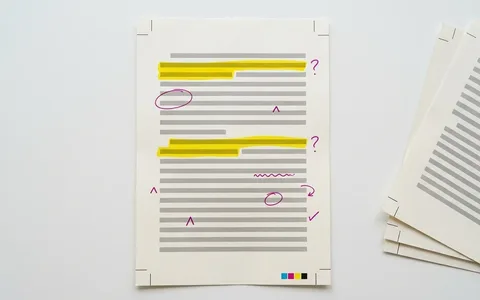
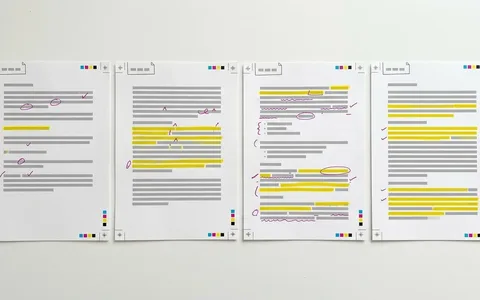
Highlighting a paper works when each color means one thing. Use a small, fixed code, such as the one in a color code for highlighters, and mark only what you would put in a summary.
| Section | What it does | What to highlight | Question to ask |
|---|---|---|---|
| Abstract | Summarizes the whole article; the GVSU guide puts the typical length at 150 to 250 words | The research question and the one-sentence finding | Is this relevant to my question? |
| Introduction | Background, past research and the authors' goals | The gap the authors say they fill, and the hypothesis | What is already known, and what is left? |
| Methods | How the data were gathered and analyzed | Sample, measures and design, in one color | Could I repeat this from what is written? |
| Results | What was found, often in figures and tables | Each main result and the figure that shows it | Are the results presented factually? |
| Discussion and conclusion | What the results mean and what comes next | The authors' claims and their stated limits | Do the claims match the data? |
Mark limits in their own color. Circle unknown terms rather than highlighting them, as GVSU suggests, and look them up before moving on.
A worked example: a first pass on one abstract
This abstract was written for this page; the study does not exist.
A first pass on this abstract, with highlights, would mark four things:
- Question (one color): whether rereading or self-questioning helps recall more.
- Method (second color): 120 first-year students, two study conditions, a recall test one week later.
- Finding (third color): the self-questioning group recalled more but rated its learning lower.
- Limit (fourth color): one university and one subject.
Now the five Cs. Category: an experiment. Context: research on study strategies, which the introduction would name. Correctness: the design looks reasonable, but the limit warns against generalizing. Contributions: the gap between how study feels and how well it works. Clarity: high. If you go on, the second pass checks whether the figures show the difference the abstract claims. Turning those notes into a paragraph is the subject of how to write a summary of what you read.
Questions to ask as you read
- What exact question does the paper answer, in one sentence?
- What did the authors do, and could someone repeat it from the methods as written?
- Which figure or table carries the main result, and do its axes and error bars support the claim?
- What limits do they state, and what limits do they leave out?
For the general version for any text, see active reading strategies that keep you questioning the page, and the other study guides on reading and note-taking.
Pitfalls when reading research papers
- Stopping at the abstract when you need the paper. An abstract is a summary written by the authors. For anything you cite, read at least the results and the discussion.
- Reading the methods first. Without the question in mind, they are hard to judge. Keshav and Potsdam both put them after the introduction and conclusion.
- Skipping the figures. Keshav's second pass starts with them. Keshav asks whether axes are labeled and results show error bars.
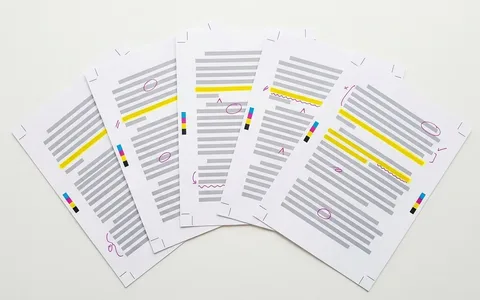
- Highlighting everything. If a whole page is yellow, nothing is marked. Mark the question, the method, the finding and the limit.
Tips for reading papers faster
- Time-box the first pass. Keshav gives about five to ten minutes. Set a timer and decide at the end.
- Write the five Cs on the first page. Five short lines in the margin.
- Read with a question of your own. Write it above the title before the first pass, and judge every section against it.
- Keep notes in a fixed layout. A cue column and a summary line, as in the Cornell note-taking method, keeps every paper's notes comparable.
- Do a literature survey in passes too. Keshav suggests three to five recent papers, one pass each, then their related work sections.
Reading a research paper well means reading it in passes: a short first pass to decide, a careful second pass to understand, and a slow third pass only when you need depth. Follow the order the library guides suggest, highlight the question, method, findings and limits in separate colors, and write the five Cs in the margin. You will read more papers, and remember more of each.
Common questions
What is the three-pass method for reading a paper?
It is the approach S. Keshav described in 2007 in ACM SIGCOMM Computer Communication Review. The first pass, about five to ten minutes, gives a general idea. The second, up to an hour, lets you grasp the content but not its details. The third, about four or five hours for beginners, aims at understanding the paper in depth by mentally re-creating the work.
What order should I read a research paper in?
The SUNY Potsdam library guide recommends the title and abstract first, then the introduction and conclusion, then the methods and results, then the discussion, and the references last. Reading the argument before the details means you know what the methods are meant to show, so you can skim the parts that do not bear on your question.
How long should it take to read a research paper?
Keshav gives about five to ten minutes for a first pass, up to an hour for a second, and about four or five hours for a third pass by a beginner, or about an hour for an experienced reader. Most papers you read need only the first or second pass. Save the third for papers you must review or build on.
What should I highlight in a research paper?
Highlight the research question, the method in brief, each main result with the figure that shows it, and the limits the authors state, each in its own color. Circle unfamiliar terms instead of highlighting them. Skip background you already know. If a section is mostly highlighted, you are copying rather than selecting.
How do I read a paper I do not understand?
Keshav lists reasons a paper stays unclear after a second pass: unfamiliar terms, a technique you do not know, poor writing, or simple tiredness. He gives three choices: set it aside, return after reading background material, or persevere with a third pass. For background, Keshav's literature-survey advice applies: look for a recent survey paper in the area and read it first.
Sources
sign-off
Checked against its sources and signed before it went out.
Nora Feld
Editor · reviewed 2 Nov 2026